


Staff Profile: Brain Injury Unit Secretary Matilda Lamar-Reed
Matilda Lamar-Reed Goes Above and Beyond In Her Role as ABI Unit Secretary
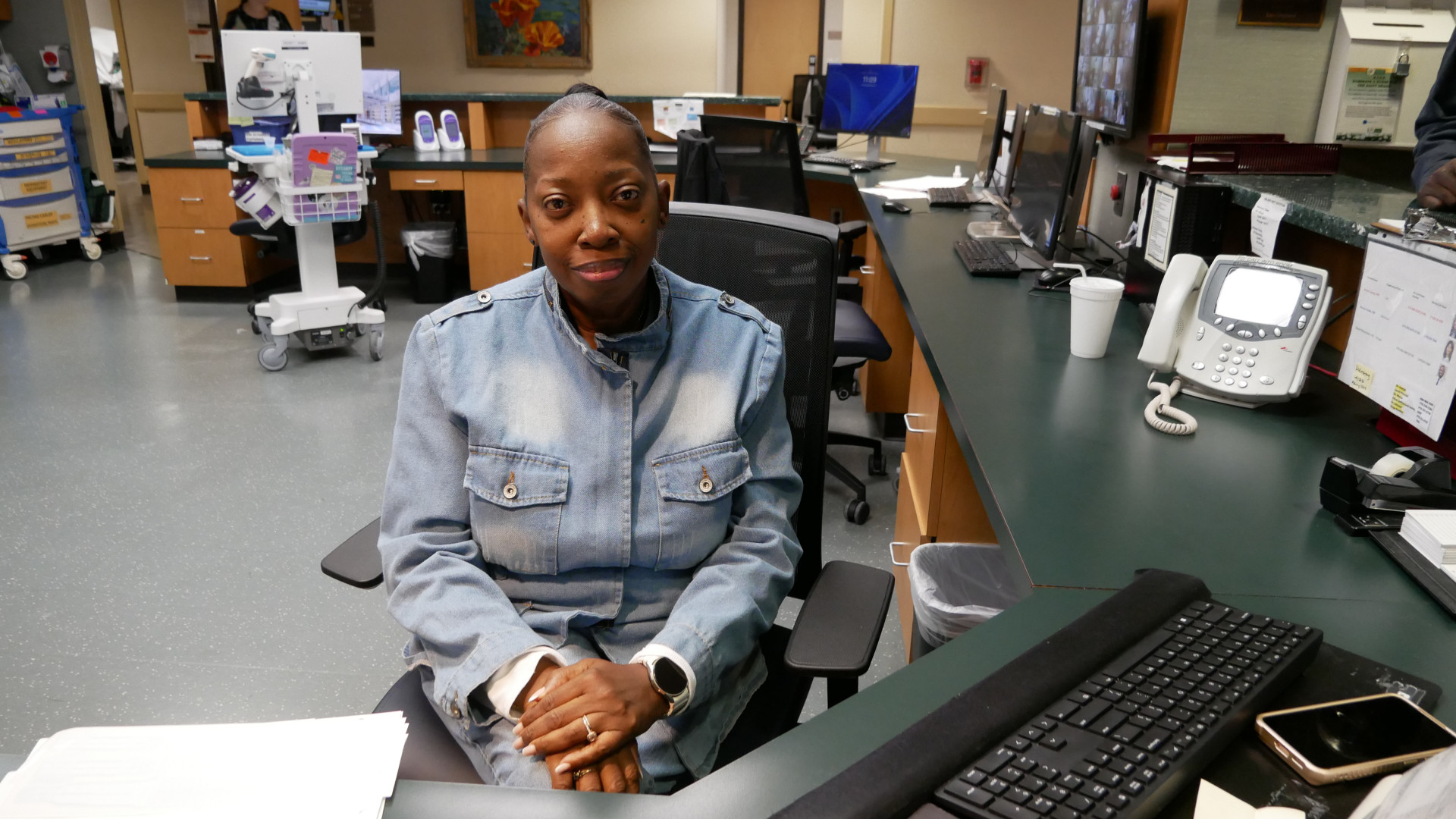
Years at Shepherd: 9
Training: Secretary Duties, The Atlanta College of Medical and Dental Careers
Fun Facts:
- Matilda is a motorcycle enthusiast.
- She is an avid Disney fan, with Mickey Mouse being her favorite.
- She is a Barbie doll collector and has over 100 Barbies!
What is your role at Shepherd, and how long have you been here?
I've been at Shepherd Center for nine years as a unit secretary. What drew me to Shepherd was my mother, who had a brain injury. She passed away in 2021. I got to see all those different aspects of living with someone with a brain injury and working with someone with a brain injury. It’s had a big impact on my family. [Now] I listen to the patients, who can be having it tough, and you try to be here and be positive for them. That's really why I came here to work.
What does a typical day in your role look like?
Sometimes, it starts out very smooth and easy. But when you log in to the computer and get orders where you have to call different places, like [Piedmont Atlanta Hospital], to schedule consultations and procedures for other patients, it can get busy. It can be very hard to schedule appointments — sometimes outside clinicians have room for 20 appointments, and I’m the 21st person to call. Sometimes you don’t know how long it will take to get an appointment for a procedure, but one thing I do is call every day. Even if they say it will be a week, I’ll call every day to see if there’s been a cancellation or another way to fit in one of our patients. We also work closely with case managers, for example, if we have a discharge at 6 a.m., case managers won’t be here at 6 a.m., so they leave packages for me to give to the ambulance driver, to the patient’s family, to be sent to the patient’s home, etc.
You’re known for coordinating Atlanta Police Department visits for patients who are police officers. How did that start?
My dad was an Atlanta police officer. So, people will come to me and say, “Matilda, we have an officer here. Maybe you can talk to the family and let them know how Shepherd works, what we're doing, and what's going to happen.” Some of the officers are patients far from home, nowhere near home, and they want an officer to visit them and say, “Hey, that’s my brother. They know what I’ve been through.” So, I have a contact at APD, and we let him know what we need and when. Sometimes patients may want to see a chaplain — we have our own chaplains [at Shepherd], but they may feel more comfortable with the police chaplain. Or some officers may come by on their bikes for the patient to see. The visiting officers want to support our patients — they’ll do anything for them. 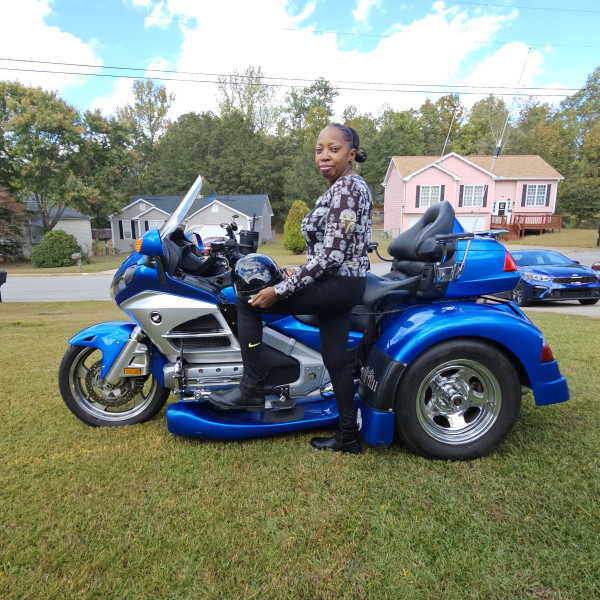
In addition to coordinating the officer visits, you do some volunteer work at the hospital — what does that look like?
In order to be in my motorcycle club, you have to do volunteer service. So, for mine, I come to Shepherd Center, pick a patient that’s in need, and do something for them. We do a big thing for Christmas — we’ve done that for the last six years. And the patient isn’t necessarily in my unit — they can be anywhere. If someone says to me, “Hey, we have this guy on my floor who needs a little help,” we’ll do something for them and their family. We’ve done gifts, given custom helmets, and thrown pizza parties.
What is your favorite part of working at Shepherd Center?
I have some wonderful, wonderful coworkers. When I see myself all backed up and the phones are ringing, and the doorbell is ringing — because we're a locked unit, and not everyone can enter and exit — my coworkers are a big, big help. They’re always willing to step in.
Responses have been edited for length and clarity.
Interview by Erin Kenney
With five decades of experience, Shepherd Center provides world-class clinical care, research, and family support for people experiencing the most complex conditions, including spinal cord and brain injuries, multi-trauma, traumatic amputations, stroke, multiple sclerosis, and pain. An elite center ranked by U.S. News as one of the nation’s top hospitals for rehabilitation, Shepherd Center is also recognized as both Spinal Cord Injury and Traumatic Brain Injury Model Systems. Shepherd Center treats thousands of patients annually with unmatched expertise and unwavering compassion to help them begin again.