


Working Together for Little and Big Wins
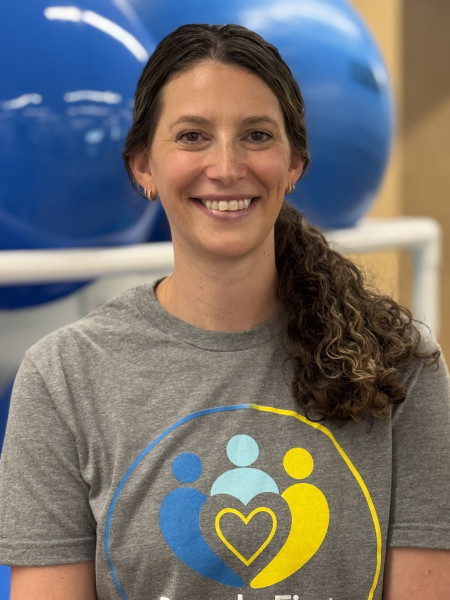
Rebecca Frissell, PT, DPT, NCS, loves working with her patients and collaborating with her teammates to help patients in the Rollins Acquired Brain Injury Program at Shepherd Center gain as much independence as possible.
 How long have you worked at Shepherd Center, and what is your role?
I've been at Shepherd Center for a little over 9 years. I started as a PRN [as-needed] PT and then transitioned to a full-time role on an ABI [acquired brain injury] team. I've been on a team since 2019.
How did you know that you wanted to be a physical therapist (PT)?
I've been an athlete my whole life, and I was an athlete in college. My only exposure to PT originally was outpatient ortho. I was a neuroscience major in undergrad, but it wasn’t until I got a job working in a stroke lab that I learned about the incredible world of neuro PT. Inpatient rehab, working with the stroke and brain injury population, has been my focus from early on. I just love the complexity of that patient population, the fact that really no two patients are the same. And it really does challenge me every day. There's not a formula you can use. It's seeing the patient as a whole and building those relationships with the patients as well as the families.
What were your first impressions of Shepherd when you started working here?
You always feel supported and empowered to be the best version of yourself as a clinician and as a professional. I think the mentoring at Shepherd is also incredible. It's such a supportive and collaborative environment — you don't ever feel like you're on an island. You feel like you always have someone in your corner, either advocating for you or helping you out if you need it. I am not one to shy away from asking for help or asking questions if I am not sure of something. I felt that [team aspect] right away when I first started here, and I still feel that, even though I've been here for a while.
What does the day-to-day look like as a physical therapist in the Brain Injury Rehabilitation Program?
No two days are the same, which is partially why I love working in ABI. I feel like we see the full spectrum of patients, from people with disorders of consciousness to people who are working on returning to running. So, we're doing anything from working on sitting balance, standing balance, completing a scavenger hunt, navigating an obstacle course, strengthening, and gait training.
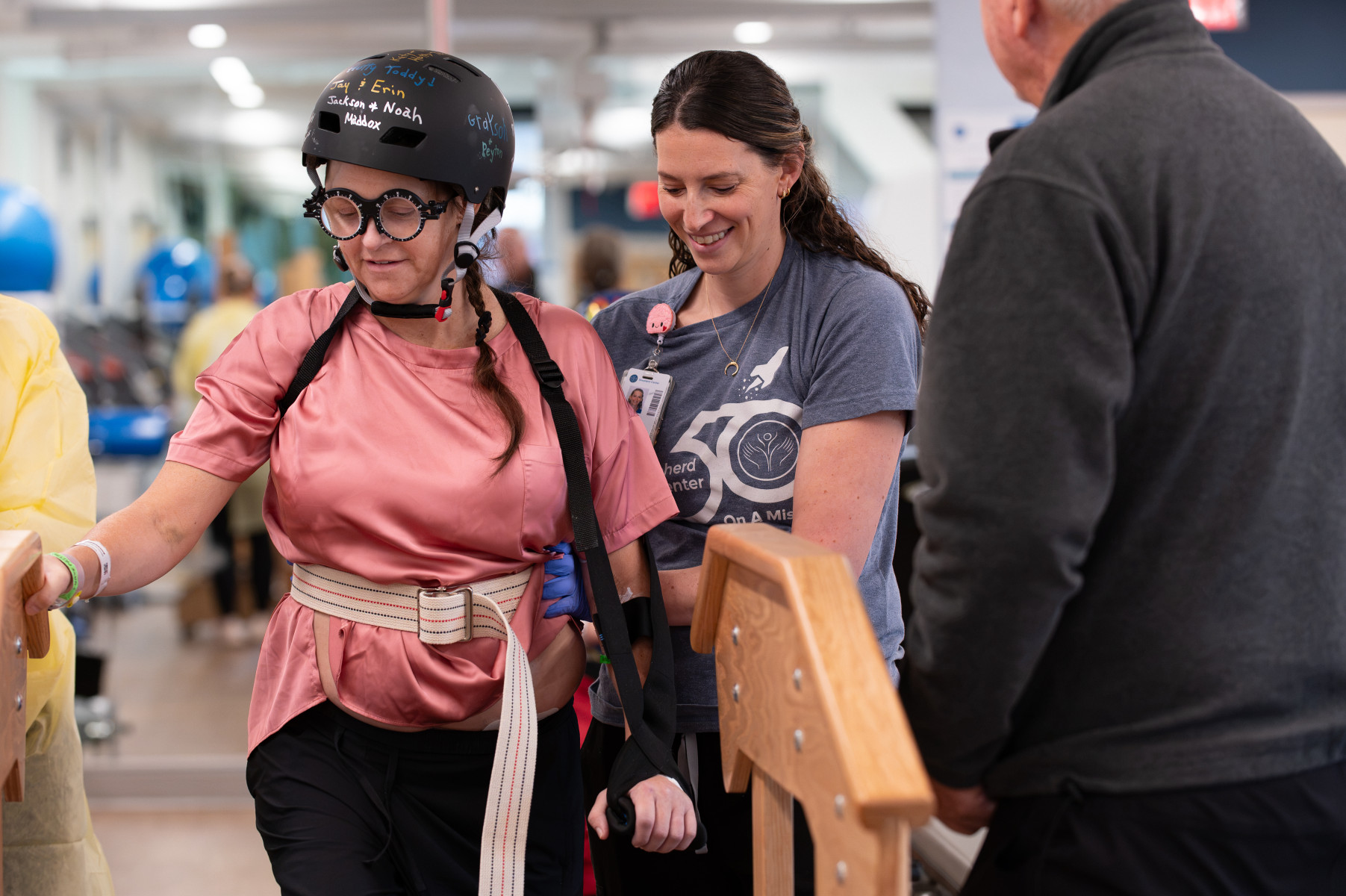
I do see a lot of different diagnoses, too, which also keeps you on your toes. I work with people who’ve had a traumatic brain injury, anoxic brain injury, stroke, and sometimes people who have had a brain tumor resection or infection that would affect the brain. We also get some patients with dual diagnoses, which is typically someone who’s sustained a brain injury and a spinal cord injury.
A lot of it is looking at the patient as a whole and building your treatment plan based on what they need. What I do from one session to another session with two different people might look totally different depending on where they're at from a cognitive and physical standpoint.
I also do some extra stuff in addition to my caseload. I run something called the Lexo [a robotic gait trainer] on the 6th floor once a week. I do a yoga group once a week on Thursdays. I was certified in Love Your Brain Yoga, which is yoga for people who have had a brain injury. I love doing yoga, so it's a nice way to use my skills as a physical therapist while also incorporating the values of Love Your Brain.
I also do a cooking group with my OT, speech, and rec therapy partners once a month, where we go to the grocery store and then also cook what we buy. I try to help [the patients] with walking in the grocery store, wheelchair mobility in the grocery store, and then incorporate therapy goals in the kitchen once we do our cooking —It’s a fun way to break up the day and have something different. And we haven't repeated a recipe yet.
Do you have a special area of interest within physical therapy?
I do love casting. There are a lot of different techniques we can do. There are
different cast materials, and you use them for different reasons. So, you have fiberglass casting, which is what you'd think of when you have a broken bone, but we can use it for serial casting to help increase range of motion or help combat tone. From those casts, we make splints that people wear at nighttime. And we also have less rigid cast materials that we can use for the in-house ankle splints that we make for people to help with standing and walking. And so that is a piece of my job that I really enjoy.
What is the most fulfilling part of your job?
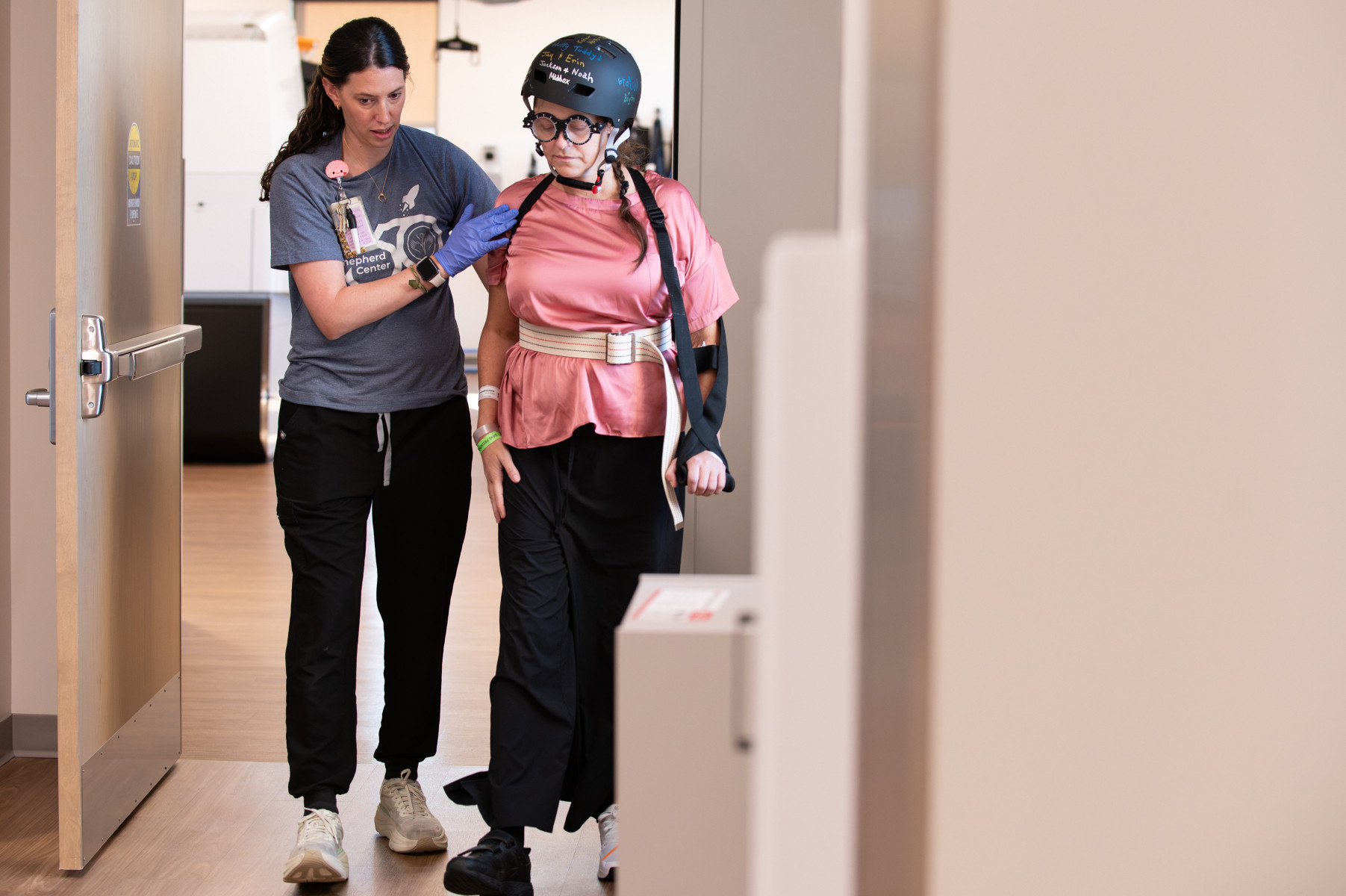
You really can see so much change in someone from when they first come to where they are at discharge. I love getting those messages once people have discharged or seeing how they've really improved when they come back to visit. I feel like we challenge people in a way where we really do see progress. I think giving people hope and helping people take that first step they haven't taken since they were injured or standing for the first time and knowing that it's going to be okay. I feel like the little wins — or sometimes the big wins — are really exciting.
 What makes for a great day at work?
Accomplishing a goal with a patient, no matter how big or small. Seeing something for the first time is also so exciting.
I'm usually very sweaty at the end of the therapy day. I work hard for my patients. And I feel like they, in turn, give me their best effort, too, because we're working together to work on their goals.
I love teaching, and a lot of [physical therapy] is teaching patients how to move their bodies in a new and different way and then teaching families how to best help their loved one move, too. And at the end of the day, [we’re] striving for as much independence as that person can have.
Education
Emory University, Bachelor of Science, Neuroscience
University of Maryland, Doctor of Physical Therapy
Board-Certified Neurological Clinical Specialist (NCS)
Fun Facts
Rebecca enjoys spending time with her husband, two young sons, and the family dog.
She played basketball for Emory and still plays in a women’s league.
She loves music and movies, but also enjoys being outside, exploring parks and different parts of the city with her family.
Responses have been edited for length and clarity.
Interview by Ruth Underwood
With five decades of experience, Shepherd Center provides world-class clinical care, research, and family support for people experiencing the most complex conditions, including spinal cord and brain injuries, multi-trauma, traumatic amputations, stroke, multiple sclerosis, and pain. An elite center ranked by U.S. News as one of the nation’s top hospitals for rehabilitation, Shepherd Center is also recognized as both Spinal Cord Injury and Traumatic Brain Injury Model Systems. Shepherd Center treats thousands of patients annually with unmatched expertise and unwavering compassion to help them begin again.