


Mike Hynes Continues Building Independence Post-SCI
Former FBI agent shares his recovery journey and hopes for the future
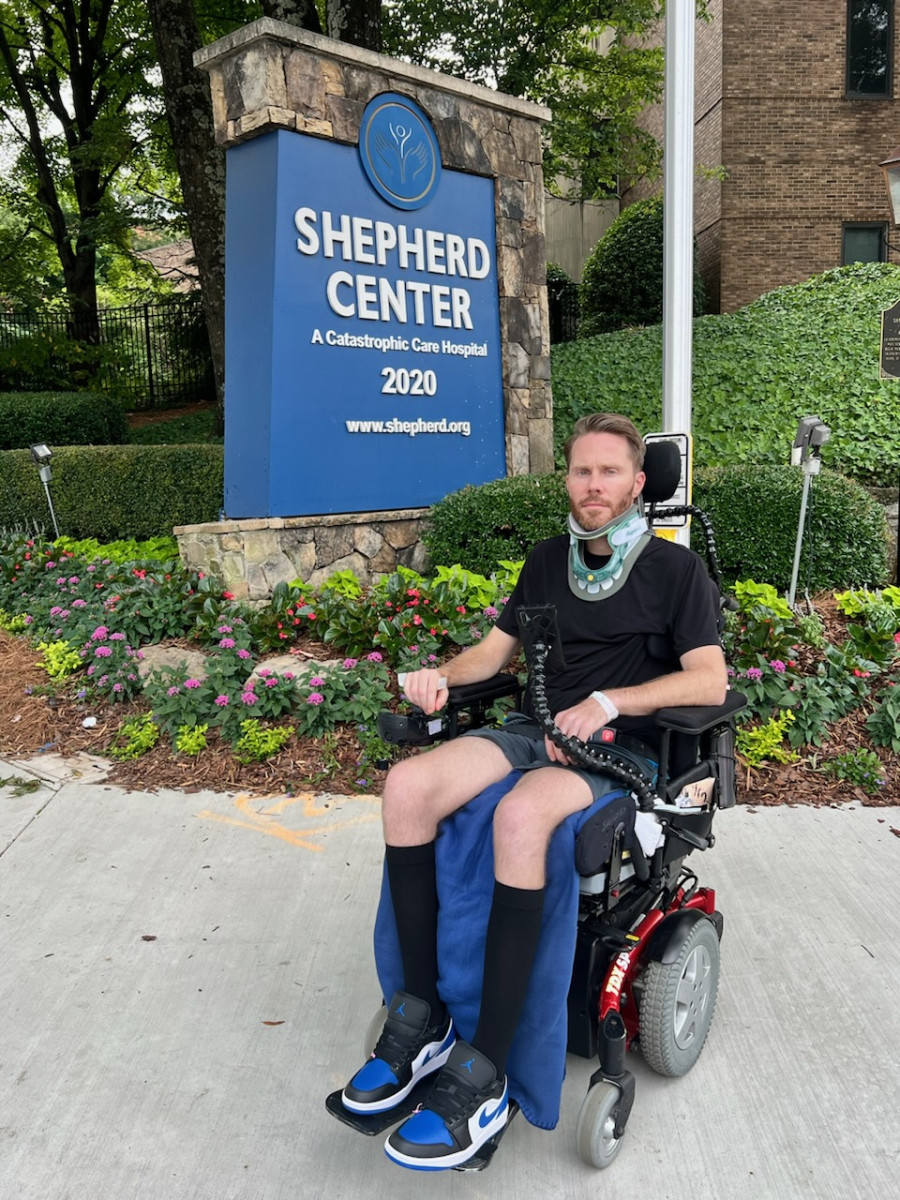
Upon Mike Hynes’ arrival at Shepherd Center, he remembers meeting Elliot Scott, his charge nurse, as well as the other nurses on his floor.
“They were just super friendly and very smiley,” he remembers. “Laughter was such a good medicine with them, just to distract from my world being turned upside down. But their professionalism and customer service was just as good as their personalities.”
Mike was living in Virginia and working as a Federal Bureau of Investigation (FBI) agent in 2024 when he was assaulted, resulting in a spinal cord injury (SCI). He was in the intensive care unit at the University of Virginia Health University Medical Center for a month before transferring to Shepherd Center.
During his inpatient therapy, Mike’s girlfriend and sister took turns staying in family housing to support him. After inpatient therapy, Mike stayed for a month of outpatient therapy in the Spinal Cord Injury Day Program, which he said helped prepare him for his transition home.
“Not only was it nice to have that extra therapy, but [to stay in] housing, just to kind of transition to being on your own a little more, having a little kitchen to use ... it's a nice transition period,” he says.
Mike also went on several recreation therapy outings, including a trip to an Atlanta Braves game and to the Atlanta FBI office, where he practiced navigating the building using his wheelchair. He also fondly remembers Tuesday night family dinners as a time to meet with other patients and their families.
After Day Program, Mike returned to Virginia, but his transition has not been without its challenges. Unfortunately, Mike couldn’t return to his job as an FBI field agent, and the agency didn’t have an available office position compatible with his qualifications and pay grade. He’s also had to navigate a divorce.
But his friends and former FBI colleagues have continued to support him, coming by for visits or going out for dinner or a movie. Mike has also continued physical and occupational therapy, working to increase his strength and independence.
“It's been a rough year or two, but I think I'm out of the worst part,” he says. “[My goals for the next year] are maybe finding another job, and continuing to build strength in therapy, and to continue to become more independent.”
Written by Erin Kenney
With five decades of experience, Shepherd Center provides world-class clinical care, research, and family support for people experiencing the most complex conditions, including spinal cord and brain injuries, multi-trauma, traumatic amputations, stroke, multiple sclerosis, and pain. An elite center ranked by U.S. News as one of the nation’s top hospitals for rehabilitation, Shepherd Center is also recognized as both Spinal Cord Injury and Traumatic Brain Injury Model Systems. Shepherd Center treats thousands of patients annually with unmatched expertise and unwavering compassion to help them begin again.