


Wife, Caregiver, Drill Sergeant, Teammate
Heather Millican shares a caregiver’s perspective on her early days at Shepherd Center with her husband, Jeff.
Heather and Jeff Millican have just returned to Jeff’s room after his physical therapy session on the treadmill.
“It’s fascinating,” Heather says. “They were having him do circus tricks, it seemed like, but he did a great job.” Jeff’s room is “their” room. While their kids and Jeff’s parents have stayed on and off at the Arthur M. Blank Family Residences down the street, Heather has opted to stay in the room with Jeff, fashioning a makeshift mattress out of pillows and a fitted sheet (her advice on mattress options later).
The Millicans arrived at Shepherd Center just a couple of weeks earlier. On Sept.14, Jeff sustained a traumatic brain injury (TBI) along with broken bones and multiple internal injuries when he was hit by a car while helping with a crash on the interstate. After a month at Gulf Coast Medical Center in Fort Myers, Florida, he transferred to Shepherd’s Comprehensive Rehabilitation Unit, where he has been participating in physical, occupational, and speech therapy, with Heather by his side.
“I love how involved I can be,” Heather says. “I mean, I'm here. I love that I can spend the night. That was not the case in the ICU (in Florida) after the first three days. And that was really hard on both of us, because we've been together since I was 18. Literally, we've grown up together, and so that was really difficult. So, it's been nice to be able to be here, kind of in the rhythm of everything.”
It's a new rhythm, of course, and while they’re fully focused on therapy, both Heather and Jeff are eager to get back to their “normal.” Heather, a teacher and librarian, and Jeff, a fire battalion chief, live in Bradenton, Florida. They have two boys, ages 20 and 24, and Heather says, with both boys now out of the house, she and Jeff are “empty nesting pros.” When not working, they have been traveling, going to concerts, and enjoying time outdoors together.
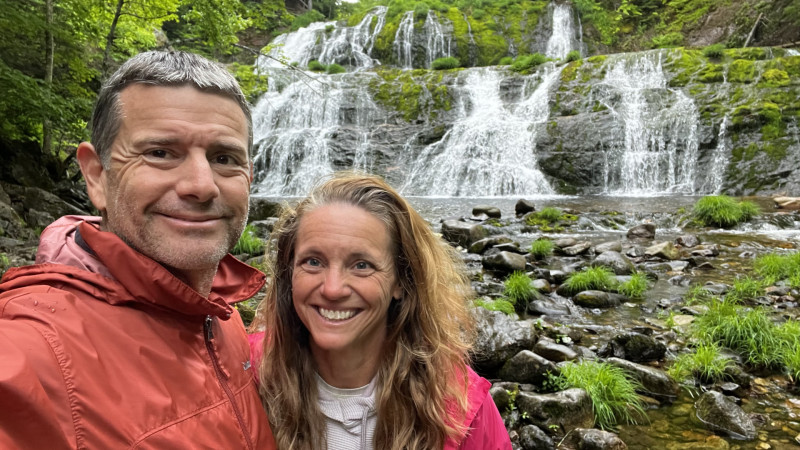
“We like adventures. We like traveling, kayaking, hiking, paddleboarding, biking, college football, we don't sit still very well,” she explains.
She says that after Jeff’s injury, getting to Shepherd marked a milestone for them.
“One of the hardest things, I think, was watching Jeff recover in the other hospital. They 100% saved his life, and they did a phenomenal job. But as he was recovering, wanting rehab, wanting more to happen for him, neurologically, physically — and they're not a rehab hospital, which I totally understood,” Heather explains. “We kept saying, ‘Okay, here's a checklist of things we need to do. We need to get off this. We need to get off this. We need to do this so we can move to Shepherd. And so getting to Atlanta became our mantra.… It was a big milestone in his recovery because we knew he was stable enough. We knew we were ready for it.”
And she was thrilled when things began to happen soon after they arrived.
“Once we got here, we were in therapy all day and all the things, and it's so tailored to what Jeff wants to do and what we used to do. It's so heartwarming … you know, we keep talking about our normal. We just want our normal back. And it will never be the same because WE won't be exactly the same. But to know that they want that for us, too. They want him to ride his bike, and go kayaking, and go paddleboarding — and they’re making exercises specifically for that is amazing.”
Shepherd Center encourages caregivers to be involved in their loved ones’ care and to learn as much as possible during their recovery. Heather is an essential member of Jeff’s care team, and she wouldn’t have it any other way.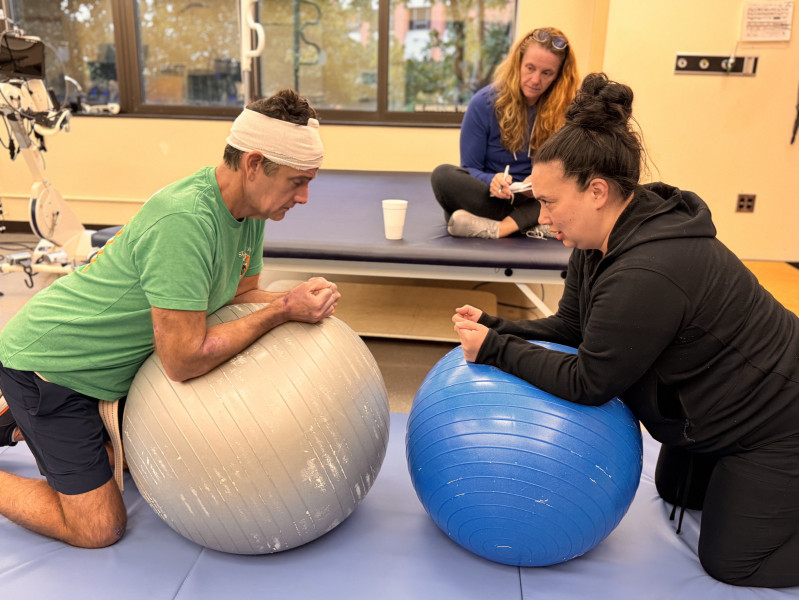
“I go to the therapies, I get the homework or tips or tricks and things to work on for now and in the future, even keeping a running list of things we're going to need for the house for exercises and stuff like that. Because we're a team in this, you know, if we're going to get better every day, we've got to both be working for it.”
She also says joining Jeff for therapy sessions, taking notes, and soaking in the information has felt empowering.
“I think that's been my biggest outlet because it allows me to be very active during the day. Do you know what I mean? There's not a lot of languishing.”
And she gets to see Jeff’s progress.
“I'm proud of him because he's doing things that would not be in his comfort zone and doing it willingly,” Heather says. “You know, asking for help if he needs it, waiting a second to try to understand something, or doing something that seems like it should be easy, but it's a tool.”
‘Get Better Every Day’
Heather probably wouldn’t call herself a “caregiver” — maybe a teammate or, she jokes, a “drill sergeant.”
But shifting roles has been just one part of the rehabilitation journey, layered with uncertainty, impatience, medical milestones and setbacks, overwhelm, gratitude, and hope.
“I am not responsible for many things, apparently, in our lives, besides working,” she laughs. “He does a lot of our bills and our travel plans. So, I had to learn.”
Part of the learning process involved canceling plans the couple had for concerts, sporting events, and travel in the near future, plus paying bills, navigating insurance, and making sense of reports on Jeff’s medical condition.
And dealing with uncertainty.
“Just the unknown,” she says. “We both want our regular life back, and it's going to take time. What does that look like — him returning to work when trying to fit in the therapies, and me going back to work at some point?
And it's been hard, but our mantra is ‘get better every day.’ So we're getting better every day, and we have each other, and we're blessed beyond measure for that.”
She’s grateful for the support of family and friends at every stage of the journey and is glad their kids and Jeff’s parents can stay nearby in family housing, helping with logistics and just being there to spend time as a family.
Accepting that support has been another transition. As a firefighter and a teacher, Jeff and Heather are used to being the helpers. “We're not used to being the center of attention. We're the givers, we're the helpers. So that role reversal kind of feels weird,” she explains.
With all the support she and Jeff have received, Heather shares another outlet that she has found helpful.
“This may sound silly, but … writing thank-you notes. … The fire community has been astounding for us. [Jeff’s] union has always been a brotherhood, but they just swooped in and, when I couldn't stand, made sure we were going to be fine. … And then my school community and our friends. So just being able to write, it’s almost like journaling, so that's been a really big outlet for me.”
She also attended a peer support group for family members of people who have sustained brain injuries. “Been There, Done That” is led by Kim Ross, Family Member/Caregiver Peer Support Lead Liaison, whose son sustained a TBI several years ago.
“I really did find that powerful,” Heather reflects. “My husband's trajectory is so positive, and both of us have talked about perspective, right? Like he knows he probably shouldn't have survived. The reality is, most people getting hit by a car going fifty-plus miles an hour wouldn't. And so, taking that perspective and turning it into your power, and [recognizing] that we are further ahead of where anybody would have expected him to be at this point.”
In a couple of weeks, Jeff will graduate from CRU and continue therapy at Shepherd Pathways, where he and Heather will share an apartment. Heather is especially excited that she’ll have a real bed again. While she and Jeff are still on his recovery journey, Heather has some advice to share based on their experience.
“I think getting connected — we have connected with some of the people on our floor and their families. It’s just that shared struggle, that shared goal. There's something to be said about that. So don't isolate yourself. You know, we all want the same goal. We want the best life possible moving forward. And so that has been inspiring.
“I also think counting on your team and talking to them, and [knowing that] it's okay to ask questions.”
On the lighter side, Heather adds,
“Download Uber Eats…
“Eat the banana pudding in the cafeteria…"
And if you’re staying in the hospital room, “probably buy an air mattress.”
Written by Ruth Underwood
With five decades of experience, Shepherd Center provides world-class clinical care, research, and family support for people experiencing the most complex conditions, including spinal cord and brain injuries, multi-trauma, traumatic amputations, stroke, multiple sclerosis, and pain. An elite center ranked by U.S. News as one of the nation’s top hospitals for rehabilitation, Shepherd Center is also recognized as both Spinal Cord Injury and Traumatic Brain Injury Model Systems. Shepherd Center treats thousands of patients annually with unmatched expertise and unwavering compassion to help them begin again.