


Why Does Shepherd Center Take Halloween So Seriously?
Hair-Raising Traditions Explained
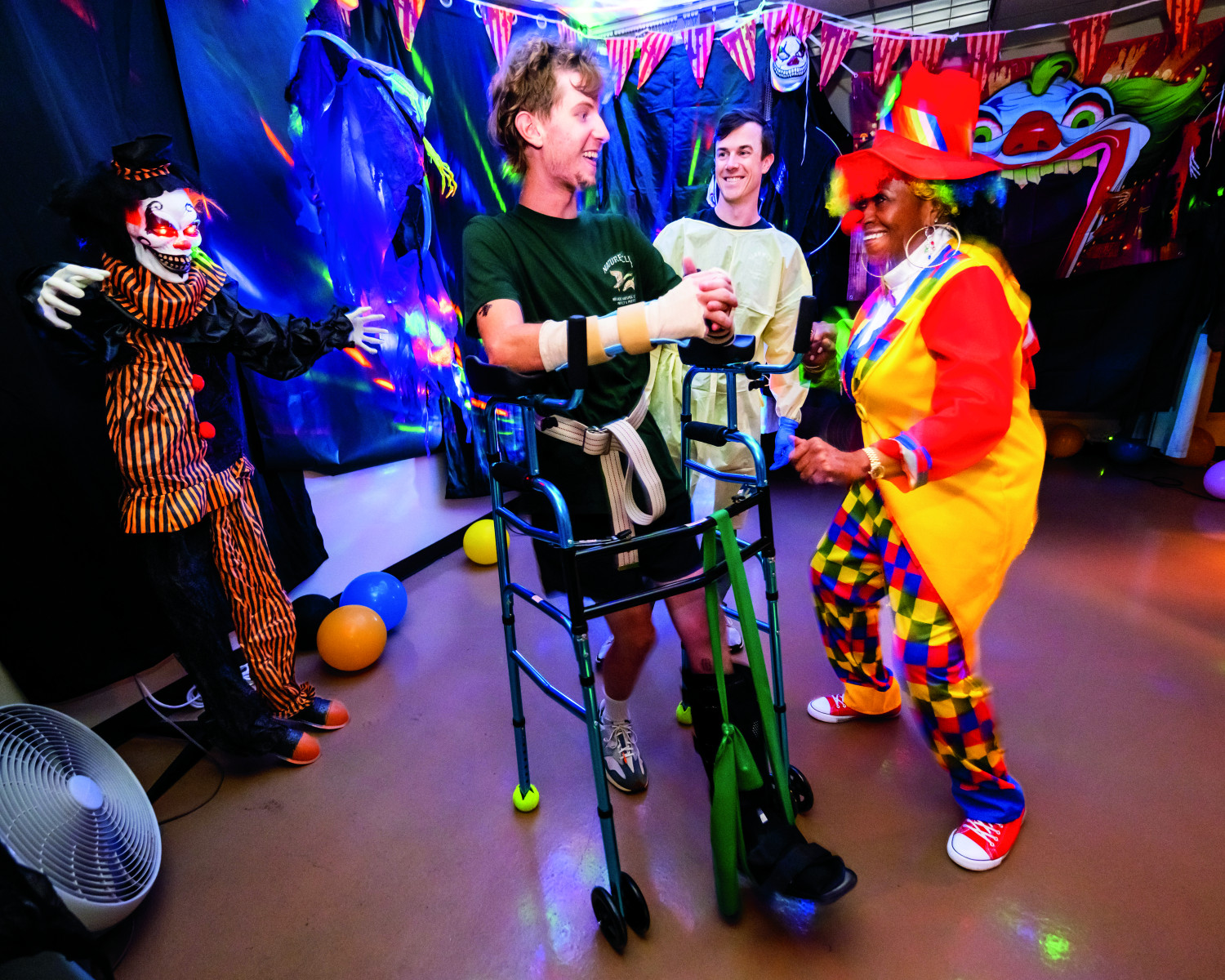
Tina Turner was dancing so fiercely in the Disco of the Damned that LL Cool J had to caution her to save some energy for all the trick-or-treaters to come. Just down the hall, therapists helped people using walkers and wheelchairs move to the irresistible beat of the “Cupid Shuffle”— to the right, to the right, to the left, to the left. In a dramatically lit nook, Alana Shepherd, co-founder of Shepherd Center, donned a shawl to read Tarot cards and palms.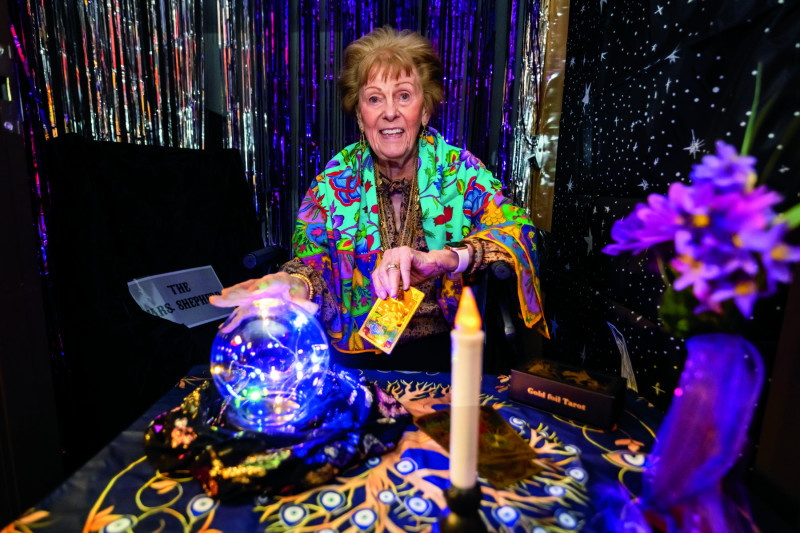
Ben Thrower, M.D., medical director of the Eula C. and Andrew C. Carlos Multiple Sclerosis Institute, started this wildly popular Halloween tradition at Shepherd Center 20 years ago. Dressed as a demented ringleader, Dr. Thrower presides over a gauntlet of costumed staff members who have decorated every square inch of the MS Institute’s lobby, hallway, and infusion room.
“We begin planning in January for the upcoming year,” says Rebecca Duguid (aka Medusa), PT, DPT, program manager of the MS Institute. This annual Halloween party is a perfect fit for Shepherd’s culture, she says. “It’s fun, it’s focused on our patients, and it’s a team effort.”
But, the MS Haunted House isn’t the only spooky space at Shepherd Center.
“Usually, we have competing haunted houses, but they’re very different,” says Cathi Dugger, PT, who’s helped orchestrate the Adolescent Haunted House for 20 years. “It’s a good
contrast, and we usually try to do it on different days.”
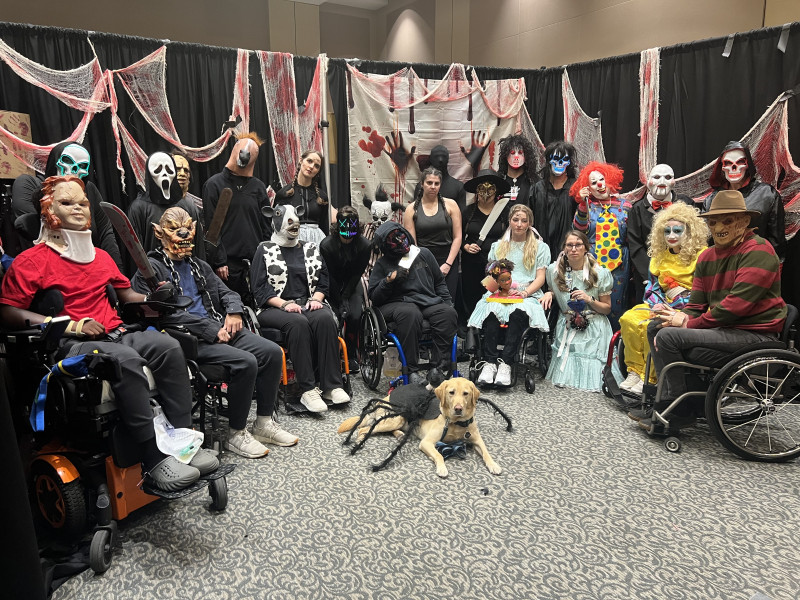 The Adolescent Haunted House started as a way to incorporate some Halloween fun into therapy, playing games like “Cheesy Face,” where patients would throw cheese puffs at someone with a face full of shaving cream to see how many could stick.
Now, with support from Andee's Army, the event is more like a typical haunted house experience — a one-way path through a series of creepy scenes, hanging cobwebs, and, of course, jump scares from adolescent patients and staff.
The haunted house gives patients the opportunity to practice their dexterity and motor skills by helping make props and set up.
The event also helps the adolescent program form connections within the Atlanta community — they’ve partnered with Atlanta Sound and Lighting for professional-grade light and sound effects, and they once had the makeup artists from Netherworld provide spooky transformations for the participating patients.
Another tradition is the annual Halloween Costume Contest. Held in the cafeteria, tables and chairs are pushed aside to create a runway for participants — which include staff and patients in a variety of categories, like best group costume, best individual costume, and best patient/staff group costume.
Don’t let all the holiday fun be misleading — haunted houses and costume contests aren’t a way to blow off work or therapy sessions. For patients, these fun traditions can offer a break in the routine while still incorporating therapy goals. For staff, the day can be a way to decompress from the challenges they may face in their roles, all while building camaraderie within their teams and with other departments across the hospital.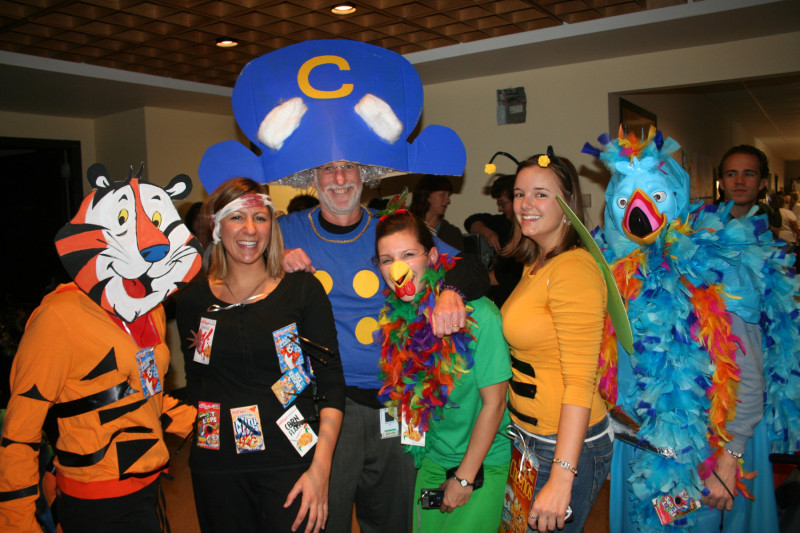
“I love it when the other departments come [to the Adolescent Haunted House], because they get so scared,” Dugger says with a laugh. “It brings the whole hospital back to that family feeling that I really love.”
Written By Teresa Weaver and Erin Kenney. Some passages in this story came from Shepherd’s 50th anniversary book, "Mission Moments: 50 Years of Transforming Lives."
With five decades of experience, Shepherd Center provides world-class clinical care, research, and family support for people experiencing the most complex conditions, including spinal cord and brain injuries, multi-trauma, traumatic amputations, stroke, multiple sclerosis, and pain. An elite center ranked by U.S. News as one of the nation’s top hospitals for rehabilitation, Shepherd Center is also recognized as both Spinal Cord Injury and Traumatic Brain Injury Model Systems. Shepherd Center treats thousands of patients annually with unmatched expertise and unwavering compassion to help them begin again.