


Straight Talk on Spinal Cord Injury
Whether building community, becoming advocates, or just being respectful, we can all benefit from raising our awareness about spinal cord injury. Here’s some food for thought from Shepherd Center alums and their family members on what they wish more people understood about spinal cord injury (SCI).
“SCI impacts our bodies, not our minds.” — Chris Port
“If you say that something is wheelchair accessible, please make sure that any and all wheelchairs are able to fit or be allowed to experience the same thing. Not every wheelchair is the same.” — Jordynn Woods
A misconception: “Thinking that ADA accessible is the same as accessible for my paralyzed husband.” — Ashley Buttersworth
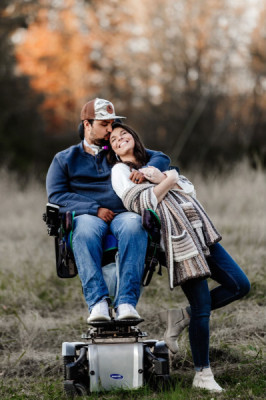
“Handicap parking lines are for wheelchairs to exit, not for others to park on!” — Star Wolf
“Not all paralyzed people don’t have sensation, and everyone is always surprised that I have sensation. Some people say, well, you can’t feel it, but I can, and people think I am lying.” — Dakota Walls
“Never question whether I'm telling the truth or not, especially when it comes to my injury, because I know about my body and what I need to improve, so if I'm advocating for myself, don't assume that I'm lying to get out of something.” — Jordynn Woods
“After my injury, daily tasks became a challenge, requiring the development of new skills…It allowed a shift in focus from what my body couldn’t do, to new possibilities and routines!” — Libby Presnell
“I wish people knew how time-consuming care is. Often, family members and others just aren't aware of how long it takes to shower, bowel program, and get in bed. — Dakota Walls
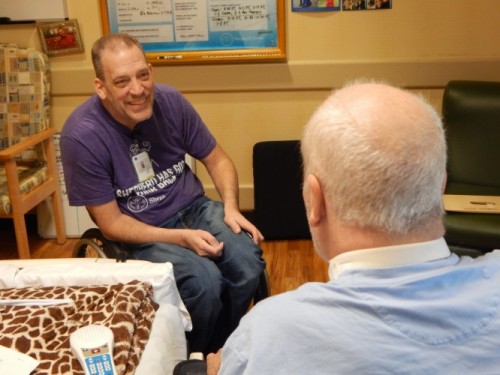 “I think it’s very important for people with new injuries to surround themselves with like-minded people with similar injuries to show them the way. Today, I’m the old guy helping people transition from the awkward rehab-to-home period that we all go through, and that’s because of the people before me.” — Clint Cook
“I love answering questions about what happened, but please don't be abrasive.” — Jordynn Woods
“A way for people to be helpful is to ask before doing, because sometimes, a wheelchair user gives themselves a challenge to see if they can do it to gain independence. Also, people should ask because they could do something wrong or make the situation harder due to having to fix the mistake.” — A.K. Spangler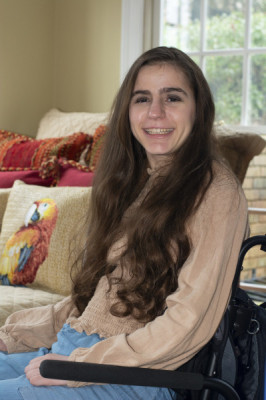
“If you are working with someone for a long time who is in a wheelchair, walks with assistance, etc., and you DON'T ask how it happened, it is weirder than asking.” — Chris Port
“For wheelchair etiquette, people need to be aware of all the attachments that are on a person’s chair to prevent accidental damage to the chair when driving or even sitting in the chair. People also need to keep a little distance, if possible, to avoid bumping the chair because it can risk damaging. If a person wants to stand close to the chair, be sure to have the wheelchair user turn the chair off or have the person standing be aware of the controller. This prevents any damage or harm to the chair and/or to the person if the chair accidentally gets bumped and hits a person.” — A.K. Spangler
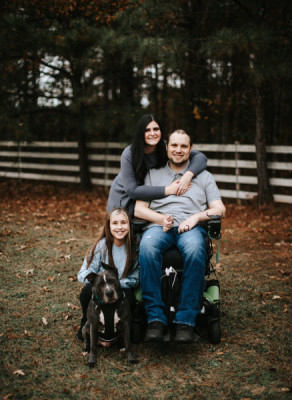
“I really dislike it when somebody I don’t know intentionally touches my chair over and over. For example, someone would put their feet on my chair because my wife was doing it for a few days. She can do it, but when someone else did, it was definitely weird.” — Dakota Walls
“There are two different types of SCI - complete and incomplete.” — Maria Stewart
“Despite the fact that people could be on the same level, everyone's body is different, and some people recover faster than others.” — Jordynn Woods

“Jump in the game with us. I meet too many people who give up skiing and other sports because of "bad knees". Take up an adaptive sport. You may find you have even more fun.” — Chris Port
“Life doesn’t stop after injury.” — Maria Stewart
“I want people to see wheelchair users as normal people who just need a little bit of help. I do not want people to be nervous to talk with us just because we are in a different state than they are. Wheelchair users have had to learn how to adapt to things, so we can be as normal as possible.” — A.K. Spangler
“If we fall and laugh, laugh with us, help us up, and let's keep going!” — Chris Port
With five decades of experience, Shepherd Center provides world-class clinical care, research, and family support for people experiencing the most complex conditions, including spinal cord and brain injuries, multi-trauma, traumatic amputations, stroke, multiple sclerosis, and pain. An elite center ranked by U.S. News as one of the nation’s top hospitals for rehabilitation, Shepherd Center is also recognized as both Spinal Cord Injury and Traumatic Brain Injury Model Systems. Shepherd Center treats thousands of patients annually with unmatched expertise and unwavering compassion to help them begin again.