


Spinal Cord Injury Awareness Month: Hope Through Research
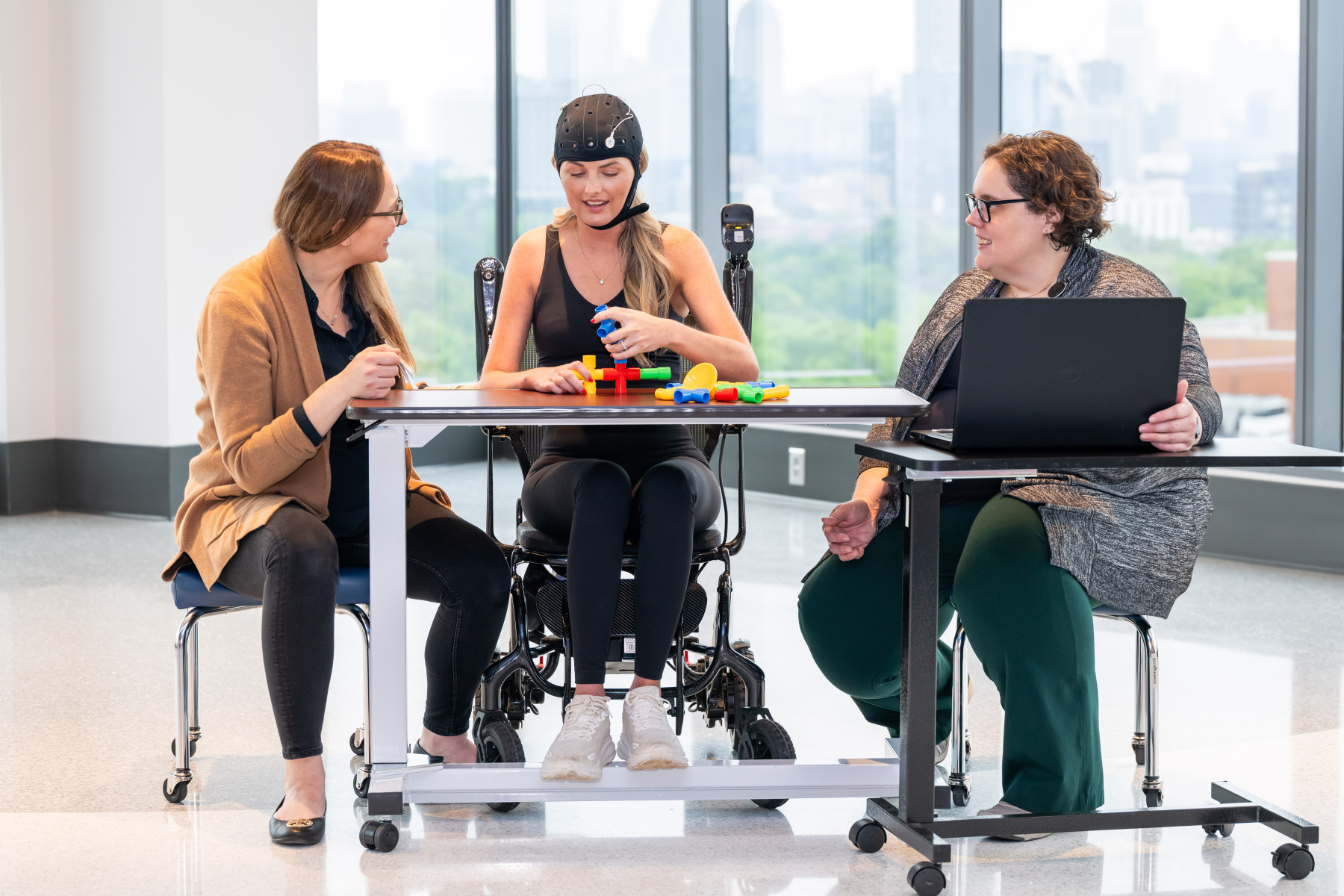
At Shepherd Center, the work in the Hulse Spinal Cord Injury Research Laboratory is driven by a simple yet ambitious goal: to develop innovative interventions that promote functional restoration and improve spasticity following spinal cord injury.
Led by Edelle Field-Fote, PT, Ph.D., FAPTA, FASIA, Director of SCI Research, the laboratory focuses on translating scientific discovery into meaningful outcomes for people living with SCI. Internationally recognized as a leader in SCI rehabilitation research, Dr. Field-Fote has helped pioneer investigations into stimulation techniques aimed at improving function and enhancing recovery.
As Dr. Field-Fote puts it: “Spinal cord injury research is the driving force behind advances in rehabilitation, translating what we know about the nervous system into greater function, independence, and quality of life.”
Research Designed for Real Life
Consistent with evidence demonstrating that practice and task-specific training remain among the most effective strategies for improving function, the Hulse SCI Research Laboratory focuses on interventions that are:
Clinically accessible
Low cost
Portable
Easy to implement in real-world rehabilitation settings
This approach reflects Shepherd Center's commitment to ensuring that advances in research can ultimately be integrated into everyday clinical care.
For example, we know that after damage to the spinal cord or brain, the nervous system signals that are transmitted from the brain to the spinal cord are often weak. Training is a powerful way to make these signals stronger, and we can further amplify the strength of these signals using brain stimulation or spinal stimulation in conjunction with training.
Exploring the Potential of Transcutaneous Spinal Stimulation
The laboratory recently completed participant recruitment for two federally funded studies led by Dr. Field-Fote that examine the use of transcutaneous spinal stimulation (TSS).
The first study, funded through the SCI Model System Program by the National Institute on Disability, Independent Living, and Rehabilitation Research, investigated whether combining TSS with lower-extremity motor skill training could lead to greater improvements in walking function, balance, and lower-extremity strength than motor skill training alone.
The second study, funded by the National Institutes of Health (NIH), explored how different stimulation patterns and frequencies influence the effectiveness of TSS for reducing lower-extremity spasticity.
Both studies have completed recruitment and are currently in the data processing and analysis phase.
“We have already begun incorporating TSS into our clinical programs at Shepherd, and the results of these studies will help us fine-tune our approaches so that individuals receiving stimulation experience the greatest possible benefit” say Dr. Anastasia Zarkou and Dr. Jennifer Iddings, two research scientists working on these projects.
The Next Frontier: Improving Arm and Hand Function
Building on this momentum, the Hulse SCI Research Laboratory is launching two new pilot studies to improve arm and hand function following cervical spinal cord injury.
Supported by the Georgia Tech–Shepherd Center Research Collaboration, these projects will investigate the use of noninvasive brain stimulation to enhance motor recovery.
Predicting Who Benefits Most
Led by Anastasia Zarkou, PT, MS, Ph.D., one study will focus on developing predictive models that identify which individuals are most likely to benefit from noninvasive brain stimulation.
Researchers hope this work will help create more personalized rehabilitation approaches by better understanding the characteristics associated with successful outcomes.
“As rehabilitation technologies continue to advance, it is essential that we understand who benefits most from specific interventions. This study is an important step toward developing personalized rehabilitation approaches that match the right treatment to the right individual at the right time, ultimately improving outcomes and quality of life for people living with spinal cord injury,” says Dr. Zarkou.
Optimizing Motor Learning
A complementary study led by Jennifer Iddings, Ph.D., will investigate which forms of noninvasive brain stimulation produce the greatest improvements in motor learning and hand function for people living with cervical SCI.
“Restoration of function after spinal cord injury depends not only on rehabilitation training, but also on the brain's ability to learn new movement patterns. Promising early evidence suggests that noninvasive brain stimulation may boost these learning processes. Yet with multiple types of noninvasive stimulation available, it remains unclear which method is most effective. This pilot study lays the groundwork for answering that important question,” says Dr. Iddings.
Recruitment for both studies is anticipated to begin in late 2026.
Looking Toward the Future
While research is often measured in data points, study outcomes, and scientific discoveries, its true impact is measured in people. Every project undertaken in the Hulse SCI Research Laboratory is guided by the belief that individuals living with spinal cord injury deserve innovative solutions that improve independence, function, and quality of life.
During Spinal Cord Injury Awareness Month, we celebrate not only the progress already made but also the possibilities that lie ahead.
Because every breakthrough starts with a question, every study begins with hope, and every advancement brings us one step closer to helping people achieve more after spinal cord injury.
As Dr. Field-Fote puts it: “Hope and science together fuel innovation, expanding what is possible through rehabilitation. As rehabilitation scientists, we turn neuroscience into new possibilities for recovery, working toward a future where people with spinal cord injury can achieve greater function, independence, and quality of life.”
Learn more about spinal cord injury research at Shepherd Center and the work of the Hulse SCI Research Laboratory.
With five decades of experience, Shepherd Center provides world-class clinical care, research, and family support for people experiencing the most complex conditions, including spinal cord and brain injuries, multi-trauma, traumatic amputations, stroke, multiple sclerosis, and pain. An elite center ranked by U.S. News as one of the nation’s top hospitals for rehabilitation, Shepherd Center is also recognized as both Spinal Cord Injury and Traumatic Brain Injury Model Systems. Shepherd Center treats thousands of patients annually with unmatched expertise and unwavering compassion to help them begin again.