


Rehabilitation Rewired: The Hulse Spinal Cord Injury Lab
In the Hulse Spinal Cord Injury Lab, Electrical Stimulation Is Making Waves
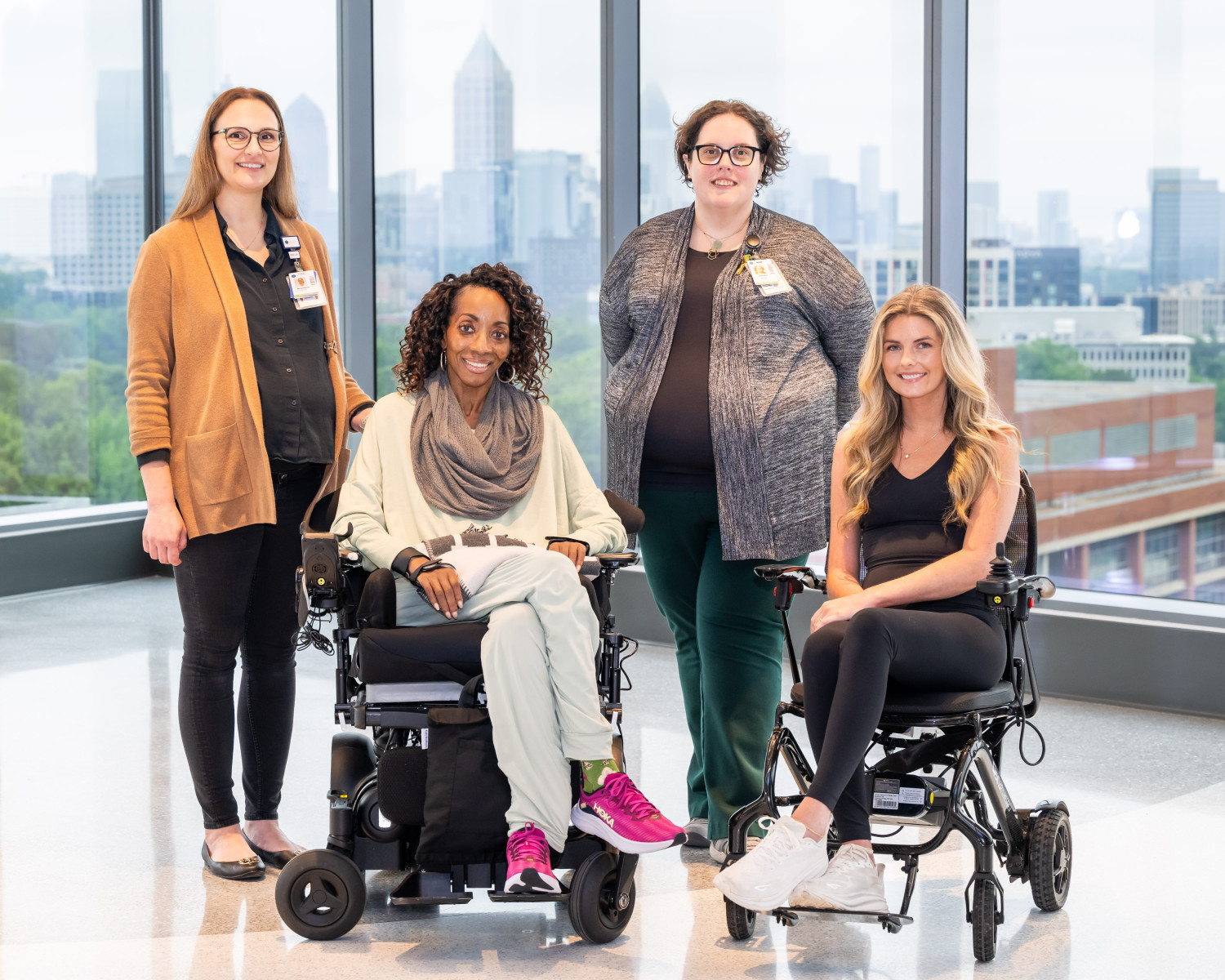
Robbyn Washington sustained a C4-level spinal cord injury (SCI) during a fall in 2022. After surgery at Memorial Health University Medical Center in Savannah, Georgia, doctors thought her injury was complete, meaning she wouldn’t regain function below her injury. After two months of inpatient therapy at Shepherd Center, she had no movement.
“When they started talking about discharge, I got really frantic, like, ‘What do I do now? I'm not moving,” she remembers. “It was kind of a frantic time, but we tried to absorb everything they told us and taught us.”
Before discharge from Shepherd, she began to feel sensation in her lower back, prompting doctors to change her diagnosis from complete to incomplete SCI and opening a new world of possibilities for her recovery.
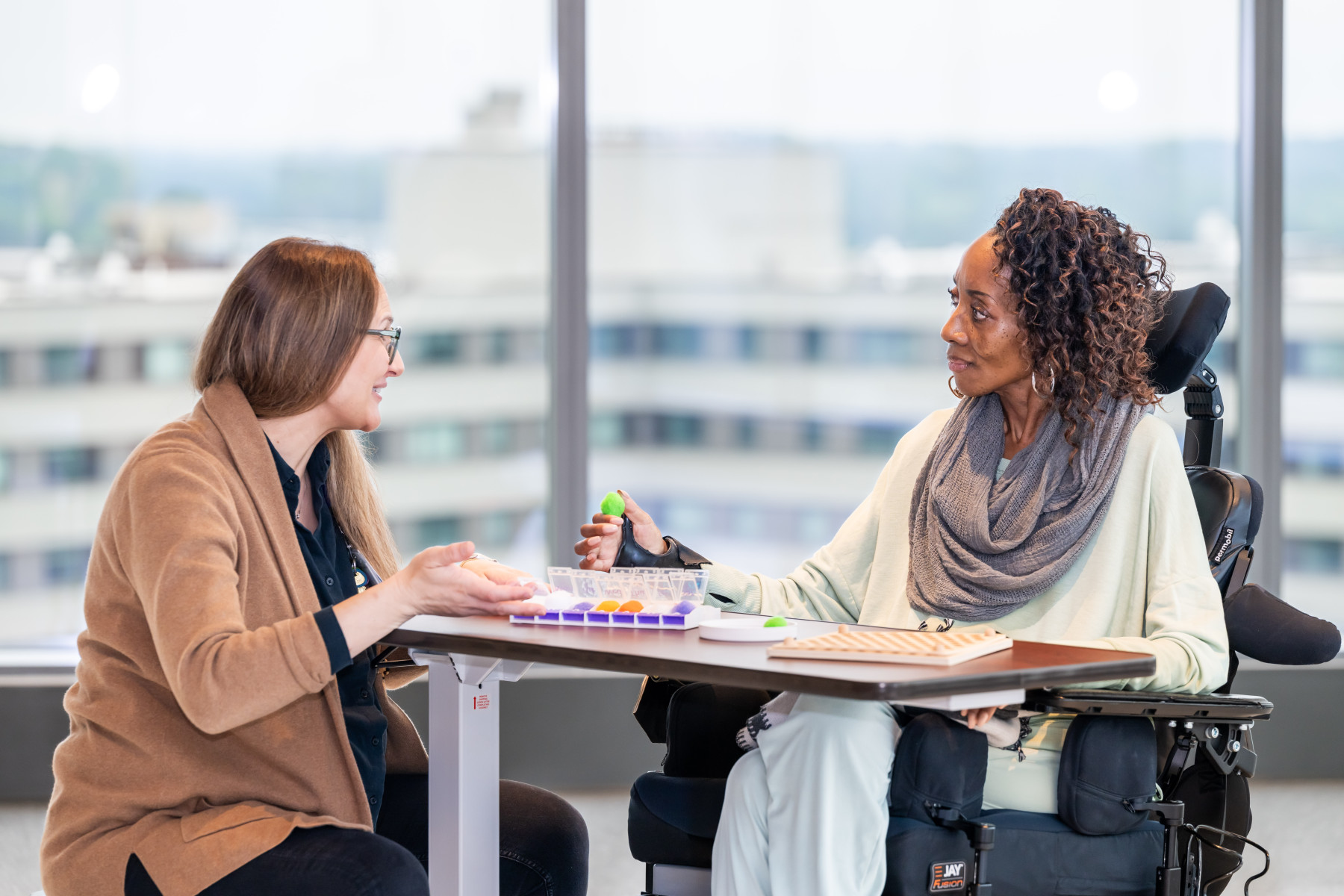 Once she was back home, she and her husband continued her physical therapy program while they worked through delays in finding a home care agency. They referred to handouts and flyers her therapists gave her before she left Shepherd. Over time, they started noticing progress. Robbyn had returned to Shepherd for the Spinal Cord Injury Day Program when she heard about a research opportunity in the Hulse Spinal Cord Injury Research Lab. The study aimed to reduce muscle spasticity through transcutaneous spinal stimulation (TSS).
Even though the study wasn’t aimed at improving motor function, after participating, Robbyn noticed changes in her ability to move. She heard about a study led by Shepherd’s SCI Research team, where TSS was used over the neck area to boost the effects of training with the goal of improving hand function. She brought a stimulator she’d been using at home to the SCI research team, where lab director Edelle Field-Fote, PT, Ph.D., FAPTA, FASIA, and the other research scientists adjusted the settings so the device could be used for TSS. Now, she uses the stimulator at home as part of her routine physical therapy practice.
“She’s really been a champion of translating the work that we're doing, not only from the lab to her home, but also from the spasticity study that she participated in to her home program for motor function,” Dr. Field-Fote says.
Robbyn says TSS has been a game-changer. It’s helped her build strength in several muscle groups, and it’s especially exciting because even her therapists who don’t know she’s using TSS are seeing the changes.
“[Sometimes my therapists] will go, ‘Hey, we’re noticing a little more strength in this arm, what’s going on?’ and we laugh,” she says. “It’s great because they’re noticing the effects of the TSS and the exercise that goes along with it.’”
Electrical stimulation is nothing new, but the Hulse Lab has pioneered its application for TSS. The SCI research team is continuously finding new ways to use it to help people with spinal cord injuries, from reducing spasticity to improving motor function in the hands, to magnifying the effects of locomotor training for improved walking function.
Turning on the Stove: TSS & Neuromodulation
Dr. Field-Fote is an expert in spinal cord injuries. Her career weaves throughout all kinds of research in that field — from her Ph.D. thesis on turtles with complete SCIs to her work at the Miami Project to Cure Paralysis, a world-renowned research center. At the Miami Project, she worked alongside both basic and applied scientists — basic meaning foundational scientific research, like doing experiments with animal models or cells in a dish. She frequently reviews grant proposals and papers on the basic science of SCIs, and she’s received numerous distinctions for her work in the field.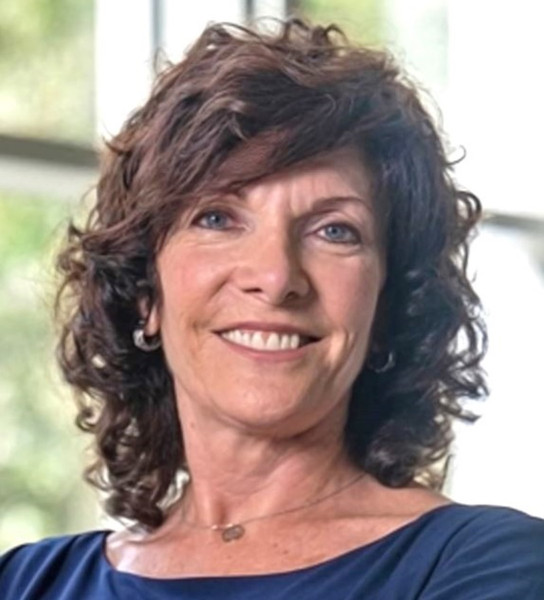
In short, she knows a lot about spinal cord injuries. And she says that right now, despite all the attention the media gives to high-tech approaches, rehabilitation is key to helping people with SCIs regain function after injury.
“The research evidence shows that right now rehabilitation is the best approach we have for improving function in people with spinal cord injury,” Dr. Field-Fote says. “And when I say rehabilitation, I mean practice and training. The focus of my lab has acknowledged that physical and occupational therapy are the best ways to promote neuroplasticity.”
That’s why, as director of the Hulse Lab, Dr. Field-Fote has focused research efforts on how tools like TSS and other forms of neuromodulation can improve physical and occupational therapy outcomes. By applying stimulation to the spinal cord or the brain, the SCI researchers in the lab make the nervous system more receptive to therapy.
“These tools change the nervous system, but you still have to tell the nervous system what you want it to change,” Dr. Field-Fote says. “Think of a stove that has four burners. If you turn the stove on, it will heat up, but there’s no usefulness to it until you put a pot on the stove with the soup. Stimulation provides the system with energy, but it’s the training that tells the nervous system what to do with that energy.”
In addition to improving hand and walking function when combined with training, TSS can also help reduce spasticity — another focus for the Hulse Lab. The lab’s scientists also determine best practices, such as where to place the electrodes and whether to use the stimulation in bursts or as a continuous pulse.
“If you think about a spinal cord that is damaged, the signals are still coming down from the brain, but information is not making it out to the muscles,” Dr. Field-Fote says. “It's like a hose that has holes in it, and you might not be able to do anything about the holes in the hose, but if you turn up the spigot, more of it's going to get to the end.”
‘Ready to Find a Breakthrough’
Of course, none of the lab’s research would be possible without help from research participants. For research scientists Anastasia Zarkou, PT, MS, Ph.D., and Jennifer Iddings, Ph.D., their groundbreaking work in noninvasive brain stimulation to improve hand function in people with SCIs finds its true purpose in patient interactions.
“We love working with participants. It’s probably our favorite part of the job,” Dr. Iddings says. “Research seems to attract a very specific type of person who wants to benefit the spinal cord injury community in some way. They’ll say, ‘It doesn’t matter if it helps me, as long as we get knowledge out of it.’”
Research participant Hannah Johnston is one example of someone embracing this philosophy. Hannah’s experience with research is intertwined with her recovery journey — she started a clinical drug trial while in the hospital following an accident with an 18-wheeler. She sustained a C3-C4 level SCI and was taken to the University of Mississippi Medical Center. Once her condition stabilized, she transferred to Shepherd Center for rehabilitation, where she continued the drug trial and later participated in other studies.
“I've been the research girl for quite some time — for the entire length of my spinal cord injury, I've been participating in research of some sort,” she says.
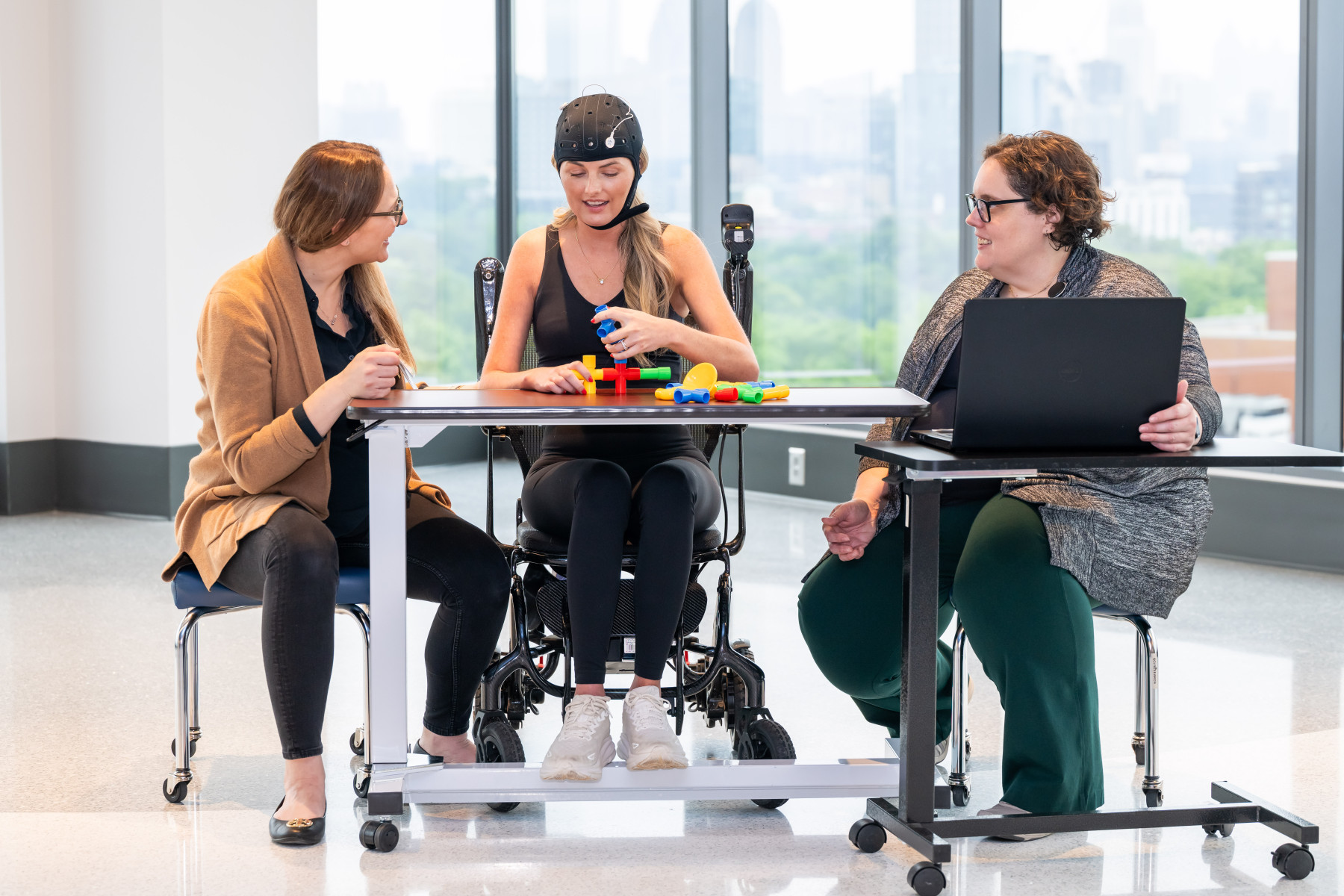 Hannah has many reasons for participating in research. For starters, she says Shepherd Center is her home away from home. After her inpatient therapy, she went straight into the Spinal Cord Injury Day Program and later returned for another round of Day Program and Beyond Therapy.
"You don’t look the same as you used to, or you don’t feel the same, and your body’s definitely not the same, but there’s no judgment,” she says. “You’re just loved and appreciated and respected at the same time. I can’t imagine being anywhere else and being able to receive the same treatment.”
While continuing outpatient therapy, Hannah got involved with the Hulse Lab’s spasticity study, funded by a research grant from the National Institutes of Health, and also with a motor skill training study funded by the SCI Model Systems grant. She says working with research staff members like Drs. Zarkou and Iddings makes participating in research all the better.
“They’re just so eager. You know, a lot of people go to work and do their job and do the bare minimum,” she says. “But you don’t get that here, and you definitely don’t get that with research. They’re happy to be here, but they’re also ready to find something to help somebody — to find a new breakthrough.”
Hannah did experience some breakthroughs because of the research. For the spasticity study, she wore sensors on her body that connected to a computer monitor, showing her which muscles she was activating. She says she could see where she was overcompensating and where she wasn’t fully activating certain muscle groups. As a result, she learned how to better isolate certain muscles. Hannah also says she continues to visit with Drs. Iddings and Zarkou when she’s at the hospital, jokingly adding that she and Dr. Zarkou “are like best friends.”
It’s not uncommon for research participants to feel this way — Drs. Iddings and Zarkou make it a point to build relationships with patients who might be interested in research starting when they’re inpatients.
“We never want someone to be interested in research and verbalize this to someone and not meet one of us,” Dr. Zarkou says. “Even if they aren’t eligible for one of our research projects, we are more than happy to guide them through resources and other opportunities that are out there for them.”
“[They’re] more than a participant to us. We are there for them,” Dr. Zarkou says. “We want them to feel comfortable reaching out to us because that’s what establishes this relationship.”
Building a Better Study
Scientists in the Hulse Lab rely on participants to complete their studies, and they also need participants’ feedback to create better clinical trials. Dr. Zarkou says she often returns to participants after a study to learn what went well and what could’ve gone better. She says a participant’s perspective is equally important when working on proposals for new studies. Some grant funding even requires including participant perspectives in proposals, something scientists in the Hulse Lab are proponents of.
“We might have the best idea in the world, right?” Dr. Zarkou says. “But I’m not the person who lives with spinal cord injury, so [we have] our participants come and say, ‘Yeah, that seems like a good idea, but what are you going to do about this?’” 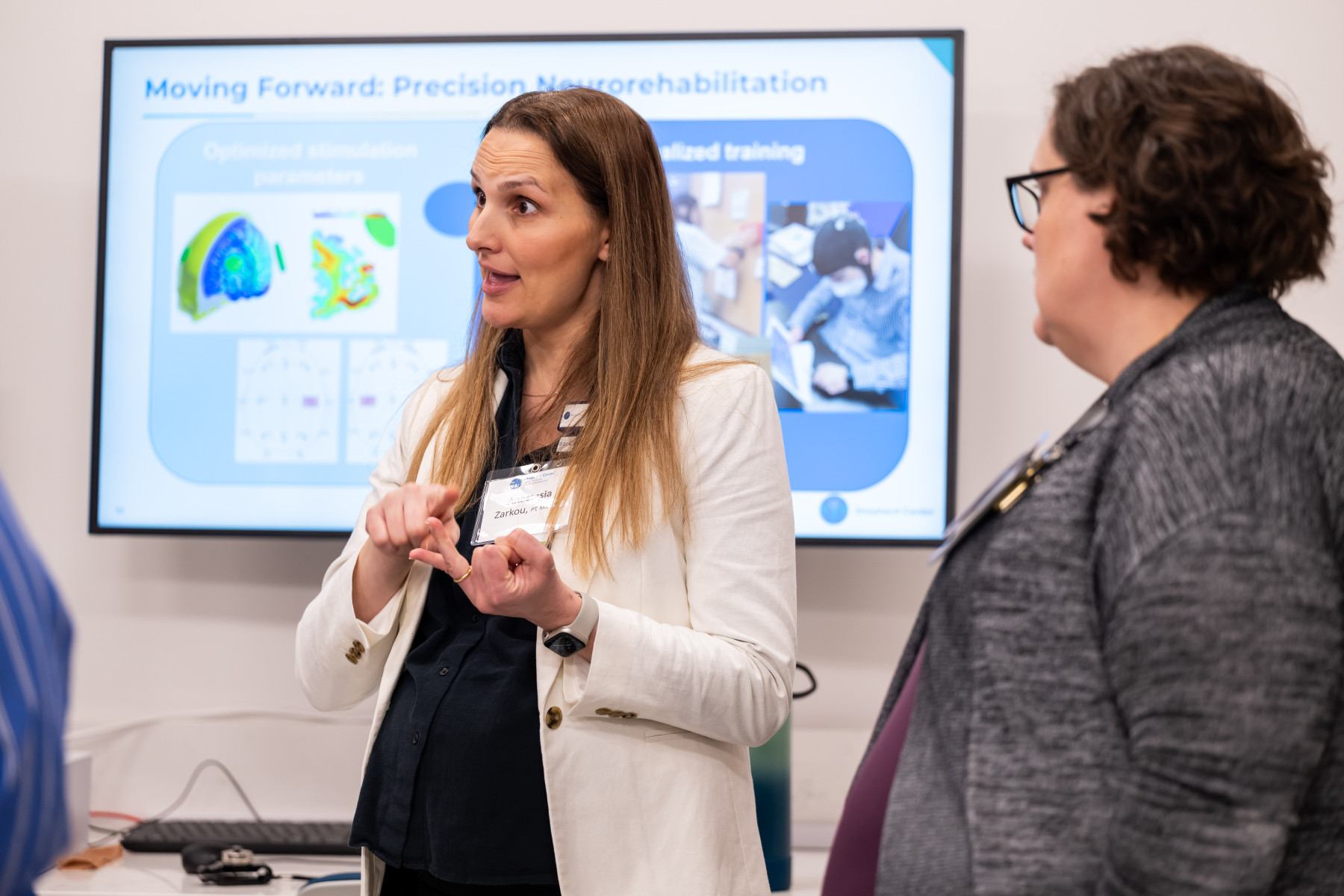
For example, participants might flag that a clinical trial requires too many research sessions or that each session is too long. Participants living outside Atlanta may have to fight traffic just to make it in time for a research session — a concern that has eased slightly with the expansion of housing at Shepherd, which can sometimes accommodate an out-of-town participant to stay in the Irene and George Woodruff Family Residence Center, Dr. Iddings says.
The lab prioritizes participants’ needs — from making the research process accessible to addressing problems for people living with SCIs.
Although the research team can never promise a beneficial outcome to participants — the purpose of research is to test out new ideas, after all — this is no turnoff for Robbyn and Hannah. They say even if they hadn’t personally benefited from the research, they’d do it all over to help someone else down the line.
“I already had my foot in the door with research when I got here, and of course, I was willing and ready to participate,” Hannah says. “But some people seem uninterested or hesitant, and I’ve been trying to encourage people to get involved or ask if there’s a good fit for them. It’s not going to hurt you in any way; it would only help you, or at least help somebody else in the future.”
Robbyn shares this sentiment, adding that she encouraged a friend who had a stroke to look into brain injury research at Shepherd.
“I am definitely an advocate of ‘You’ll never know until you try,’” she says. “Even if it doesn’t help me feel something, someone else could really benefit. They could get more data so they could see where they could help others.”
At Shepherd, there are ongoing clinical trials in the Hulse Lab and other research areas throughout the hospital, including brain injury, multiple sclerosis, and accessibility and user research. To learn more about opportunities or how to get involved, you can visit shepherd.org/research.
Written by Erin Kenney
With five decades of experience, Shepherd Center provides world-class clinical care, research, and family support for people experiencing the most complex conditions, including spinal cord and brain injuries, multi-trauma, traumatic amputations, stroke, multiple sclerosis, and pain. An elite center ranked by U.S. News as one of the nation’s top hospitals for rehabilitation, Shepherd Center is also recognized as both Spinal Cord Injury and Traumatic Brain Injury Model Systems. Shepherd Center treats thousands of patients annually with unmatched expertise and unwavering compassion to help them begin again.