


Safety Within Reach
This Fall Prevention Awareness Month, Shepherd Center provides patients with tools and strategies to prevent falls.
People who have sustained spinal cord or brain injuries or who are living with a neurological condition such as multiple sclerosis (MS) have a higher risk of falling. Fortunately, Shepherd Center staff members, including a dedicated Fall Prevention Team, are highly trained in preventing falls. Educating patients and their families on ways to reduce the risk of falls while in the hospital and when they return home is an essential part of rehabilitation.
Some things that may increase your risk for a fall include:
· Changes in vision
· Decreased strength or impaired sensation
· Lack of sleep
· Medication side effects
· Footwear that is not supportive or does not protect against slippery surfaces
· Using an assistive device improperly or choosing not to use an assistive device when needed
· Changes in blood pressure
· Changing positions quickly
· Fear of falling
But there are lots of tools available to reduce your risk.
“We have multiple strategies in place to reduce falls while in rehab and to help carry over fall prevention at home,” says Kallie Little, PT, DPT, a physical therapist in the inpatient Spinal Cord Injury Rehabilitation Program.
The interdisciplinary care team works with patients throughout inpatient rehabilitation to practice safe mobility, safe environment setup, cognitive strategies (including pausing before an action to think through the steps required to complete it), and proper assistive device use. Team members provide independent instruction to caregivers on how to best assist with mobility needs to help reduce the risk of falls at home. A home modifications education class for patients and caregivers includes recommendations specific to the patient’s residence.
Little says that patients and caregivers have the opportunity to do a trial run of their routines with an “in-center pass,” which allows them to practice their day- and nighttime routines with Shepherd staff nearby to offer guidance and support. Then, the care team can address any concerns that arise before discharge.
Shepherd’s Transition Support Program (TSP) provides an additional layer of care after discharge for patients who need it. Bridget Smith, CTRS, a life skills therapist with TSP, assists patients post-discharge as they adjust to being home.
“Part of my initial evaluation is a home evaluation. So I go into their homes, I assess all areas of the home for safety, accessibility, and often, if the therapists have made recommendations, I can make sure that they've followed through on those, or if not, maybe see if we can problem-solve it a different way,” Smith explains.
Smith looks for fall hazards and ways to mitigate them, guides former patients on positioning equipment properly, and works to ensure that the patient's equipment stays aligned with their changing needs.
Since it’s essential for people to continue to exercise after discharge to maintain or improve strength and balance, Smith guides them in finding the best areas to exercise at home.
“And then I can assess: ‘Should you do this alone, or wait until your caregiver is with you?’ And pick and choose which exercises they can do more independently.”
Smith can help her clients develop a “dos and don’ts list” of safe activities around the house. She also talks to them about what to do in the instance of a fall — including practicing floor transfers, discussing the use of cameras or fall alert systems, and reminding caregivers that it’s okay to call another family member, a neighbor, or even 911 for help.
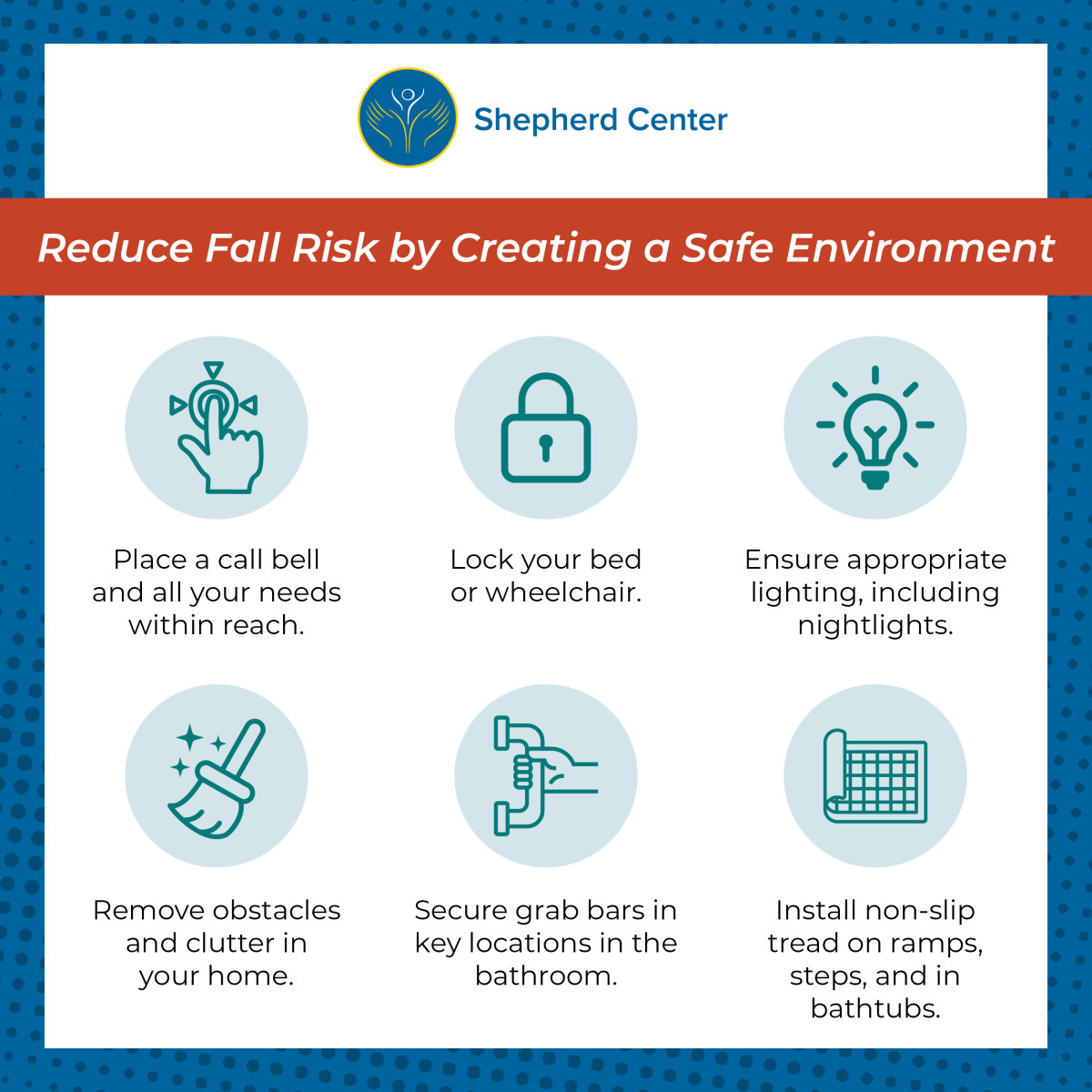
Here are some things you can do to reduce fall risk:
· Place a call bell and all your needs within reach
· Lock your bed or wheelchair
· Ensure appropriate lighting, including nightlights
· Remove obstacles and clutter in your home
· Secure grab bars in key locations in the bathroom
· Install non-slip tread on ramps, steps, and in bathtubs
· Wear supportive, non-slip footwear
· Know the side effects of your medications and talk with your doctor and pharmacist about potential side effects that make you feel dizzy.
· Limit alcohol use
· Stay up to date on maintenance for your wheelchair and other mobility aids
· Schedule an annual appointment for wheelchair adjustments to ensure your positioning accessories function properly and to reduce fall risk
· Wait for a caregiver to be present if you need help with mobility
· Sit up or get out of bed slowly, to reduce the risk of feeling lightheaded and off balance
· If you can stand, consider sitting during nighttime visits to the bathroom
· Talk to your healthcare provider if you are experiencing new dizziness, lightheadedness, loss of balance, or falls.
You can play an active role in preventing falls and protecting your independence by taking a little time to plan and prepare. You’ll find more tips at MyShepherdConnection.org.
With five decades of experience, Shepherd Center provides world-class clinical care, research, and family support for people experiencing the most complex conditions, including spinal cord and brain injuries, multi-trauma, traumatic amputations, stroke, multiple sclerosis, and pain. An elite center ranked by U.S. News as one of the nation’s top hospitals for rehabilitation, Shepherd Center is also recognized as both Spinal Cord Injury and Traumatic Brain Injury Model Systems. Shepherd Center treats thousands of patients annually with unmatched expertise and unwavering compassion to help them begin again.