


Remembering Dr. Apple: Leader, Listener, Mentor, & Friend
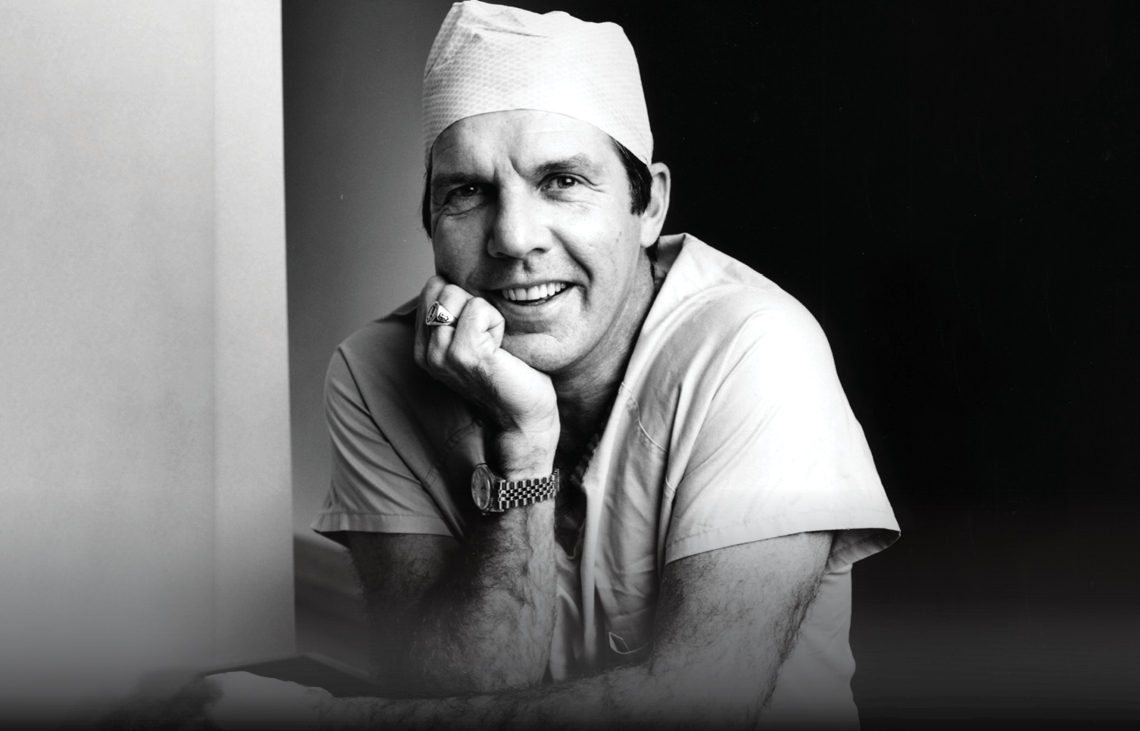
Shepherd Center's first medical director remembered as a thoughtful leader, listener, mentor, innovator, and friend
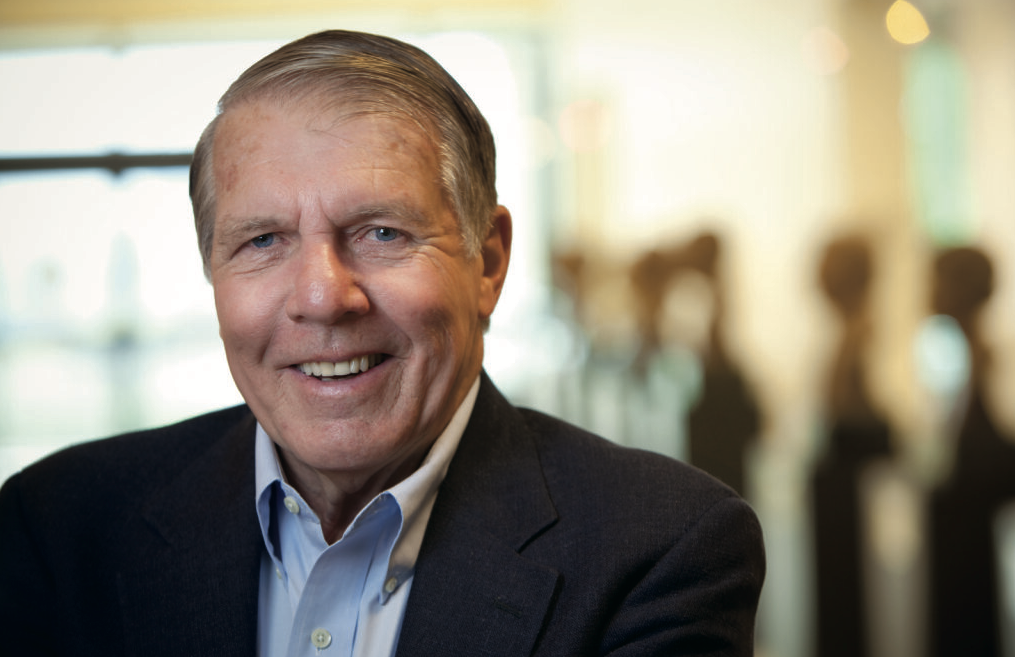
“You can do rehab in a barn if you have the right people.” — David Apple, M.D.
This “Apple-ism” often echoes off the walls at Shepherd Center, the hospital David Apple Jr., M.D. helped start five decades ago. It uniquely captures a key part of the hospital’s philosophy — with the best therapists, you can help patients achieve more, regardless of your facilities, financial resources, or access to high-tech equipment.
In the years since Dr. Apple helped start Shepherd Center, it has transformed into a world-renowned rehabilitation center, with a multi-building main campus, large, well-equipped therapy gyms, state-of-the-art technology, and room to grow. Thanks to Dr. Apple and his leadership, Shepherd Center also boasts a one-of-a-kind staff of over 1,800 people, all dedicated to serving patients through hope, humor, and hard work.
Dr. Apple took a chance on Shepherd Center as an early-career doctor, eager to help those experiencing a catastrophic injury or illness. For half a century, he served Shepherd Center’s patients, staff members, and visitors with his compassion, dedication, and medical expertise.
On March 23, 2026, Dr. Apple died at home in Atlanta, surrounded by his loved ones. Shepherd Center is saddened to say goodbye and grateful for his service, which has helped define the hospital he helped start.
“Walk or roll through our halls, and you’ll feel Dr. Apple’s presence everywhere: in our culture of compassion, in the courage of our patients, and in the dedication of every team member,” says Jamie Shepherd, MBA, MHA, FACHE, president and CEO of Shepherd Center. “Over more than 50 years of service, Dr. Apple changed the world of rehabilitative medicine — and he did it with heart, humor, and an unshakable belief in what is possible.”
Taking a Chance on Shepherd Center
When Harold and Alana Shepherd and their son, James, were working to start a new rehabilitation hospital in Atlanta, they approached Dr. Apple about being the founding medical director. While Dr. Apple was still early in his career as a doctor, he had quickly amassed clinical expertise and leadership abilities.
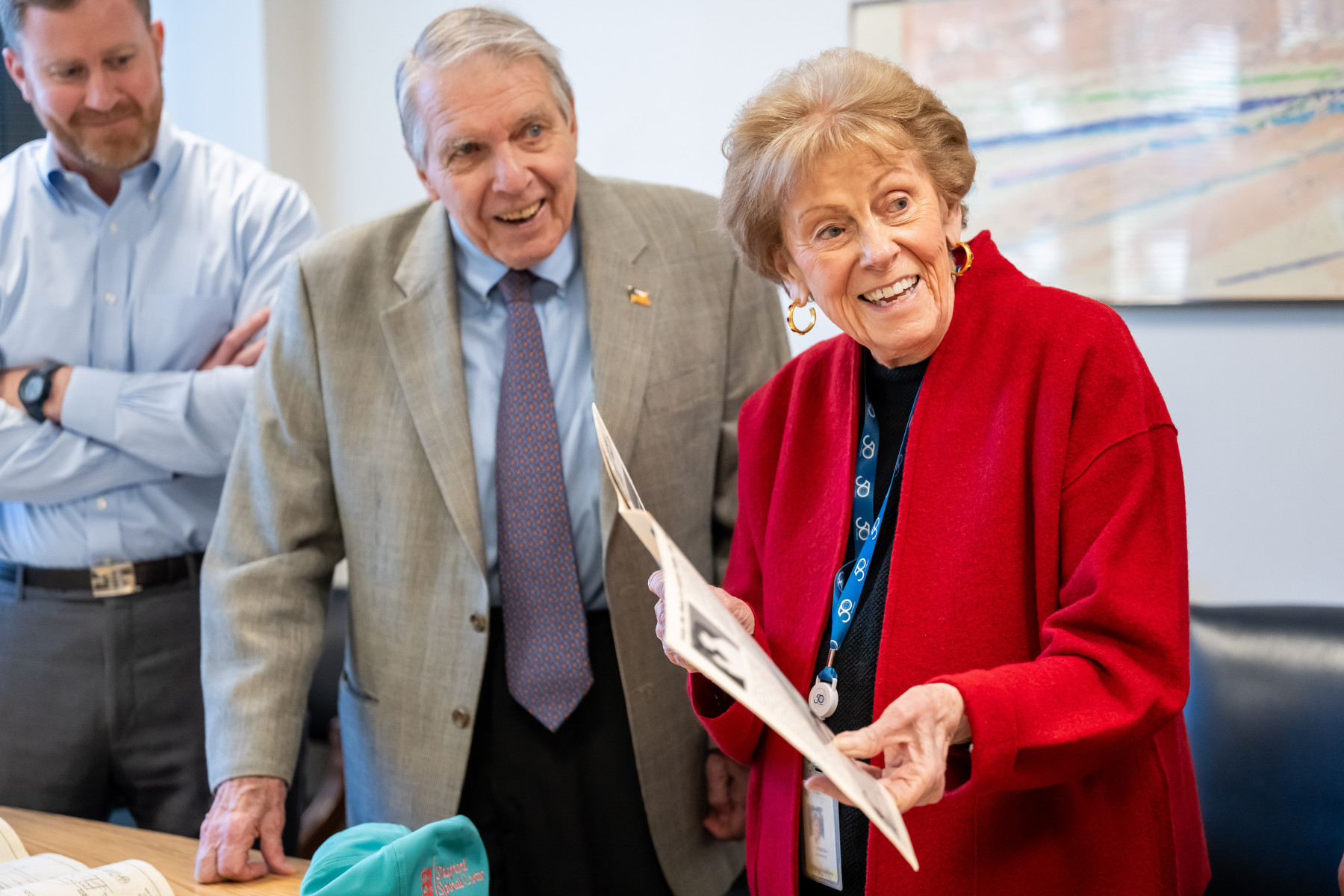 After his graduation from medical school at the University of Pennsylvania in 1962, he came to Atlanta, working first as a medical intern at Emory University and then in a residency in surgery at the Morehouse School of Medicine. He also completed an internship at Grady Memorial Hospital. Working in the region’s foremost trauma center, he learned firsthand how to care for patients hurt by devastating falls, car crashes, gunshot wounds, pedestrian accidents, and other serious incidents. In 1964, he joined the Air Force for two years — the last of which he served as chief of surgery. Then he worked as an orthopedic resident at the University of Cincinnati Medical Center in late 1969. He completed two fellowships, one in orthopedic rehabilitation at Rancho Los Amigos Hospital in California and another in hand surgery in Louisville, Kentucky. Then, he was the medical director for Easter Seals, an experience he said gave him the foundation to be the medical director for a brand-new facility.
By the time the Shepherds asked Dr. Apple to sign on as the medical director of their new rehab center, he already had ambitions to lead a hospital. Plus, he was familiar with James’ story — he had been peripherally involved with his care at Piedmont Hospital after James sustained a spinal cord injury in 1973. Helping start what was then Shepherd Spinal Center was a great opportunity, as well as a huge risk. One of his colleagues warned that starting the hospital would ruin his career. But luckily, Dr. Apple was willing to take the chance.
“I’d been trying to start a rehab center in Atlanta, and this gave me the opportunity I’d been looking for,” Dr. Apple reflected in a video filmed for the hospital’s 50th anniversary. “It all came together as if by magic.”
Looking back, Alana says that in hiring Dr. Apple, she, Harold, and James found the best medical director they could have had.
“When we asked him if he would consider being medical director, he said yes right away because he said he knew [a rehabilitation hospital] was needed and he knew it would succeed,” says Alana Shepherd. “We were lucky that we got the right one. That's the best part of all, [he was] the best choice that we could have had. Because he certainly believed in research, and he believed in doing the best you could and giving it your all, and also being very relaxed, and eager to be a real person — not a doctor in a white coat that looked at the baseboards and could hardly speak to anyone. He wasn't that kind of a doctor. So, we were really lucky that we had picked him.”
Dr. Apple was Shepherd’s first medical director, but he was also much more. As a co-founder of a brand-new hospital, he had to be a cheerleader, a fundraiser, a hiring manager, and a mentor.
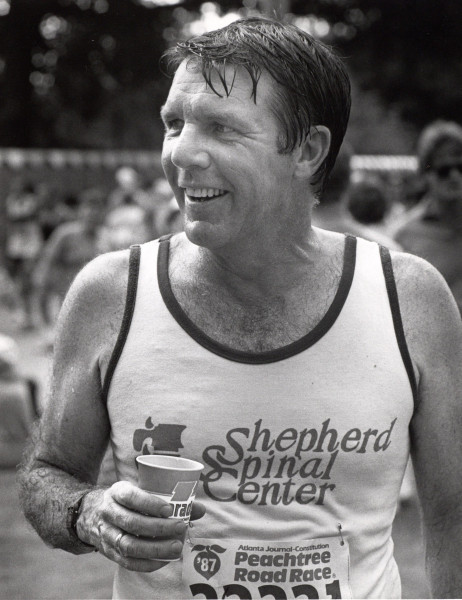
Stories from those early years are now cemented in Shepherd Center lore. For example, in 1975, he asked friends to donate to the hospital if he completed the Peachtree Road Race. He made it to the finish line, and a friend named George Johnson gave him a $100 check, the first donation to Shepherd Center from anyone not involved in the hospital’s founding.
He also helped put together the hospital’s first staff, bringing in staff members like Tammy King, MSN, ET, CRRN, CCM, who worked at the hospital for 47 years, and Herndon Murray, M.D., who worked here for 50 years. Dr. Apple was able to recruit Dr. Murray even without guaranteed funding for his position, showcasing both physicians’ belief in Shepherd’s mission.
Staff members and volunteers remember Dr. Apple as down-to-earth, a great listener, and a gentle leader and teacher whose influence helped shape Shepherd’s culture. He was a beloved mentor for staff, always eager to share his knowledge with them.
“Dr. Apple never asserted that he was the doctor. He was always just someone who would roll up his sleeves with everybody else,” says Jill Koval, Ph.D., ABPP-Rp, rehabilitation psychologist and psychology supervisor who has worked at Shepherd for 36 years. “And one of the most important things that he taught me as a leader was the importance of really listening, and respecting different opinions, but also thinking about the patients that we serve as whole people.” 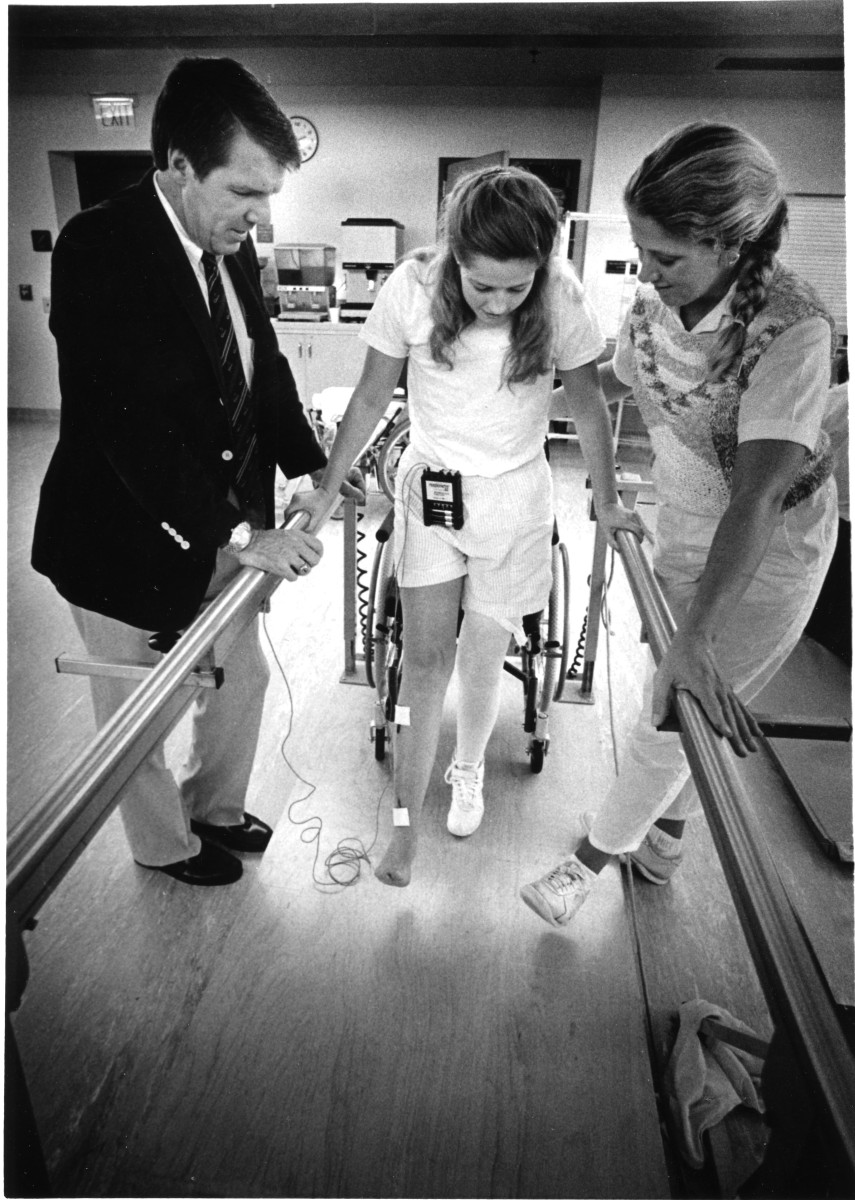
Sarah Morrison, PT, MBA, MHA, former chief executive officer of Shepherd Center, remembers her first impressions of Dr. Apple when she started as a physical therapist in 1984. She says he had total faith in his team.
“When I started working with him, what I saw was he totally trusted the staff,” she recalls. “Some physicians would say, ‘Okay, physical therapy, you're going to do X, Y, and Z three times a day.’ Now, Dr. Apple never did that. He would just say, ‘Hey, evaluate and treat this patient as appropriate.’ He understood the nuances of every position of the team. He just trusted the staff and said, ‘Do what you do best.’”
Shari McDowell, PT, DPT, FASIA, FACHE, the hospital’s current chief operating officer, joined Shepherd as a physical therapist in 1992. She remembers Dr. Apple really listening to staff — an experience she hadn’t had with working as a doctor before.
“He was somebody who listened to every single person's opinion, and valued everything equally," she says. “It was very unusual — especially then, there was a lot of hierarchy in medicine. I remember thinking, 'This is an amazing physician. This is going to be an amazing place to work.'”
Dr. Apple took his responsibilities as medical director seriously. But one responsibility — fostering a supportive culture for his patients and staff — often required him to be not-so-serious. Sara Chapman, longtime Shepherd supporter and Board of Directors’ corporate secretary, began volunteering with the hospital when it was still at its original location. She remembers Dr. Apple as doing whatever it took to bring a smile to his patients and staff, even if he was occasionally the butt of the joke.
“He [created] a spirit of fun in our culture,” she says. “He was the one you could always dress up, you could always throw pies at. He was always up for something that added to the spirit of enjoyment and happiness at Shepherd Center.”
Dr. Apple also helped lead the push to move Shepherd to its location on Peachtree Road. While the unit inside West Paces Ferry allowed Shepherd Spinal Center to get its start, Dr. Apple knew they needed more space — the rehabilitation facility had a waitlist almost immediately upon opening. Plus, he felt at odds with the owners of the leasing hospital, a for-profit operation.
“They were interested in profit. We were interested in service,” he once reflected. “That got to be a problem.”
Thanks to the vision of the Shepherd family and Dr. Apple, on May 13, 1982, Shepherd Center moved into its own building — growing to 40 beds and with a therapy gym nearly as big as the entire previous space.
Pioneering Research & Recreation Therapy
Dr. Apple leaves behind a tremendous mark on Shepherd’s history. But perhaps his most enduring legacies lay in Shepherd Center’s renowned clinical programs and research initiatives.
Dr. Apple’s clinical expertise allowed Shepherd’s Spinal Cord Injury Rehabilitation Program to quickly become renowned nationally, and even globally. With his leadership, Shepherd Center was designated as one of only a handful of Spinal Cord Injury Model Systems (SCIMS) by the National Institute on Disability, Independent Living, and Rehabilitation Research, then a program through the U.S. Department of Education. The recognition came with a $246,000 grant, a boon to a hospital only seven years old, and it cemented Shepherd Center’s status as a leader in SCI research and rehabilitation. The hospital has continued its tenure as an SCIMS ever since, operating as the Southeastern Regional SCIMS Center. The hospital is also now recognized as a Traumatic Brain Injury Model System (TBIMS).
Shepherd Center officially added research to its mission in 1985, and the program has been expanding ever since, with Dr. Apple serving at the helm for years.
“Dr. Apple is such a legend in the SCI research community, and meeting him for the first time as I considered relocating my lab to Shepherd was a tremendous honor,” reflects Edelle Field-Fote, PT, Ph.D., FAPTA, FASIA, director of spinal cord injury research and the Hulse SCI Research Laboratory. “When I arrived, I learned that he had generously given me his own office and moved himself to another space. Because he had a key, I would often arrive back at the office to find a note, a flower, or an apple. These are the kinds of sweet gestures of support that made him so loved by everyone.”
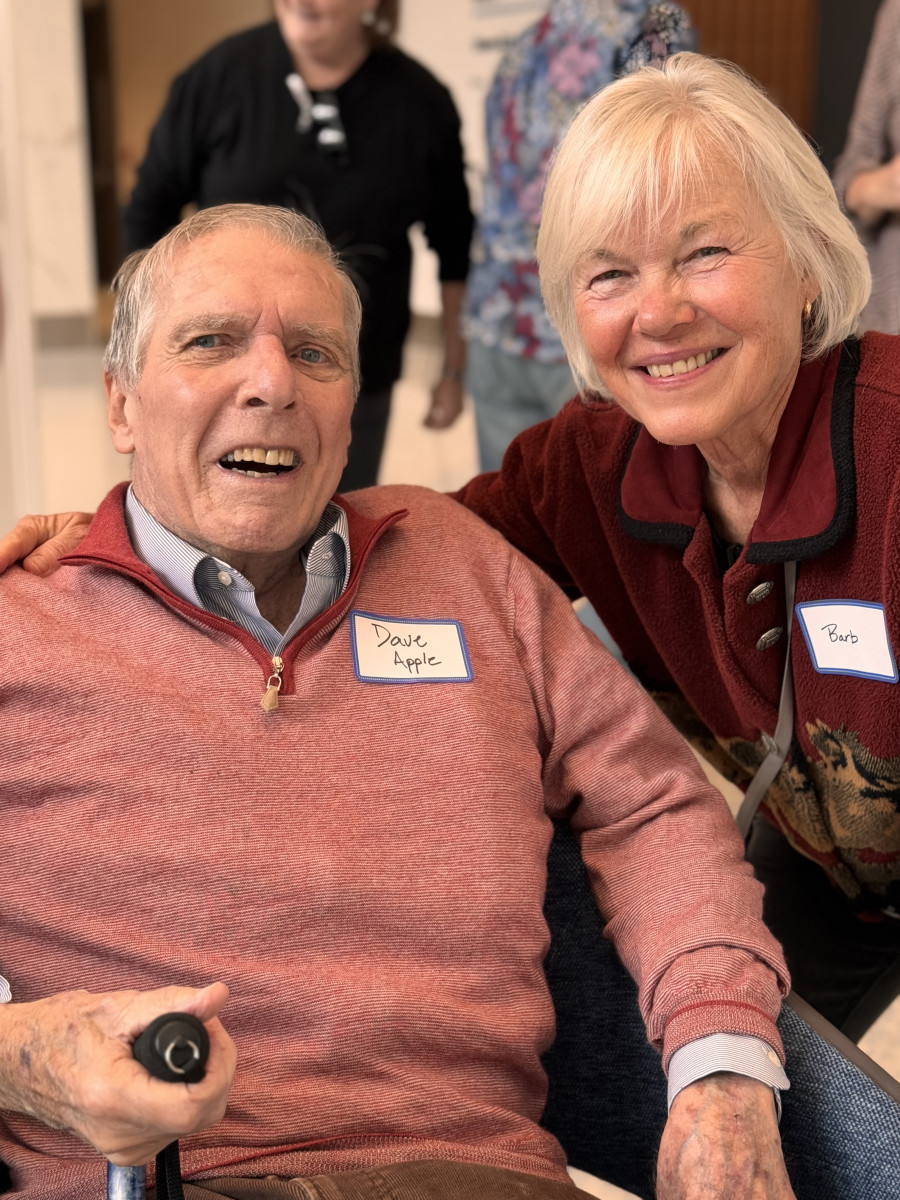 Dr. Apple also saw the value in inpatient services extending beyond the usual clinical setting. He started Shepherd’s Recreation Therapy Program, now the largest program of its kind in the country, by paying the first recreation therapist out of his own pocket. The recreation therapist, Barb (Leidheiser) Trader, took patients on outings to concerts, Atlanta Braves games, and even Dr. Apple’s property in North Georgia to fish and enjoy the outdoors.
The program has since grown into a 30-plus-person department, coordinating everything from pottery clinics to adaptive hunting trips for inpatients, outpatients, and community members living with disabilities. Last fall, recreation therapists from across the decades at Shepherd made a visit to the hospital as part of 50th anniversary celebrations. Dr. Apple attended the reunion, where current and alumni recreation therapy staffers shared their favorite stories and thanked him for his vision.
“That's one of Dr. Apple’s great legacies for Shepherd, is his understanding and vision for rec therapy, and how it was such a critical component of our patient care,” says Chapman, who volunteered on recreation therapy outings in the hospital’s early days.
Dr. Apple believed in getting patients beyond the walls of their hospital room, and he practiced what he preached. Rarely found holed up in his office, Dr. Apple was a familiar face in the hallways during his tenure as medical director and beyond. Patients often reflect on seeing him across the center, from him meeting them upon their arrival at the ambulance entrance to taking a front-row seat at events like Project Rollway.
“We talk a lot here … about culture and what that means,” says Cheryl Linden, MA, LPC;MS, OT/L, who has worked at Shepherd for 30 years. “And Dr. Apple portrayed that in such a way because he lived the culture. And it wasn't just about patient care and family care. The culture was about care of all. Care of community. Care of each other.”
A Leader at Shepherd and Beyond
Dr. Apple often encouraged his children and grandchildren to get involved in their community, beyond the responsibilities of their day jobs. And he modeled this for them constantly.
In addition to his work at Shepherd, Dr. Apple brought his medical expertise to the global stage. In 1983, he became president of the American Spinal Injury Association, a professional organization he helped found. At that time the youngest member ever elected to serve as president, Dr. Apple led the organization's then 275 physician members. In 1997, he was awarded the organization’s Lifetime Achievement Award.
“He really took his knowledge and tried to implant it in others, whether it was through the American Spinal Injury Association, whether it was through research, or one-on-one mentoring,” Morrison says.
He also served as president of the Atlanta Clinical Society, the Atlanta Orthopedic Society, and the Georgia Orthopedic Society, receiving the F. J. Funk Award for outstanding service to the Society in 2017. For the 1996 Paralympics, he was the chief medical officer. For the ’96 Olympics, he co-chaired the doping committee. And for 30 years, he was a team physician for the NBA’s Atlanta Hawks. 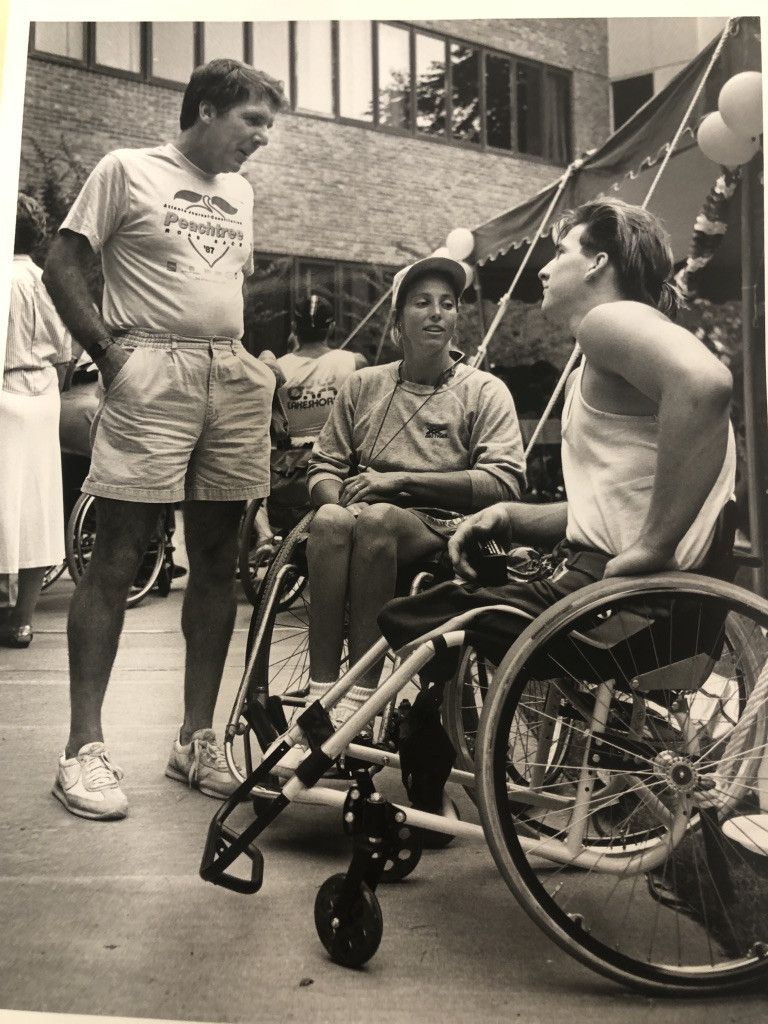
His history of community involvement has deep roots, reaching even before his time in medical school. Dr. Apple graduated from Highlands High School in Fort Thomas, Kentucky, in 1954 as valedictorian, class president, and an outstanding athlete with varsity letters in basketball, football, and track. While he was an undergraduate at the University of Virginia, studying as a Dupont Honor Scholar, he ran as a protest candidate and became student body president.
He also found ways to give back to the community outside of the medical field. He donated his time to the Lovett School Board of Directors, the Community Foundation for Greater Atlanta, and the Cathedral of Saint Philip, where he was a devoted member for more than 55 years.
“He was very beloved at the cathedral by our clergy,” says Chapman, who also attends St. Philip’s. “Whenever the church called on him, he answered. He was generous, he was present, and he was involved.”
At Shepherd Center, he continued to serve on the board of directors even after his retirement, where he helped with strategic planning for the hospital’s future.
“He was a very highly valued and respected board member whose insight and opinion were always persuasive,” says Jim Thompson, chairman of the board of directors. “When he chose to comment, it became quiet in [the boardroom] as each member listened intently to what Dr. Apple had to say. He was a giant influence to all of us.”
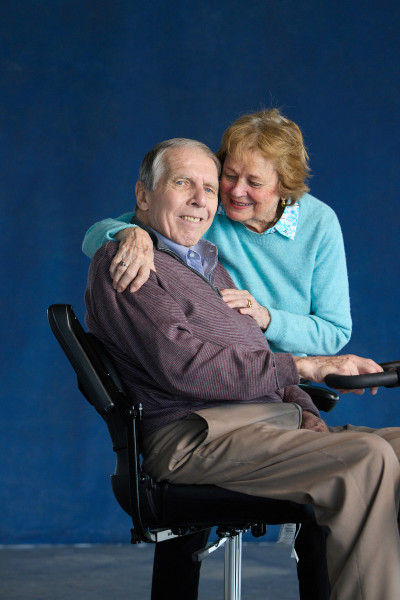
At the core of Dr. Apple’s heart was his love for his family. He met his wife Jane in 1961 when she had a date with his roommate, and they were married one year later. They had four children together and 12 grandchildren.
“Jane was the love of his life, and they had an incredible partnership,” says Jamie Shepherd, who grew up alongside Dr. Apple’s children. “He loved his kids, his grandkids. Everybody is partial to their grandkids — but he was exceptionally proud of his grandkids and all the great things that they are doing, and he really loved being a grandfather.” 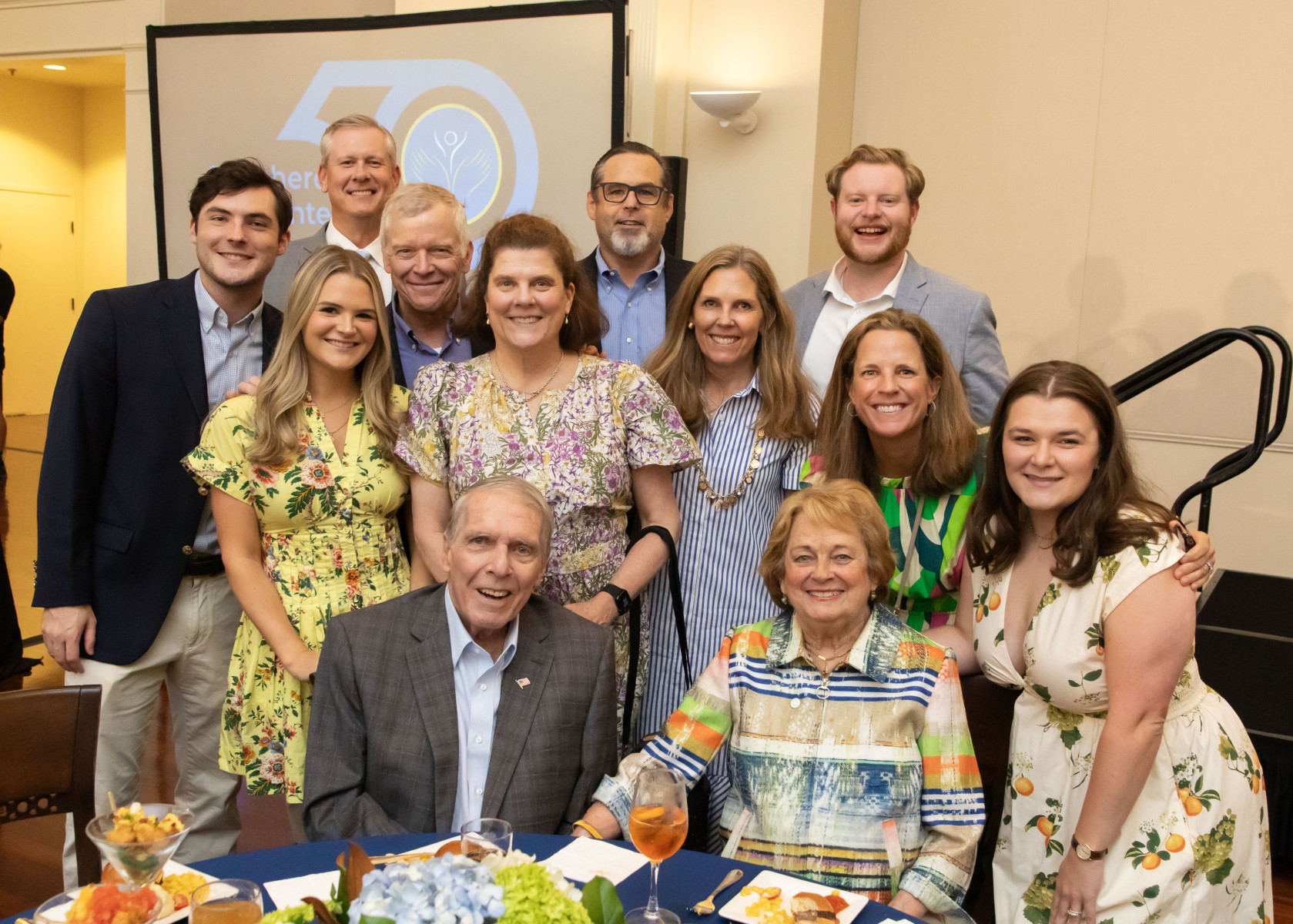
Dr. Apple enjoyed spending as much time as possible with his family, always celebrating each birthday with dinner at a favorite restaurant and attending his children’s and grandchildren’s sporting events. He also always made time for yearly trips with his family.
“[Those trips] are totally my best memories, and definitely our kids' best memories. And you could just tell that that was what gave him the most joy,” says John Stephenson, Jr., one of Dr. Apple’s sons-in-law and a member of the Shepherd Center Foundation Board of Directors. “They would just sit there and look around, smile at everybody, and be happy that everybody was there.”
A Vision for the Future
In a presentation Dr. Apple gave before his retirement in 2005, he outlined what he’d like to see in Shepherd’s future: an enlarged exercise facility, enhanced continuing education opportunities for staff, continued research emphasis, and continued focus on patients and their families.
Over 20 years later, his vision continues to come to life. Renovations at the main hospital have allowed for expanded patient floors and bigger therapy gyms. The NeuroRehabilitation Learning Institute provides educational opportunities for clinicians at Shepherd and around the world. The new Marcus Center for Advanced Rehabilitation is bringing research at Shepherd Center to new heights. The Arthur M. Blank Family Residences allow families to fully participate in their loved ones’ rehab. And during the hospital’s 50th anniversary, celebrations showcased how hospital staff are more dedicated to their patients than ever.
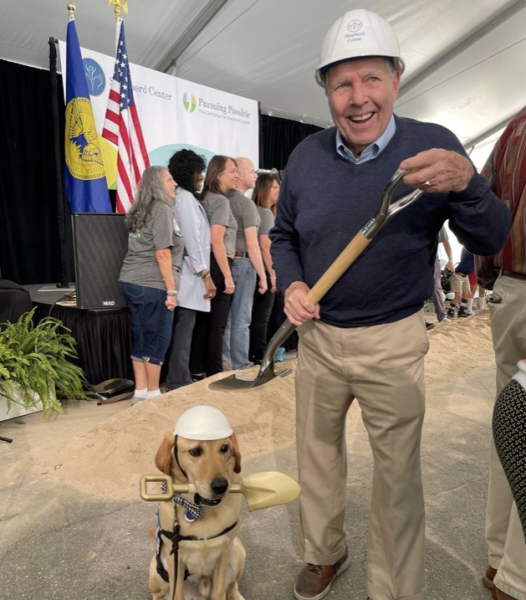
Even after stepping down from formal leadership, Dr. Apple continued to pour his time, talent, and passion into research, advocacy, and supporting Shepherd Center patients and staff. He frequently was at the hospital for Founders Meetings with fellow co-founder Alana Shepherd and hospital leadership. He also regularly attended events hosted by the Shepherd Center Foundation, including Derby Day, The Legendary Party, as well as groundbreakings and ribbon cuttings that coincided with Pursuing Possible: The Campaign for Shepherd Center, the hospital’s largest campaign and expansion effort to date.
Dr. Apple accepting the position as Shepherd Center’s first medical director not only defined his medical career but impacted thousands of patients and their families, helping them rebuild their lives. His legacy, and the hospital he helped build, will continue to do so.
“He was not a prideful person — he was quite humble, so he'd probably shudder at the concept of the legacy,” says Stephenson. “But I think he would want his legacy to be that of a man of strong faith, a dedicated husband and loving father and grandfather, and a gracious friend to anybody that he met. We all know that his legacy stretches far beyond that in scope and reach ... he was brave and pioneering in his field. His innovation, creativity, and entrepreneurial approach to that work has been a big factor in really changing the entire field around treatment of traumatic spinal injuries and complex neurological conditions worldwide."
With five decades of experience, Shepherd Center provides world-class clinical care, research, and family support for people experiencing the most complex conditions, including spinal cord and brain injuries, multi-trauma, traumatic amputations, stroke, multiple sclerosis, and pain. An elite center ranked by U.S. News as one of the nation’s top hospitals for rehabilitation, Shepherd Center is also recognized as both Spinal Cord Injury and Traumatic Brain Injury Model Systems. Shepherd Center treats thousands of patients annually with unmatched expertise and unwavering compassion to help them begin again.