


Rehabilitation Round One & Round Two
How Harmony Perez tackled two rounds of inpatient recovery with humor, grit, and compassion
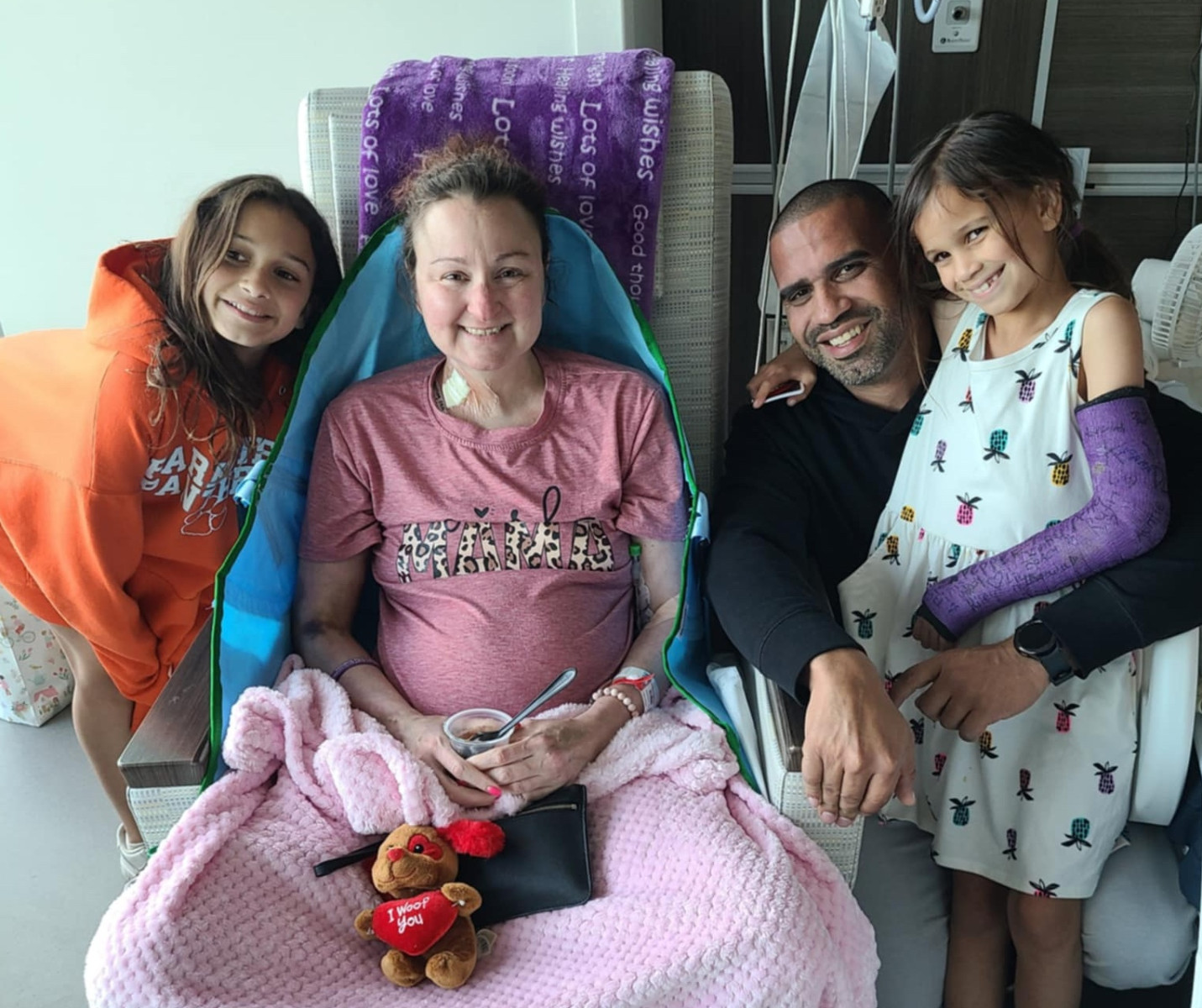
Harmony Perez never meets a stranger.
A busy mom to two daughters, she’s a “people person” through and through. Just ask Grace Day, OT, an occupational therapist, and Lindsay Mayr, PT, DPT, a physical therapist, who worked with Harmony during her inpatient spinal cord injury (SCI) rehabilitation at Shepherd Center.
“I don’t ever remember her not being bright and bubbly,” Lindsay says. “She was positive, optimistic, and willing to work hard.”
“She was really encouraging to other patients in the gym,” Grace adds. “She wanted to know other people’s stories.”
During her rehab, Harmony wanted to enjoy some time in the water, but Shepherd’s pool was closed for renovations. So, Grace and Lindsay got to work — ordering a kiddie pool and gathering supplies from across the hospital for a “hot girl summer” pool day in the Anna and Hays Mershon Secret Garden.
“My therapists surprised me, and I don’t like surprises,” Harmony laughs. “They’re waking me up, telling me to put on my black pair of shorts and a black shirt, and telling me we need to go — I was like, ‘Go where?’”
Grace and Lindsay led Harmony, along with three other patients, to the Secret Garden. They had set up the kiddie pool and beach chairs for lounging and made iced juice mocktails with tiny umbrellas. 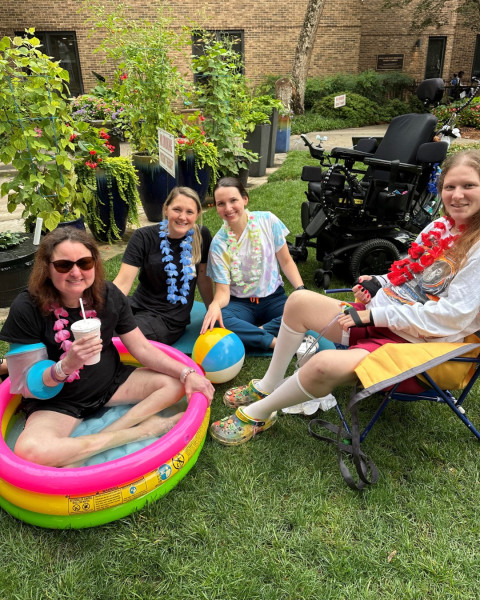
The impromptu pool day ended up being one of Harmony’s favorite experiences from her first round of inpatient therapy. Harmony is one of only a few patients who have completed inpatient rehabilitation at Shepherd Center not once, but twice. Her recovery has been marked by ups and downs, but her determined spirit, hearty sense of humor, and relentless hope have helped her along the way.
Rehabilitation, Round One and Round Two
Harmony’s SCI journey began on April 22, 2024. She had a loss of sensation in her legs, and emergency room doctors suspected transverse myelitis, inflammation of the spinal cord, was the cause. That explanation made sense, considering Harmony’s history with lupus, an autoimmune disease.
When Harmony didn’t respond to transverse myelitis treatment, doctors knew their initial diagnosis was wrong. Additional screenings revealed that Harmony had experienced a spinal cord stroke. Once they heard about her condition, family friends were quick to recommend Shepherd Center.
“Some of my neighbors and friends were talking to my husband, and they kept saying, ‘She should try to get into Shepherd. They are the best spinal and brain hospital that there is,’” Harmony remembers.
Harmony did get admitted into Shepherd. She quickly got to work with her care team on the fifth-floor SCI unit, completing physical, occupational, and recreational therapy. Her team ensured that even as she recovered, she wasn’t missing out on life — creating special memories like the pool day and organizing a surprise party for her daughter’s eighth birthday.
On top of her Shepherd Center care team, she had another fierce supporter by her side — her husband, Chris.
“My husband is a phenomenal nurse,” Harmony says. “[Shepherd] taught him how to change my catheter. And because Shepherd taught him [how to take care of me], he’s kept me out of the ER multiple times.”
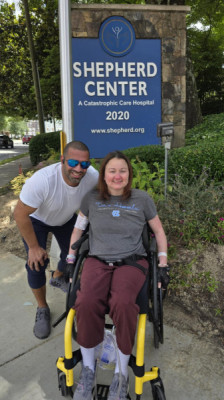 Harmony took the care she received from her team and family and passed it on to other patients on her floor, including the young women who took part in the “hot girl summer” day. Grace and Lindsay say Harmony quickly took on a nurturing role for other patients on the floor.
“She was kind of like in a mother role [for the other patients],” Grace says. “She would take time out of her day to stop and check in on other patients, even when she had her own complications. She would offer to paint their nails if they weren’t able to move their arms — she was always offering to help them eat their lunch or to go get them some water.”
After nearly three months of intensive rehabilitation, Harmony graduated in late July.
Six days later, Harmony experienced a second spinal cord stroke.
“I always said I was going to come back [to Shepherd Center],” Harmony says. “But I thought I would end up helping with peer support or something — I didn’t think I’d be back for another inpatient stay.”
After her second stroke, she returned to Shepherd for another round of inpatient therapy — an experience she says was simultaneously indispensable and frustrating.
“My mind remembered everything I was taught the first time I was at Shepherd, but my body needed to relearn everything,” she says.
She continued to push herself, and her care team continued to support her. She checked therapy goals off her list, and her nurses helped her with medications and infusions needed for her stroke recovery and lupus. She remembers her nurses poking fun at her for always choosing apple sauce and peanut butter as her post-infusion snack, something she immortalized on her fifth-floor ceiling tile.
By September, she was ready to move on to outpatient therapy.
Her outpatient team continued to help her make progress, using technology like the ZeroG Gait and Balance System. Harmony could practice weight-bearing exercises and increase the range of motion in her legs. The ZeroG also came in handy for a special wedding anniversary surprise for Harmony and her husband.
“I was begging for a chance to [use the ZeroG], and my therapist asked me, ‘What was your wedding song?’” she remembers. “Next thing I know, she’s blasting it on the speaker and tells my husband to come dance with me. That is unforgettable.”
Hope, Humor, and Independence
Throughout her journey, humor has been a crucial tool for Harmony. She often jokes that she came to Shepherd Center for her bachelor’s degree in SCI recovery, and then came back for her master’s after her second spinal cord stroke.
Since wrapping up her outpatient therapy, Harmony has remained plugged in to the Shepherd community, participating in the Driving Evaluation and Rehabilitation Program as well as Adventure Skills Workshop (ASW), an annual weekend getaway hosted by the Recreation Therapy Program for former patients and other community members living with disabilities.
She says ASW reminded her that while there are things she needs assistance with, there are still plenty of things she can do.
“It’s okay to laugh at the hardest parts,” she says. “Shepherd has taught me that I can drive a car and go water skiing and climb walls and zipline, even when other things aren’t so put together — like pulling up my own pants.”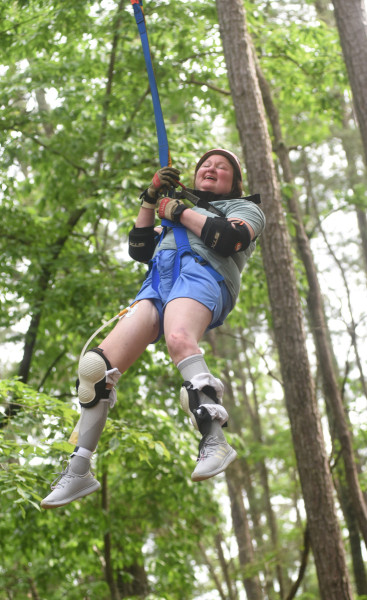
She’s also signed up for a waterskiing clinic through the Recreation Therapy Program. And though it may look different now, she continues to do things with her family she did before her injury — going to the beach, playing soccer with her girls, and enjoying time in the water.
For those just starting their rehab journey, Harmony offers some words of advice.
“Try not to be so hard on yourself, and be open-minded to the ways Shepherd [or another rehab facility] teach you to survive,” she says. “Shepherd has made me comfortable with the realization of what is happening to me. Shepherd has made me feel unstoppable.”
Harmony plans to return for additional outpatient therapy at Shepherd Center soon, quipping that it’s time to return for her “Ph.D.” She says she’s eager to see some of her old nurses and therapists again. The feeling is mutual.
“She has that energy — she connects with people really easily,” Grace says.
Written by Erin Kenney
With five decades of experience, Shepherd Center provides world-class clinical care, research, and family support for people experiencing the most complex conditions, including spinal cord and brain injuries, multi-trauma, traumatic amputations, stroke, multiple sclerosis, and pain. An elite center ranked by U.S. News as one of the nation’s top hospitals for rehabilitation, Shepherd Center is also recognized as both Spinal Cord Injury and Traumatic Brain Injury Model Systems. Shepherd Center treats thousands of patients annually with unmatched expertise and unwavering compassion to help them begin again.