


Q&A: A Respiratory Therapist’s Career at Shepherd Center
Rhonda Oxford explains respiratory care and shares her career journey, from starting school to working as a therapy supervisor.
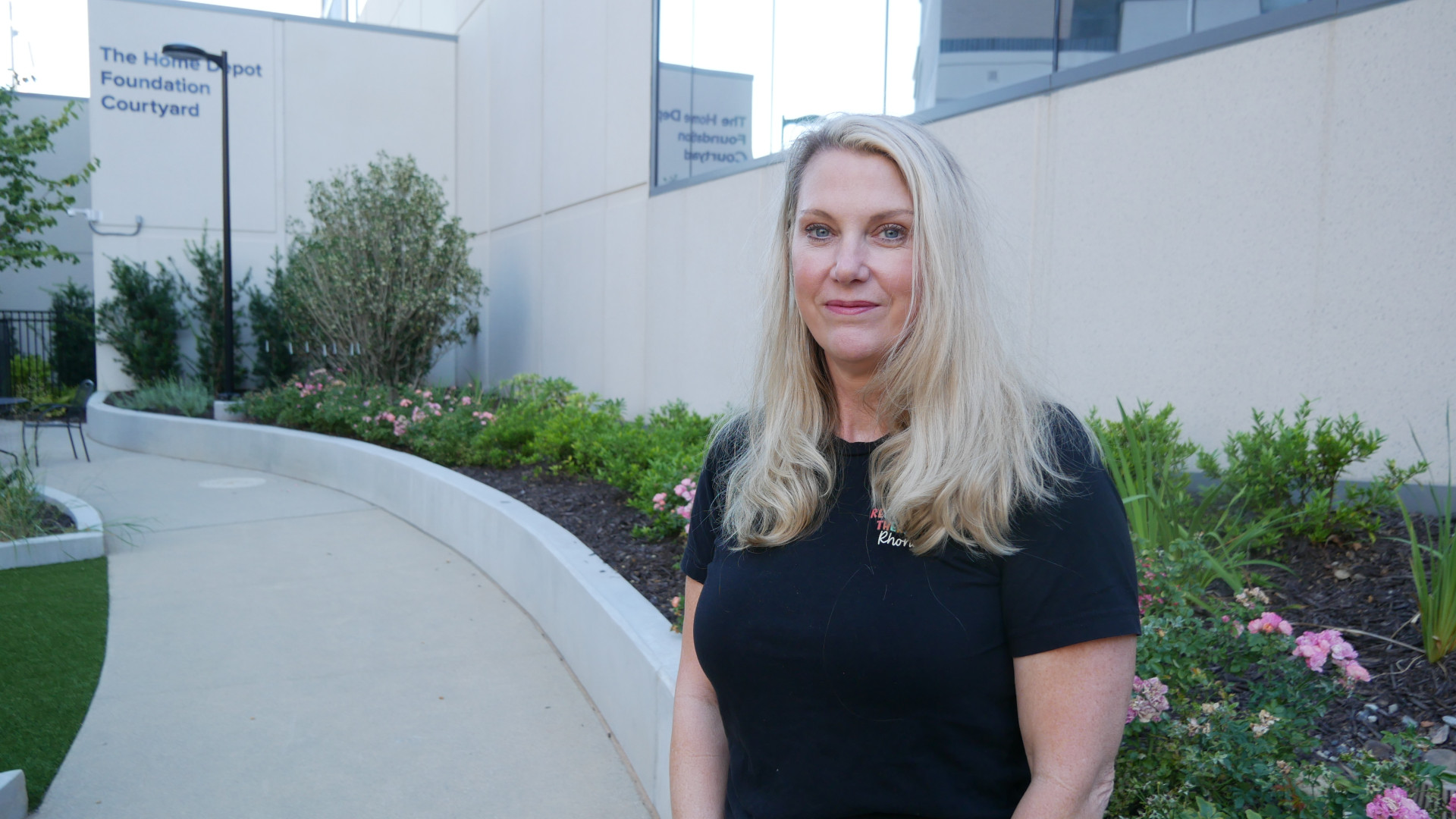
At Shepherd Center, patients engage in a variety of rehabilitative activities — including occupational, physical, recreation, and speech therapies. But for many patients, respiratory therapy is the foundation that allows them to fully engage in their recovery journey.
Respiratory therapists work with pulmonologists and other clinical colleagues to help patients manage their breathing, including ventilator management, ventilator weaning, and other treatments to increase lung capacity and cough strength, which is crucial to help fight off illnesses and remove secretions from lungs and airways.
Rhonda Oxford, RRT, has worked on and off at Shepherd for nearly 30 years — starting out as a respiratory therapist in 1995, taking some time away after having children, and returning in 2009. She’s now a respiratory therapy supervisor.
What drew you to work as a respiratory therapist and to your job at Shepherd Center?
I was at Georgia Southern as a systems analyst major. I got there, got all the stuff, and then decided I was homesick and went back to [Thomasville, Georgia]. I still didn’t really know what I wanted to do, but I was thinking, “I want to do something now.” So, I looked at the technical school’s programs, and they had respiratory, radiology, and nursing programs. I didn’t even know what a respiratory therapist was, but it was the program with the earliest start date. I thought, “Okay, let’s do this.” I graduated in 1991.
I moved to Atlanta without a job or anything lined up in 1994. The first job I saw in the classifieds was a position at Shepherd Center, which I had heard of because the hospital I worked at in Thomasville would send patients there. I thought it would be good to apply, and in June of 1995 I was hired.
You mentioned that starting out, you weren’t really sure what respiratory therapists do. How would you explain respiratory therapy to someone who isn’t familiar with it?
The funny thing about it is when I started classes, I didn’t know we [had to remove secretions from airways]. We lost a lot of people in the program because they weren’t ready for that — they were almost fainting at the sight of trachs [tracheostomy tubes] and removing secretions. I’m a really girly girl, but snot is one thing that doesn’t bother me.
As far as respiratory therapy goes, there is a difference working at Shepherd Center compared to an acute care hospital. We have so many trachs here, because most of our patients are long-term, and they may rely on ventilators or need suctioning [to remove secretions from airways]. We use cough assist machines, breathing treatments, and deliver medications. Our main goal is to get people off the ventilator if we can, so we can remove their trach and increase their independence for when they go home. Sometimes we succeed, and sometimes we provide family education on how to safely go home with trachs and vents.
Another part of our work is managing anxiety. For a lot of our patients, their anxiety is to the max, especially if they’re on a ventilator. So that’s a big thing, trying to keep them calm. Some can manage it well, and some may need more support from us. We may be getting ready to take them off the ventilator for the first time, and they might be thinking, “I can’t do it.” There are times when therapists will sit in the room with patients during their time off the ventilator, just making conversation or watching a movie. That’s what I tell patients — distract yourself with something, watch a good movie. The next thing you know, two hours have flown by, and you weren’t even thinking about breathing off the ventilator.
How does your supervising role compare to your previous role as a therapist?
I don’t have as much patient contact as I used to, but I do round with the pulmonologists, so I see the ICU patients all the time. There’s also more responsibility in my supervisor role — I’m responsible for my whole team and making sure things are going well. Even though I’m not spending as much time with the patients personally, I feel like I know more about them now. I see the ins and outs of their treatment plans and their progress.
In my current role, I also help with our outpatient clinic on Tuesdays. I’ve enjoyed that, because we have several patients who return every few months to have their trach changed. So, it’s nice to keep in touch with them, and we look forward to seeing them when they come in.
What else should people know about your work or respiratory care in general?
We joke that nobody knew who we were until COVID hit, and then everyone was like, “Oh, this is what respiratory therapists do!” We are needed, but we aren’t always the first clinicians people think about, even though we’re on the front lines. In medical shows, you almost always hear respiratory being called in the background.
At Shepherd Center, we’re on the quieter side of the hospital. Sometimes I meet people in the elevators, and they ask which program I work with, and I tell them respiratory. If they say they haven’t met anyone from respiratory yet, I tell them to be thankful! I only work with the most critical patients, or at least those in critical condition when they first arrive.
Another unique part about respiratory care at Shepherd is that we float between all the units. Other clinical departments, like nursing or physical therapy, are assigned to one floor or unit, but we see everyone. Most people have a preference, like “Oh, yay, today I’m back on the fifth floor!” I always liked the brain injury side, so I was always eager to come in on the days I had the second floor. But it’s nice that the therapists get to work with both brain injury and spinal cord injury patients. We have a challenging role, but it’s worth it for our patients. We love them and we’re here to support them.
This Q&A has been edited for length and clarity.
Interview by Erin Kenney
With five decades of experience, Shepherd Center provides world-class clinical care, research, and family support for people experiencing the most complex conditions, including spinal cord and brain injuries, multi-trauma, traumatic amputations, stroke, multiple sclerosis, and pain. An elite center ranked by U.S. News as one of the nation’s top hospitals for rehabilitation, Shepherd Center is also recognized as both Spinal Cord Injury and Traumatic Brain Injury Model Systems. Shepherd Center treats thousands of patients annually with unmatched expertise and unwavering compassion to help them begin again.