


Putting Patients at Ease
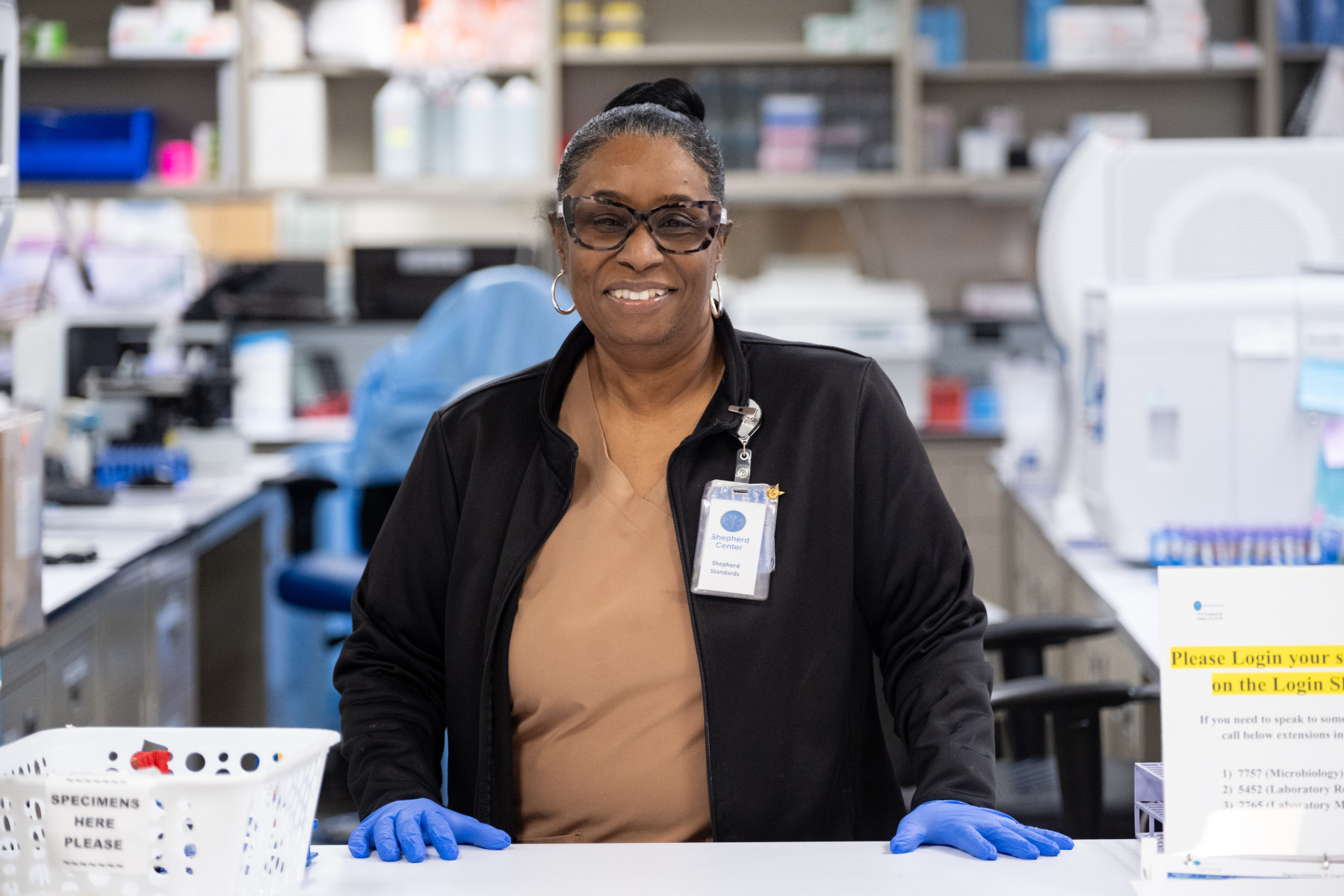
Shepherd Center’s lead phlebotomist, Tressa Thomas, knows that most patients aren’t excited about having their blood drawn, but she takes pride in her ability to help them feel calm and comfortable.
How long have you worked at Shepherd Center?
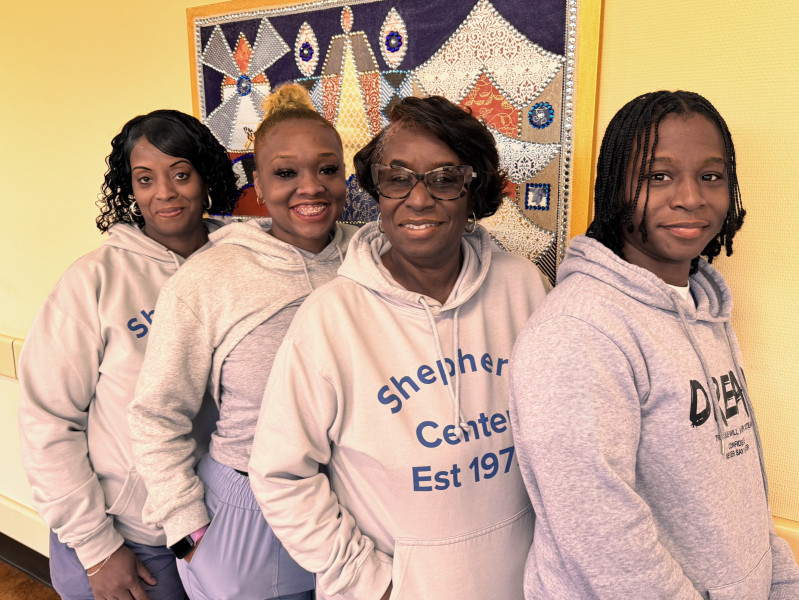
I’ve been at Shepherd for a total of six years, including two years PRN (as needed). There are four full-time phlebotomists here at Shepherd: Tracy Simmons Johnson, Raven Greer, Chyna Weatherly, and me, and three PRN phlebotomists. We have a spectacular team.
What does a phlebotomist do?
We collect lab [specimens.] We collect blood. We’re the vampires! Each phlebotomist is assigned two floors each day. Some mornings, we draw blood from anywhere from 60 to 70 patients. Then, we return to the lab where we began receiving the specimens, readying them for processing by our lab techs. By the time most staff are making their way to work, we have done the bulk of our workday! We then continue to receive labs, answer phone calls from other departments such as outpatient clinics, and assist them with hard sticks. We have two reference labs where we send specimens we don’t process here — Mayo [Clinic] Laboratories and Piedmont Hospital. We prepare the specimens for Mayo pickup, and we walk any labs that go to Piedmont over multiple times a day.
How did you know you wanted to be a phlebotomist?
I started out as a wound care tech in 1993 at DeKalb Medical Center. From there, I worked as an EKG/X-ray technician in a medical practice, where I also gained my knowledge of phlebotomy. In 2005, I joined Piedmont Hospital, where I worked as the lead lab assistant for a 12-physician medical practice. My duties included training phlebotomists and medical assistants who were new hires in my district, which totaled nine practices. I worked there for 16 years before I joined Shepherd Center.
I like the role because you work independently and you go at your own pace. Sometimes you have to take that extra time to talk to the patient and make them feel comfortable. And that's what we do here. We have a great phlebotomy team.
What is the most fulfilling part of your job?
The most fulfilling to me is when you've gone to a room and a patient's terrified, and when you draw them, and they look at you and say, ‘Well, I didn't even know you did it.’ They're no longer afraid. It's just winning them over and making them feel as comfortable as you can because they already don't feel well or are petrified of [having blood drawn]. So, once you kind of calm them down and you let them know ‘I'm done’ — ‘What, you finished? I didn’t even know you did it!’
I think you just have to be really confident, be patient with the patients, let them know what you're doing, and let them ask questions. I think that makes for a better experience for both of us.
 How do you think your role impacts patients and families?
When we enter a patient’s room, we’re very confident and positive about our ability to perform and succeed in our task. There are many times we enter a room where the patients are very afraid of having labs drawn. Some patients will greet us with “They say I’m a hard stick.” My response is always, “Lucky for you, they don’t work here.” Or I’ll ask, “Do you have a preference, where do you want me to stick to you?’ and let them make the decision. ‘You know, you’ve had this limb longer than I’ve been sticking you.”
As I stated before, we have a spectacular team. If one of us is unsuccessful, there is always another one of us who will succeed. I love it here!
Education
DeKalb Technical Institute
Fun Facts
Tressa has close friendships with her co-workers and often talks to them on the way to and from work!
She got her formal education at DeKalb Technical Institute, but says she's developed her expertise in other fields through on-the-job learning.
Tressa enjoys spending time with her family.
She has three children and five grandchildren.
Responses have been edited for length and clarity.
Interview by Ruth Underwood
With five decades of experience, Shepherd Center provides world-class clinical care, research, and family support for people experiencing the most complex conditions, including spinal cord and brain injuries, multi-trauma, traumatic amputations, stroke, multiple sclerosis, and pain. An elite center ranked by U.S. News as one of the nation’s top hospitals for rehabilitation, Shepherd Center is also recognized as both Spinal Cord Injury and Traumatic Brain Injury Model Systems. Shepherd Center treats thousands of patients annually with unmatched expertise and unwavering compassion to help them begin again.