


On a Mission to Care
Shepherd Center started with one family who saw a need and made it their mission to fill it.
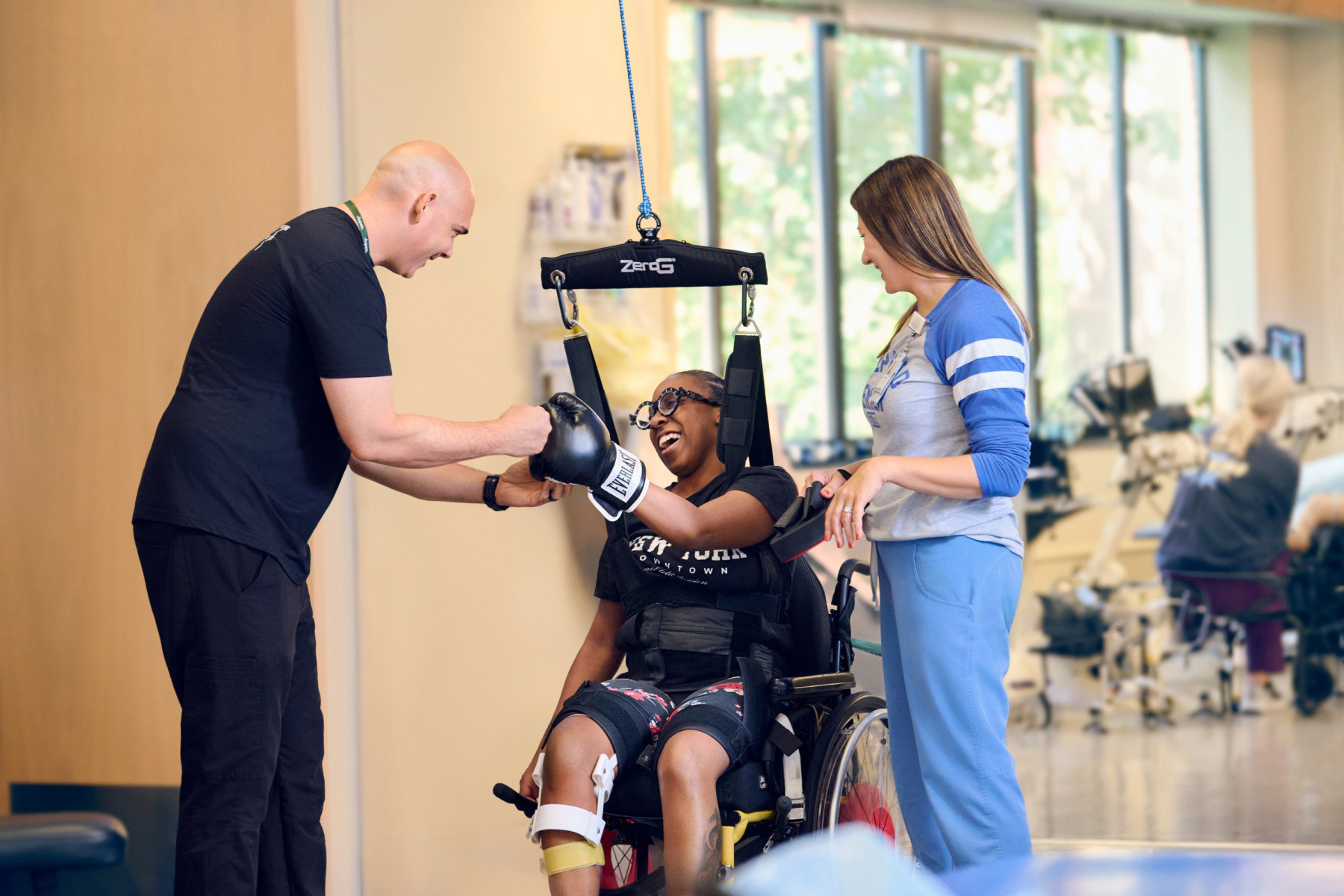
“Shepherd Center is the bridge between ‘I can’t’ and ‘I can.’” — James Shepherd, co-founder, Shepherd Center
There are many ways to measure Shepherd Center’s success at the 50-year mark. For instance, you could look at Shepherd Center’s 90%+ “return to home” rate that’s far beyond the national average of 75%. Or, perhaps, consider that 95% of inpatients would recommend Shepherd Center to others. But numbers don’t fully capture Shepherd Center’s story. There are real people behind these statistics — people who are returning to lives of meaning and greater independence. And more than the numbers, Shepherd patients tell the hospital’s story. They tell stories about doctors, therapists, and nurses who went above and beyond in their care. About an outing that opened their eyes to new possibilities. About a chaplain who lifted their spirits, a new sport that renewed their passions, or a piece of assistive tech that made returning to school, work, or just life in general, that much easier. This is a story 50 years in the making. A story that started with one family who saw a need and made it their mission to fill it.
The idea for Shepherd Center began as soon as James Shepherd finished his rehabilitation from a spinal cord injury (SCI) he sustained in 1973. James and his parents, Alana and Harold Shepherd, had to travel from Atlanta to Craig Hospital in Denver so that James could receive the specialized care he needed.
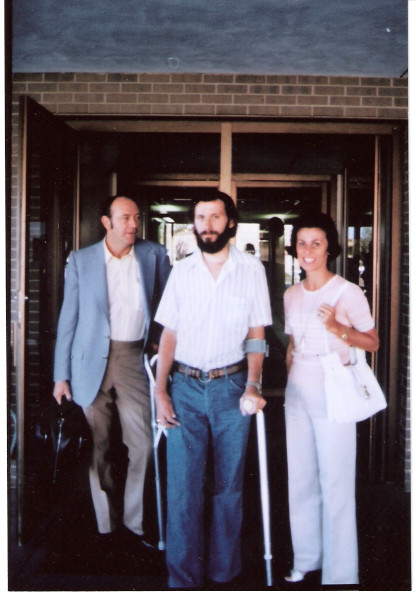 After months of hospitalizations and rehabilitation, incredibly, James walked out of Craig using only a leg brace and a crutch. His extraordinary recovery got the Shepherds wondering why their son and others with SCIs had to travel across the country for high-quality rehabilitation. Why didn’t Atlanta have a catastrophic care hospital that could serve people across the Southeast?
“We all said, ‘Somebody ought to start a hospital here,’” Alana has often recalled. “Well, it turns out that somebody was us.”
On Aug. 18, 1975, nearly two years after James’ accident, Shepherd Spinal Center opened its doors, leasing unused space from a northwest Atlanta hospital. David Apple Jr., M.D., served as the medical director. Orthopedist Herndon Murray, M.D., plus a trio of therapists and nursing help from the leasing hospital, rounded out Shepherd’s first staff. Within a week, all six beds were occupied, and a waitlist formed.
Over the years, Shepherd Center has expanded and evolved to serve more patients. In 1982, the current campus began taking shape on Peachtree Road, making space for more specialized programs, including Shepherd Center hallmarks such as peer support and advocacy.
The 1990s brought a wave of new services, including what’s now known as the Andrew C. Carlos Multiple Sclerosis Institute; Shepherd Center’s Brain Injury Rehabilitation Program, including Shepherd Pathways, a brain injury rehabilitation center in Decatur; and the Dean Stroud Spine and Pain Institute. The 2000s featured more major expansions: opening Shepherd’s first family residences and the SHARE Military Initiative for veterans, active-duty service members, and first responders with traumatic brain injuries and mental health concerns.
“It certainly started with a focus on spinal cord injury rehabilitation — after my dad’s injury, my family saw a need for a rehabilitation hospital in the Southeast,” says Jamie Shepherd, son of co-founder James and current chief executive officer. “We’ve grown and added different departments, but it’s always kept that neuro focus. Almost everything we treat is a neurological condition, and that’s where our expertise lies.”
One program has remained at the core of Shepherd Center’s mission from the very beginning: Recreation Therapy.
“We thought that getting patients out of the hospital and into the community for outings was an integral part of their recovery,” says Dr. Apple.
In fact, Dr. Apple thought rec therapy was such an important part of a patient’s rehabilitation that he initially paid the salary of Shepherd Center’s first recreation therapist, Barb (Leidheiser) Trader, out of his own pocket. For 18 months, Trader worked part-time — eight hours a week — taking patients to concerts, the mall, restaurants, Atlanta Braves baseball games, and, eventually, on bigger outings.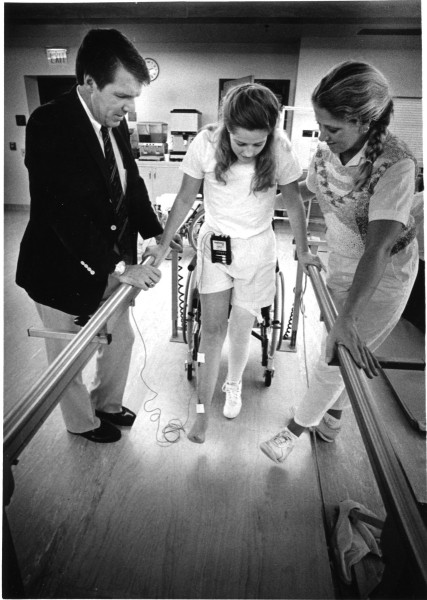
“Everything we did was empowering for the patients,” Trader shared in a 2016 Spinal Column story. “I had one man tell me: ‘The rest of the therapists taught me how to live. You showed me why I want to live.’”
By the time Trader left Shepherd Center in 1993 to work for the Atlanta Paralympic Organizing Committee, there were 10 recreation therapists helping patients learn to lead healthy and active lifestyles as independently as possible. Today, Shepherd boasts the largest recreation therapy program in the country, including sports teams, fitness facilities, and more.
Paris Carter is one of Shepherd’s recent patients who has learned firsthand the benefits of rec therapy. She came for outpatient services in 2023 with a T-10 SCI. Then 21 years old, Paris had a revelation at a Shepherd Center tennis clinic.
“I hadn’t played many sports pre-injury, other than swimming,” Paris says. “But as soon as we started playing, I was hooked. It was the most fun I’d had in a long time, and that’s really what lit my spark again.”
From there, Paris has learned as many adaptive sports as she can: basketball, sled hockey, track, rugby, wheelchair football, swimming, you name it. Next up: fencing, curling, and boxing. She’s also gone on Shepherd Center’s Adventure Skills Workshops and traveled to Utah and Colorado on Shepherd-organized trips to ski, tube, and rock climb.
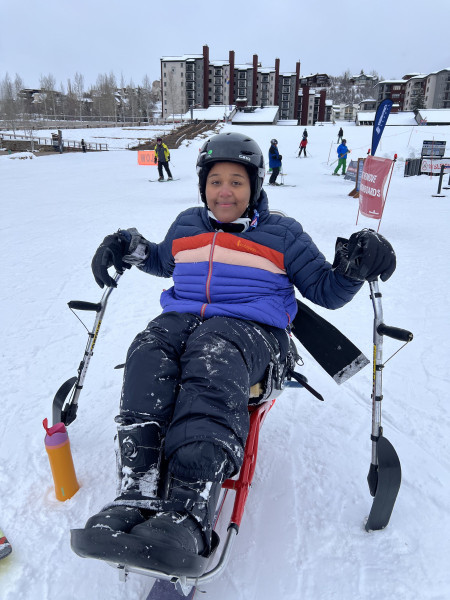 “When I was newly injured, I had guilt, shame, anger, all of it, over my injury,” Paris recalls. “And that has to go somewhere. Therapy and talking helps, but sometimes you need the physical outlets. With the adaptive sports I’ve learned, I can pack my basketball up and go shoot hoops. I can go play tennis. I can go for a swim. Be mad, get it out. And get some exercise while I do!”
A graduate student now, Paris is pursuing a Master of Science in Healthcare Management and Informatics at Kennesaw State University. She’s also a member of a wheelchair basketball team in Atlanta’s BlazeSports league.
“Everything I’m doing now started with that tennis clinic at Shepherd,” Paris says. “They’re just a hub for anything you can imagine that you’d want to try, and that’s such an important part of your recovery to get back to what you love. There are so many people with disabilities I’ve met who talk about what they can’t do. I love being able to talk about what I can do. And that’s all because of Shepherd Center.”
This story first appeared in the special 50th anniversary issue of Spinal Column magazine.
Written by Phillip Jordan
With five decades of experience, Shepherd Center provides world-class clinical care, research, and family support for people experiencing the most complex conditions, including spinal cord and brain injuries, multi-trauma, traumatic amputations, stroke, multiple sclerosis, and pain. An elite center ranked by U.S. News as one of the nation’s top hospitals for rehabilitation, Shepherd Center is also recognized as both Spinal Cord Injury and Traumatic Brain Injury Model Systems. Shepherd Center treats thousands of patients annually with unmatched expertise and unwavering compassion to help them begin again.