


Mission Moment: Seeing What Was Possible
50 years ago, the Shepherd family saw a need and came up with a plan to address it.
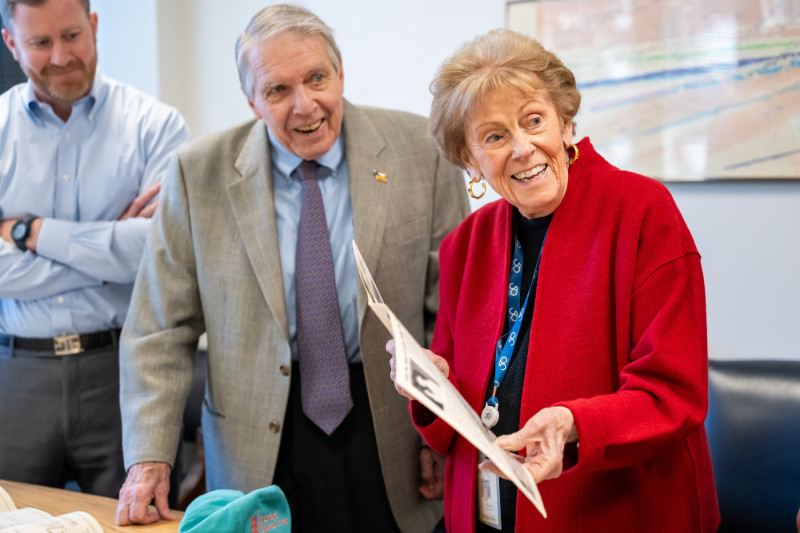

Ask friends, family members, and Shepherd Center employees about Alana Smith Shepherd, and the reply may be, “She’s a force to be reckoned with,” or, “You don’t say ‘no’ to Alana.”
Her father, an Iowa veterinarian, moved his family to Atlanta when she was 13. She was in high school when she met Atlanta native Harold Shepherd. They married in 1949.
The same year, Harold, the youngest of six children, opened Shepherd Construction Co. with two brothers. They built thousands of miles of highways and streets, and at one time managed 15 asphalt plants across Georgia and the Carolinas. James and his twin sister, Dana, were born to Alana and Harold in 1951; their brother, Tommy, five years later.
The telephone call that changed everything came on Oct. 21, 1973, a Sunday morning. James was traveling the world with friends after graduating from the University of Georgia. That morning, his friends called to tell the Shepherds that a wave had slammed James into the ocean floor while he was body surfing in Brazil. He was in critical condition, with a broken neck and pneumonia.
Harold and Alana rushed to Brazil, where they stayed for five weeks. Once they got James back to Atlanta, he spent three months at Piedmont Hospital. They kept him alive, but no institution in the Southeast could provide the medical care and rehabilitative therapy he needed for recovery. And so, still on a ventilator, his parents took him to Craig Hospital in Denver for five months. As a result of the specialized care James received, his hard work, and his family’s support, James walked out with only a leg brace and a crutch.
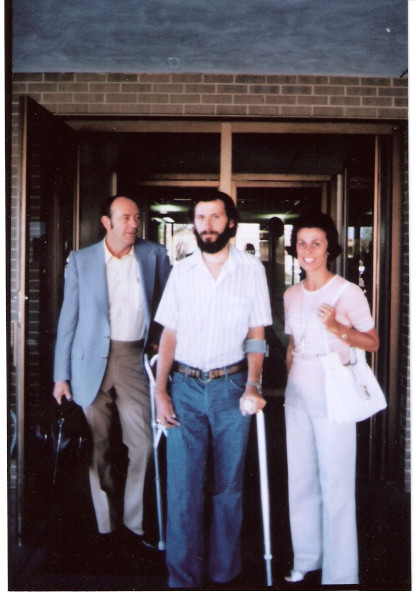
Family discussions about the need to provide treatment closer to home began with, “Why doesn’t somebody . . . ?” but soon turned to, “How can we . . . ?” The family started to raise money and build a team. Harold’s family and business connections were vital to the effort. “Without those connections and his relationships, Shepherd Center might not be here,” Jamie Shepherd says.
First on the to-do list was finding a medical director. The Shepherds immediately approached David Apple, M.D., a West Virginia native who was raised in Kentucky. While in medical school at the University of Pennsylvania, he had an internship at Grady Hospital in Atlanta. In the region’s foremost trauma center, he saw the results of devastating falls, car crashes, gunshot wounds, pedestrian accidents, and other serious incidents.
“It was a very hands-on learning experience,” he says.
Dr. Apple completed his residency in orthopedic surgery. “You could see a problem, diagnose it, and do something about it,” he says. “I was bewitched by instant gratification.” But he also did a fellowship in rehabilitation orthopedics—a not-so-immediate form of treatment.
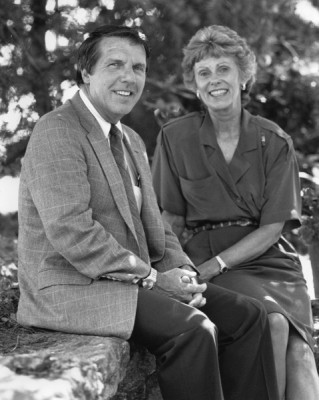 In 1973, he was affiliated with Piedmont Hospital but was involved only peripherally with James Shepherd’s care. Nonetheless, he formed a bond with the family. When the Shepherds approached him about joining their effort, a colleague warned him that pursuing the Shepherd Center dream would ruin his career. Dr. Apple was willing to help make that dream a reality.
With a co-founding physician on board, the next order of business was finding a home for the hospital. Dr. Apple proved his worth by connecting the Shepherds with West Paces Ferry Hospital, a for-profit facility on the north side of Atlanta that was planning to add a nursing home. Officials agreed to lease the space to Shepherd instead.
On August 19, 1975—667 days after James’s accident—the first incarnation of Shepherd Center, then called Shepherd Spinal Center, was ready to accept patients. A few days later, Tammy King, MSN, ET, CRRN, CCM, started work there while still in nursing school at Georgia State University.
“You walked in the door and stepped over people on the floor, because they were doing therapy on a mat in the lobby area,” Tammy recalls. “But, even in the earliest days, the culture and the caring, it was always there. So, when I graduated, I naturally stayed on as a nurse.” She stayed for 47 years, becoming the chief nursing officer in 2008 before retiring in 2023, starting many of Shepherd’s hallmark programs, and earning local and national recognition for nursing leadership. 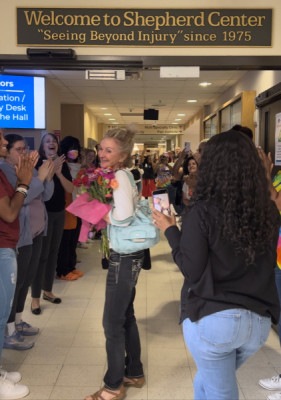
Within two weeks of opening, the hospital had a waiting list. A second physician, Herndon Murray, M.D., came on quickly. Like his friend Dr. Apple, he had held a fellowship for spinal care in California at Rancho Los Amigos National Rehabilitation Center. Although the Shepherd family wanted Dr. Murray on staff, the hospital had no money in the budget to hire him.
“I got over there and Dr. Apple said, ‘We’ll be glad to have you here as the second doctor, but they’re not going to pay you anything,’” Dr. Murray says. “Sometimes we got paid and sometimes we didn’t, but that was secondary at that point.”
Dr. Murray has interacted with hundreds of patients, many of them adolescents. He treated Woody Morgan after a diving accident in 2008. “The big thing at Shepherd when I was a patient was you don’t say, ‘I can’t,’” Woody says. “It was always, ‘I can’t yet.’”
Dr. Murray was there to make the “can’t yet” become “can.”
In 2023, Woody Morgan, M.D., returned to Shepherd as a physician, one of dozens of former patients and family members of patients so inspired that they wanted careers at Shepherd.
Also in 2023, Dr. Murray, still at Shepherd after 48 years, was recognized by the Georgia Hospital Association as a “physician hero” for tirelessly giving time, talent, and expertise to improve the hospital and the world.
Tapping Connections
As Shepherd Center got up and running, Harold Shepherd continued to run the family construction company with his brothers, but he began using his vast connections to garner support for the hospital. James, who was president of one of the divisions of the construction company, also served as chairman of the hospital’s board. For Alana, the hospital became a full-time mission.
Both the demand for, and the extent of, Shepherd’s services grew like kudzu. Dr. Apple himself funded the first recreational therapist in 1979. “I felt that if I could get patients back to being involved in what they enjoyed before, we were going to have better outcomes,” he says. “We went swimming. We went boating. I have a farm up in North Georgia and I had them come up there and spend time outdoors. They could see what was possible.”
By its fourth anniversary, the hospital employed 60 full-time staff members. As Shepherd’s patient population grew, it leased more space. But there was a philosophical gulf between Shepherd and its landlord, Dr. Apple says. “They were interested in profit. We were interested in service,” he says. “That got to be a problem.”
Shepherd Center had enough patients to justify building a hospital, but raising the money was not easy, Dr. Apple says. “Who is going to donate to a concept? We relied on friends and board members to back the initial fund.”
Finding affordable land in a good location was another challenge. Shepherd officials discovered the ideal solution in a 4.5-acre parking lot next to Piedmont Hospital. By serendipity or providence, the land was owned by real estate developer Scott Hudgens, who had leaned on Harold for advice when his granddaughter was injured not long after James’s accident. Hudgens agreed to sell it at a deeply discounted price.
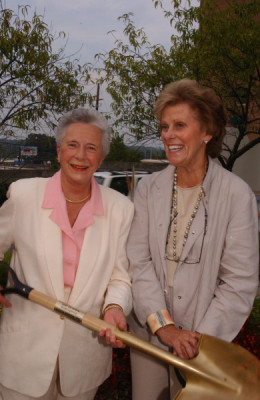
In October 1980, the founders broke ground at 2020 Peachtree Road; and, on May 13, 1982, a handful of patients boarded a van to move to the new building. One person was transported by ambulance. Greg Delay, the first patient to cross the threshold, popped the cork on a bottle of champagne.
Just seven years after its humble start, Shepherd Center was in a brand-new 93,000-square-foot building with 40 beds and a therapy gym roughly the size of the entire previous space. Soon afterward, an intensive care unit opened, providing highly sought-after care in weaning people from ventilators and starting the rehabilitation process as soon as possible. About the same time, the hospital was designated one of a handful of Spinal Cord Injury Model Systems by the National Institute on Disability, Independent Living, and Rehabilitation Research, then a program through the U.S. Department of Education. The recognition came with a $246,000 grant.
Shepherd Center officially added research to its mission in 1985. Expansion of staff and space also allowed the development of some of the programs that differentiate Shepherd, such as peer support, vocational services, and advocacy. 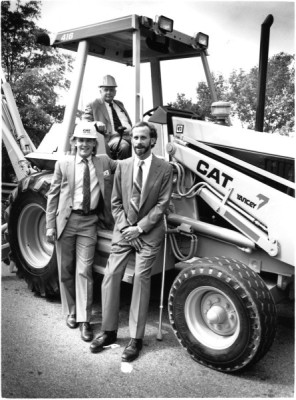
As the reputation of the hospital grew, so did the realization throughout the country of the role it played in filling a gap in the healthcare spectrum. Less than two years after the move, Shepherd was granted approval to build out the shell of the third floor, making space for an additional 40 beds. The expansion made Shepherd Center the country’s largest hospital for the comprehensive treatment of spinal cord injuries in both patient capacity and overall size.
Five years into the new facility, Shepherd reported that it served patients from 20 states and three countries beyond the United States. Another five years and the hospital doubled in size again with the Billi Marcus Building, named by her husband, the late The Home Depot co-founder Bernie Marcus, in honor of her birthday. Funding for the building was one of many generous donations from the Marcus family and foundation.
By then, a third generation of Shepherds was on the scene. James’s children, Jamie and Julie, would sometimes come with their father to the hospital. They confess to playing with wheelchairs and even getting caught racing them in the tunnel that connects Shepherd Center to Piedmont Hospital. “There were security cameras,” Jamie says, “and the security guards came and got us.”
 Shepherd Center was no longer only serving people with spinal cord injuries. The Andrew C. Carlos Multiple Sclerosis Institute opened in 1991; a third specialty, acquired brain injury, came on board in 1995. Shepherd was already treating brain injuries in patients who had damage to their spinal cords. Now, the hospital would treat those who had only brain injuries, including strokes. The expansion in services led to a name change, and the Shepherd Spinal Center became Shepherd Center: A Catastrophic Care Hospital.
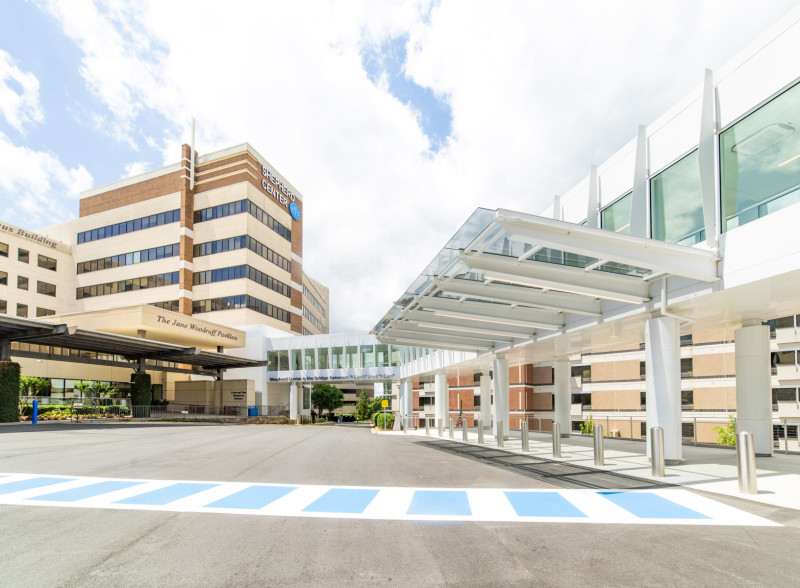
In 2008, Shepherd expanded again with the opening of the Jane Woodruff Pavilion and the expanded Billi Marcus Building, providing space for more beds and outpatient and day programs. The Virginia C. Crawford Nutrition Center added a full cafeteria for the first time.
That same year, Shepherd reinforced its commitment to patients and families when it opened the Irene and George Woodruff Family Residence Center with 84 wheelchair-accessible apartments and community space, which it offered to families at no cost during their loved one's time at Shepherd. This facility and ongoing support from donors helped address three major concerns for families—ensuring their ability to support their loved one emotionally during the rehabilitation process, learning alongside them so they could assist when they return home, and relieving the financial burden of being far from home.
Written by Gayle White
This story is an excerpt from “Mission Moments: 50 Years of Rebuilding Lives One Moment at a Time,” a book celebrating Shepherd’s 50th anniversary in 2025. You can explore the full eBook or purchase a hardcover copy here.
With five decades of experience, Shepherd Center provides world-class clinical care, research, and family support for people experiencing the most complex conditions, including spinal cord and brain injuries, multi-trauma, traumatic amputations, stroke, multiple sclerosis, and pain. An elite center ranked by U.S. News as one of the nation’s top hospitals for rehabilitation, Shepherd Center is also recognized as both Spinal Cord Injury and Traumatic Brain Injury Model Systems. Shepherd Center treats thousands of patients annually with unmatched expertise and unwavering compassion to help them begin again.