


Mission Moment: Research and Innovation
Integrating research and technology into clinical practice.
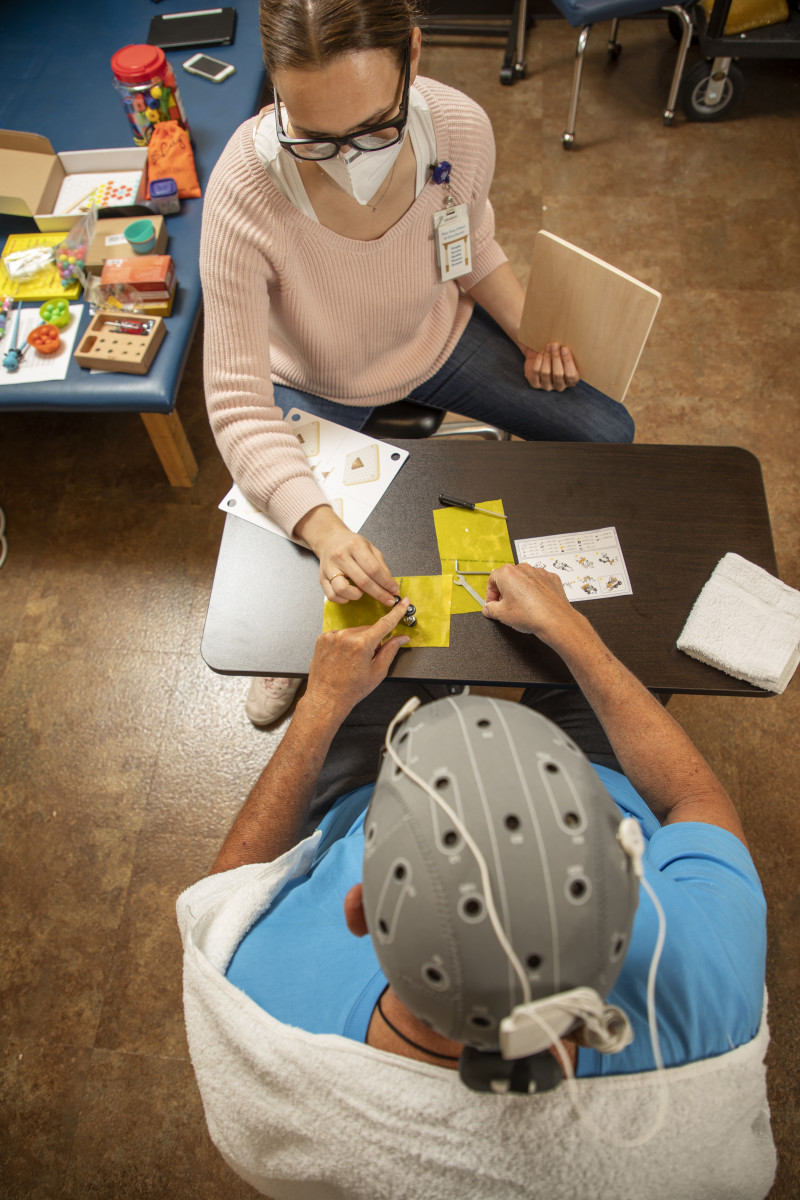
Healthcare is constantly changing,” says Shari McDowell, PT, DPT, FASIA, Shepherd Center's chief operating officer. “If you’re still doing the same thing you were doing five years ago, you’re behind. You have to adapt. But technology and innovation for the sake of technology and innovation is not what it’s about. It has to make a difference in patients’ lives. We give our staff a lot of autonomy to be smart, and we don’t have a lot of bureaucracy here, so we’re able to move things forward pretty quickly when we have an idea. Most of our best ideas come from line staff, not managers. They’re in the trenches, and they’re really creative about what they do.”
Integrating research and technology into clinical practice — and sharing information freely with other institutions — ensures that more people benefit from every advance made. “Our research culture at Shepherd was consciously developed,” says Deborah Backus, PT, Ph.D., FACRM, who is vice president of research and innovation. “We weren’t setting out to make everybody a researcher, but we wanted everybody to understand the research process and help inform it—maybe bring us questions or know how to use evidence in a meaningful way.”
The result is that clinical staff are more fully invested in Shepherd’s research initiatives, and researchers are more attuned to patients’ needs. A sampling of recent or ongoing projects shows the breadth of Shepherd’s research. In spinal cord injury research, Edelle Field-Fote, PT, Ph.D., FAPTA, FASIA, leads the Hulse Spinal Cord Injury Lab and a team working on augmentation, combining strategies to modulate what’s happening in the nervous system to help it respond better to interventions. In brain injury research, George “Brick” Johnstone, Ph.D., ABPP, and his team are focusing on the patient’s return to employment, as well as the impact of spirituality on recovery. Through the SHARE Military Initiative, researchers are looking at ways to help manage substance abuse among veterans. “There’s some very exciting work there,” Dr. Backus says.
Shepherd is at the forefront of multiple sclerosis rehabilitation and wellness research, led by Brad Willingham, Ph.D., who is working on exercise interventions as well as the use of telehealth and remote monitoring. The findings will benefit not just people with multiple sclerosis, but patients in all Shepherd programs and beyond.
In addition, a team of specialists regularly lead clinical trials of pharmaceuticals and medical devices either to receive Food and Drug Administration approval or demonstrate market potential. These efforts, led by Ismari “Issi” Clesson, RN, BSN, CCRP, CIP, have included drugs that have revolutionized multiple sclerosis treatment over the past two decades and enabled people with multiple sclerosis to be healthier for longer.
Artificial intelligence (AI) offers exciting opportunities to build on what Shepherd already does well. With 25 years of solid data on patients, Shepherd researchers want to explore the use of pragmatic trials rather than randomized control trials (RCTs), which have long been the industry standard. In RCTs, data is gathered from an intervention group and a control group, and then comparisons are made. But, because the sample groups are small, it takes a lot of RCTs to reach broad conclusions.
“In pragmatic trials, information is collected as part of the regular clinical process, anonymized to protect patient privacy, and then added to our database,” Dr. Backus says. “With AI tools, we’ll be able to work through our data more efficiently and do more predictive analysis. We will be able to say, ‘OK, based on the thousands of patients who came before, this is what we think will work best for this patient.’ That may help them get better faster, maybe help them return to work or their lifestyle faster, give them a better quality of life, and decrease overall healthcare expenses. That would be the ultimate goal.”
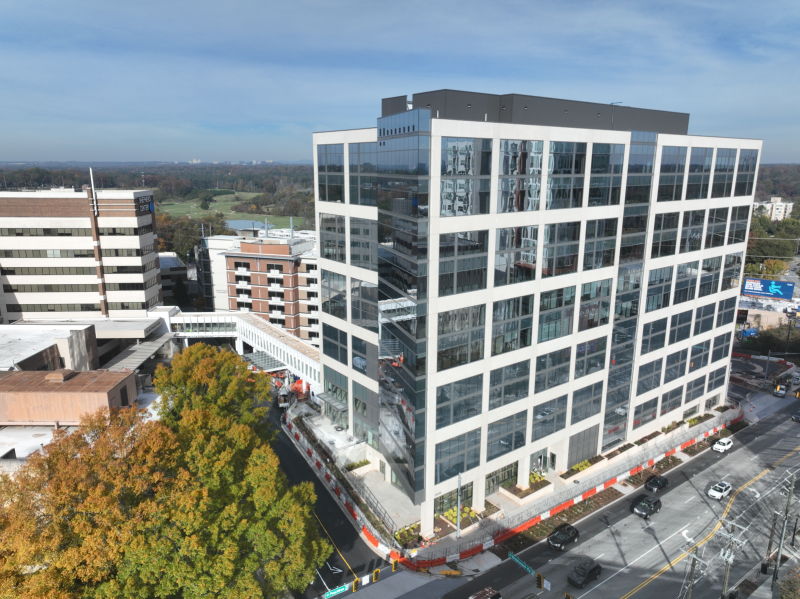 The Cox Innovation Institute is designed to enable the team at Shepherd to be more effective and efficient in delivering individualized solutions for patients and increasing accessibility to world-class care and will include a wellness and telehealth suite, along with a fully equipped motion analysis lab, with the newest technologies to collect data on people’s cognitive and behavioral status.
In addition to more space for research, the Innovation Institute in the Marcus Center for Advanced Rehabilitation will have a smart tech hub where Shepherd can work with people with disabilities, industry partners, technology developers, data scientists, clinicians, and researchers to identify the most meaningful problems and solutions. “We’ll expand our 3D printing lab,” Dr. Backus says. “People can learn how to use 3D printing and come up with some of the tools they need in their everyday lives that otherwise would not be affordable.”
Written by Teresa Weaver
This story is an excerpt from “Mission Moments: 50 Years of Rebuilding Lives One Moment at a Time,” a book celebrating Shepherd’s 50th anniversary in 2025.
With five decades of experience, Shepherd Center provides world-class clinical care, research, and family support for people experiencing the most complex conditions, including spinal cord and brain injuries, multi-trauma, traumatic amputations, stroke, multiple sclerosis, and pain. An elite center ranked by U.S. News as one of the nation’s top hospitals for rehabilitation, Shepherd Center is also recognized as both Spinal Cord Injury and Traumatic Brain Injury Model Systems. Shepherd Center treats thousands of patients annually with unmatched expertise and unwavering compassion to help them begin again.