


Mission Moment: Becoming ‘Who You Are’
Shepherd Center therapists help teenagers rise above trauma.
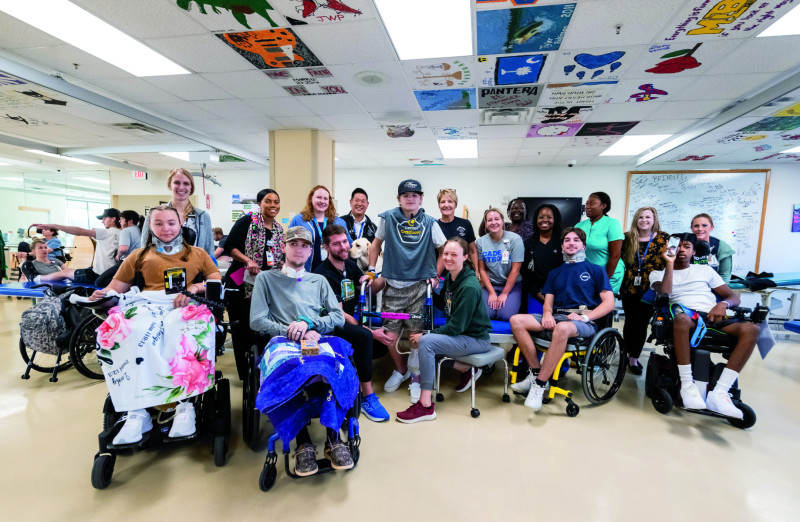
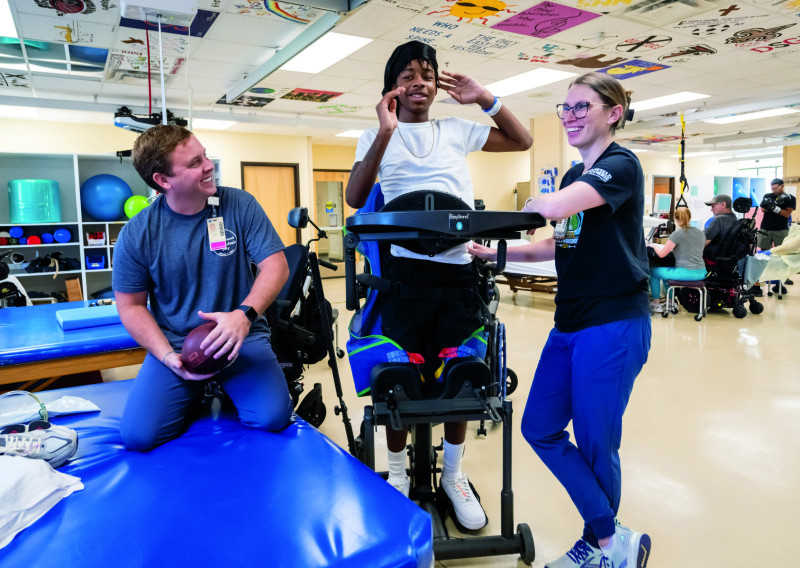
Chris Ready, PT, DPT, NCS, sums up the atmosphere among the adolescents and their therapists in Shepherd Center’s fourth-floor Spinal Cord Injury Unit: “I mess with Brian, he messes with me, and the kids mess with both of us.”
For Chris and fellow therapist Brian Tanner, PT, DPT, NCS, teasing is a way to keep the atmosphere lighthearted while pushing their young charges to work hard and stay positive. “I think it’s kind of a trust- building exercise,” Brian says. “If I’m vulnerable enough for you to make fun of me, then you can trust me to get you to your goals in life.”
Teenagers at Shepherd have the same concerns as any of their peers. “They’re trying to find their identity,” Brian says. “That doesn’t change because you have a catastrophic injury. In fact, it might be exacerbated by having an injury, because who you thought you were going to be may not turn out to be who you are.”
“The fun part is finding different ways to connect with these kids to get them motivated,” Chris says, “like playing video games, or listening to rap, or talking about their boyfriend or girlfriend.”
Shepherd treats about 60 inpatients with spinal cord injuries and 25 inpatients with brain injuries ages 12 to 17 each year. Adolescents with brain injuries typically need time to progress their cognitive and behavioral abilities and will begin interacting with their peers during their time at the Pathways day program. Those with spinal cord injuries are cohorted right away.
The Adolescent Program takes an interdisciplinary approach that includes family involvement, stigma management, and self- advocacy. With a teacher and academic coordinator on site, there also is a major emphasis on facilitating their return to school, whether that’s middle school, high school, or college. More than 90% of the adolescents with spinal cord injuries go back to school within two weeks of discharge, and 95% of those graduate with their class. Shepherd Center staff members often visit schools with their patients to ease the transition, check out accessibility, and meet with teachers and classmates.
But adolescents don’t have to wait until they are discharged to have some typical teenage experiences. Shepherd provides regular Friday outings for pizza, shopping, bowling, movies, and other “normal” activities. One Friday, the group made tie-dyed T-shirts. Another Friday, they piled in a Shepherd bus to go to Zoo Atlanta. And at Shepherd, adolescent patients don’t miss milestones such as homecoming, prom, and senior photos just because they’re in the hospital. Instead, the staff brings these events to them.
The entire spinal cord injury adolescent population and staff turn out to celebrate whenever a teenager graduates from Shepherd. The culmination of the graduation ceremony is presentation of the Shepherd Center alumni shirt.
Cam Rhoden, 13, of Jacksonville, Florida, looked a bit sheepish at being the center of attention when he was ready to leave in the summer of 2024. Cam had been injured while swimming at an RV park.
Doctors who treated Cam immediately after his injury told his parents he would likely be paralyzed from the neck down. But by the time he left Shepherd Center, he was doing wheelies in a wheelchair. “We never would have dreamed he would make the progress he has made,” says his mother, Brooke.
“I was scared at first,” Cam says, but joking with Chris and Brian made him feel comfortable. “We picked on each other a lot,” Cam says. “They are both great.”
Shepherd is only the beginning of their relationships with many patients, both therapists say. “What’s great about the adolescents is that you get to kind of see them grow up,” Chris says. “When patients graduate from high school, they’ll send us a senior picture or an announcement. I had a patient who bought his first house and invited me to the housewarming. We were a part of their lives while they were here, but, with the majority of them, we also get to be a part of their lives going forward.”
Written by Gayle White
This story is an excerpt from “Mission Moments: 50 Years of Rebuilding Lives One Moment at a Time,” a book celebrating Shepherd’s 50th anniversary in 2025. You can explore the full eBook or purchase a hardcover copy here.
With five decades of experience, Shepherd Center provides world-class clinical care, research, and family support for people experiencing the most complex conditions, including spinal cord and brain injuries, multi-trauma, traumatic amputations, stroke, multiple sclerosis, and pain. An elite center ranked by U.S. News as one of the nation’s top hospitals for rehabilitation, Shepherd Center is also recognized as both Spinal Cord Injury and Traumatic Brain Injury Model Systems. Shepherd Center treats thousands of patients annually with unmatched expertise and unwavering compassion to help them begin again.