


Men Making Health a Priority
Two Shepherd employees discuss their approach to health.
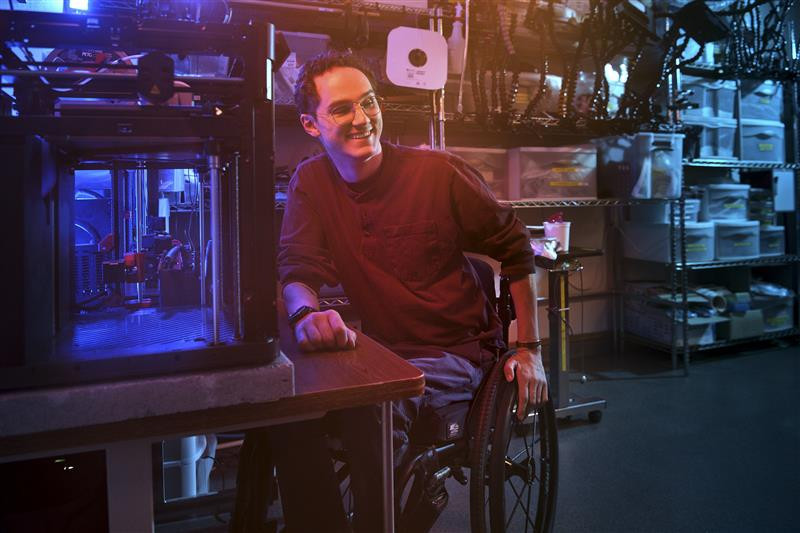
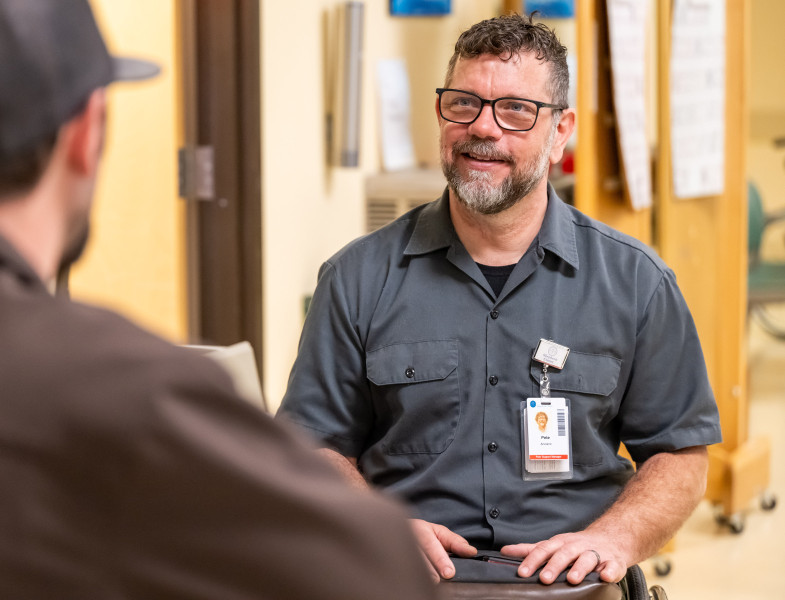
It's no secret that men don’t always prioritize their health. In honor of Men’s Health Awareness Month, we spoke with two men who have sustained spinal cord injuries about how they approach their health and what being health-aware means to them.
For Pete Anziano, Shepherd Center’s peer support manager, health and wellness have always been priorities, even before his spinal cord injury. He had a very active job and physical hobbies. In his mid-20s, he started to “pay attention to the food and cancel out as many processed foods as I could,” he says.
Anziano sustained a spinal cord injury at 33. “It sent my sense of self into question and certainly my sense of the pursuit of health,” he explains.
Like many others, Anziano grappled with what staying healthy would look like when he could no longer be as physically active as he once was. While still figuring out his new physical limits, he also had to learn about his new body.
“I was learning about pressure ulcers, urinary tract infections, bowel impaction, and all the other secondary complications that come with a spinal cord injury,” he says.
It took him a while to get the hang of it, but when he realized that being “physically, mentally, and spiritually healthy” was key, finding ways to optimize his health became easier.
“For example, with bowel impaction, if I'm eating right, in appropriate amounts, and staying hydrated, it helps me avoid those secondary complications.”
Figuring out how much food he needed to consume was another obstacle for Anziano. He found out he could no longer eat the same amount he did before his injury. “Because I'm not using the big factories — my big leg muscles, which consumed a lot of energy — I have to regulate the volume of food I take in.”
As far as his physical routine goes, Anziano is not a gym guy.
“Rather than going to the gym, I make my daily life therapeutic. I challenge myself physically as if I were going to the gym. If the only path is up a hill, through gravel, or across the grass, I do the hard work. I don't put my well-being or safety in jeopardy, but I'm always ready to do the hard work.”
Jared Grier, Shepherd’s assistive technology rehabilitation engineer, sustained a spinal cord injury at the C6 level 10 years ago. Initially, he struggled with his health. He lost a lot of weight and strength and had trouble eating. As he progressed in his rehabilitation, his focus changed.
“I really focused on trying to regain my independence. My health and my strength were a huge focus because those were the important foundations for gaining my independence.”
It was critical for him to be strong enough to manage self-care, including transfers. He knew that to get stronger, he would have to maintain overall physical health. For Grier, this includes keeping a healthy bladder and proper bowels, eating well, and having a diverse and balanced diet.
“You know, I look at my health, my physical strength, my well-being as essential to just being able to continue living the life I have.”
Food is an essential part of his equation for independence. He is conscious about what he eats and how much, ensuring he always includes plenty of vegetables for fiber. He is also highly aware of how much protein he’s getting, with a mix of chicken, red meat, and fish for different essential nutrients.
He recognizes the obstacles people with spinal cord injuries face. “One of the challenges for people with spinal cord injuries, especially higher-level injuries, is their ability to cook for themselves. And because you don’t have that ability, we tend to resort to a lot of fast food or microwavable meals with high sodium and preservatives, which are very low in nutrition.”
Grier’s mission to achieve optimal health also includes prioritizing his mental health.
“With depression running in my family — and while I haven’t been specifically diagnosed — I do take medication to help keep my baseline steady.”
Grier also advocates for mental health therapy. “In therapy, I’ve learned coping mechanisms and how to recognize triggers. I know to be mindful. I know I tend to spread myself thin doing a lot, so now I make sure to give myself time to stop for a second, focus on myself, and take the time I need.”
Written by Dominique McPhearson
With five decades of experience, Shepherd Center provides world-class clinical care, research, and family support for people experiencing the most complex conditions, including spinal cord and brain injuries, multi-trauma, traumatic amputations, stroke, multiple sclerosis, and pain. An elite center ranked by U.S. News as one of the nation’s top hospitals for rehabilitation, Shepherd Center is also recognized as both Spinal Cord Injury and Traumatic Brain Injury Model Systems. Shepherd Center treats thousands of patients annually with unmatched expertise and unwavering compassion to help them begin again.