


'Lift Yourself Up:' Tachiana Ingram Navigates Motherhood and Multiple Sclerosis
Tachiana and her daughter, Adia, have grown together through navigating Tachiana's illness



Tachiana Ingram’s parenthood journey has been intertwined with another important journey in her life — navigating multiple sclerosis (MS).
Her first symptoms appeared when she was pregnant with her daughter in 2006. Her vision would blur, and at times, go dark completely.
“I watched all the episodes of [A Baby Story on TLC], read all the books. I was that person — did all the research, and probably scared myself more than needed,” she reflects on her pregnancy. “So, it completely threw me because going blind was not one of the things that was on my checklist [of pregnancy symptoms].”
She went to a specialist who eased her worries. While rare, vision issues can be a pregnancy complication, he said. 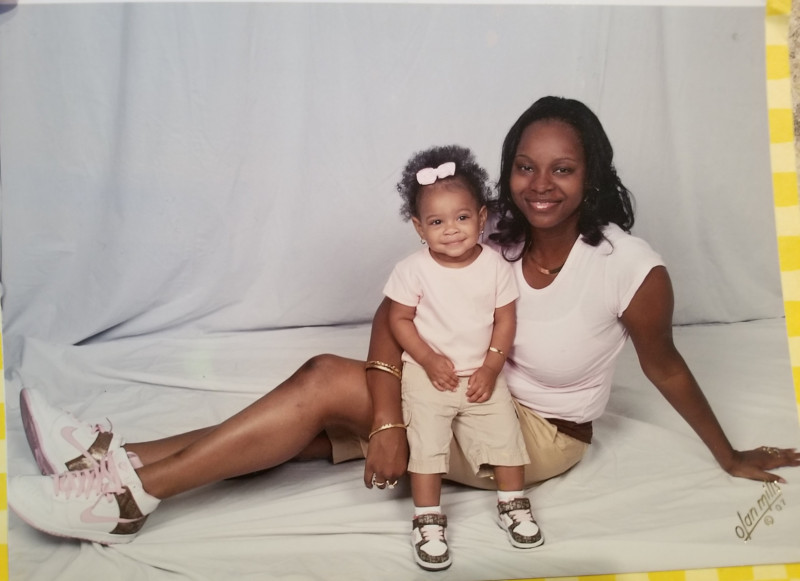
She gave birth to her daughter, Adia Sims, in 2006. But her vision problems and other severe symptoms continued on and off for years, leading her to the emergency room. Doctors would run MRIs, CT scans, and ultrasounds, but the tests never offered the answers they were looking for.
Eventually, she got a referral to Shepherd Center, where doctors in the Andrew C. Carlos Multiple Sclerosis Institute confirmed that Tachiana had MS. It was October 2015, nearly 10 years after her symptoms appeared.
By that time, her symptoms made her give up many of the things she loved — baking, running, and traveling with her daughter. She used a walker to get around, and in her initial consultation at Shepherd Center, she struggled to walk at all. But that was all about to change.
“Finally, I was somewhere where people actually understand, and they know what’s going on,” she says. “Within my first three or four treatments, my vision started to get better.”
She began intensive physical therapy to rebuild her strength, and the MS staff gave her tools to keep improving at home in between sessions. But even as her symptoms improved, Tachiana had a long journey in front of her, including helping Adia understand her condition.
“I think her biggest [concern] was, ‘There's no cure, are you going to die?’” Tachiana remembers. “That just broke me hearing her say that.”
Tachiana encouraged Adia to ask questions about her MS, as well as to voice her feelings when she was scared or upset. She made Adia appointments with a therapist so she could freely discuss her feelings. And she made it a point to show Adia some of the realities of living with MS.
“I also had to teach myself to stop hiding my episodes or symptoms when I was feeling bad, so she could get a better understanding and get comfortable with seeing me like that,” she says.
 Today, Tachiana and her daughter are back to doing many of the things they love: cooking and baking, going on trips, and living an active lifestyle. She emphasizes that it’s taken time for them to get to this point, something she encourages other parents with MS to embrace.
“Be patient, give yourself some grace, try to be as positive as you can,” she says. “It’s okay to ask for help ... lift yourself up just as much as you lift your kids.”
And for children with parents who have MS, Adia, now 19, has some advice too. “It can be hard or confusing to understand, but the best way is to take it slow. It’s okay to ask questions,” she says. “It’s going to be hard, but over time you’ll get used to it and find ways to help with it and find better ways to cope with it.”
Written by Erin Kenney
With five decades of experience, Shepherd Center provides world-class clinical care, research, and family support for people experiencing the most complex conditions, including spinal cord and brain injuries, multi-trauma, traumatic amputations, stroke, multiple sclerosis, and pain. An elite center ranked by U.S. News as one of the nation’s top hospitals for rehabilitation, Shepherd Center is also recognized as both Spinal Cord Injury and Traumatic Brain Injury Model Systems. Shepherd Center treats thousands of patients annually with unmatched expertise and unwavering compassion to help them begin again.