


Jonathan Booth Returns to Work With Help From SHARE Military Initiative
After serving as an infantryman, Jonathan Booth turned to SHARE to chart a new course for his career
Jonathan Booth enlisted in the U.S. Army at 18, drawn by a mix of reasons: a desire for stability, the benefits of serving, and — most of all — a sense of purpose. From July 2022 to June 2024, he served as an infantryman.
His military career was cut short when he fell 12 feet and landed on his head. He doesn’t remember the fall, but he does remember the concussion and the headache that followed. After returning from the field, his symptoms escalated: dizziness, nausea, and migraines that were hard to predict and harder to power through. He also injured his right arm, leaving nerve damage that can cause him to suddenly lose sensation. The head trauma eventually led to a medical discharge.
“I didn’t know what to do when I got out of the Army. I was lost,” Jonathan says. He wanted to find a new purpose and connected with Camp Southern Ground’s Warrior PATHH program, which aims to facilitate post-traumatic growth among combat veterans.
During a meeting, Jonathan talked about his injury and the symptoms that continued to shape his life. Jennifer Selke, Ph.D., Warrior PATHH director, recommended Jonathan try Shepherd Center’s SHARE Military Initiative, an evidence-based rehabilitation program for military veterans, service members, and first responders who are ready to accept help and healing for traumatic brain injuries and mental health concerns.
Jonathan enrolled in SHARE in September 2025 and spent 12 weeks in the program, working on improving his short-term memory, physical and cognitive symptoms, and overall well-being.
“They have everything laid out for you,” he says. “You just have to show up and be willing to do what needs to be done.”
When Jonathan arrived, he had spent much of the previous months in bed. He was stiff and couldn’t move his neck, and even rolling to his side could make the room spin. Specialized physical therapy helped him rebuild mobility and confidence in movement. Cognitive rehabilitation helped improve his short-term memory.
Healing also happened outside traditional therapy rooms. In recreational therapy, Jonathan practiced cognitive and balance tasks in Shepherd’s heated pool — walking backward, tracking a straight line, and turning his head side to side while staying steady.
Returning to Daily Life and Work
After graduating from SHARE on Dec. 22, 2025, Jonathan wanted to rebuild structure in his day-to-day life, including returning to work. Through SHARE’s vocational rehabilitation program, he met Post-Acute Vocational Rehabilitation Specialist Gabriella (Gabby) King, M.Ed., CRC, NCC, who helped him translate momentum in rehab into next steps in the community.
“Gabby is great,” he says. “She’s very kind and go-getting.”
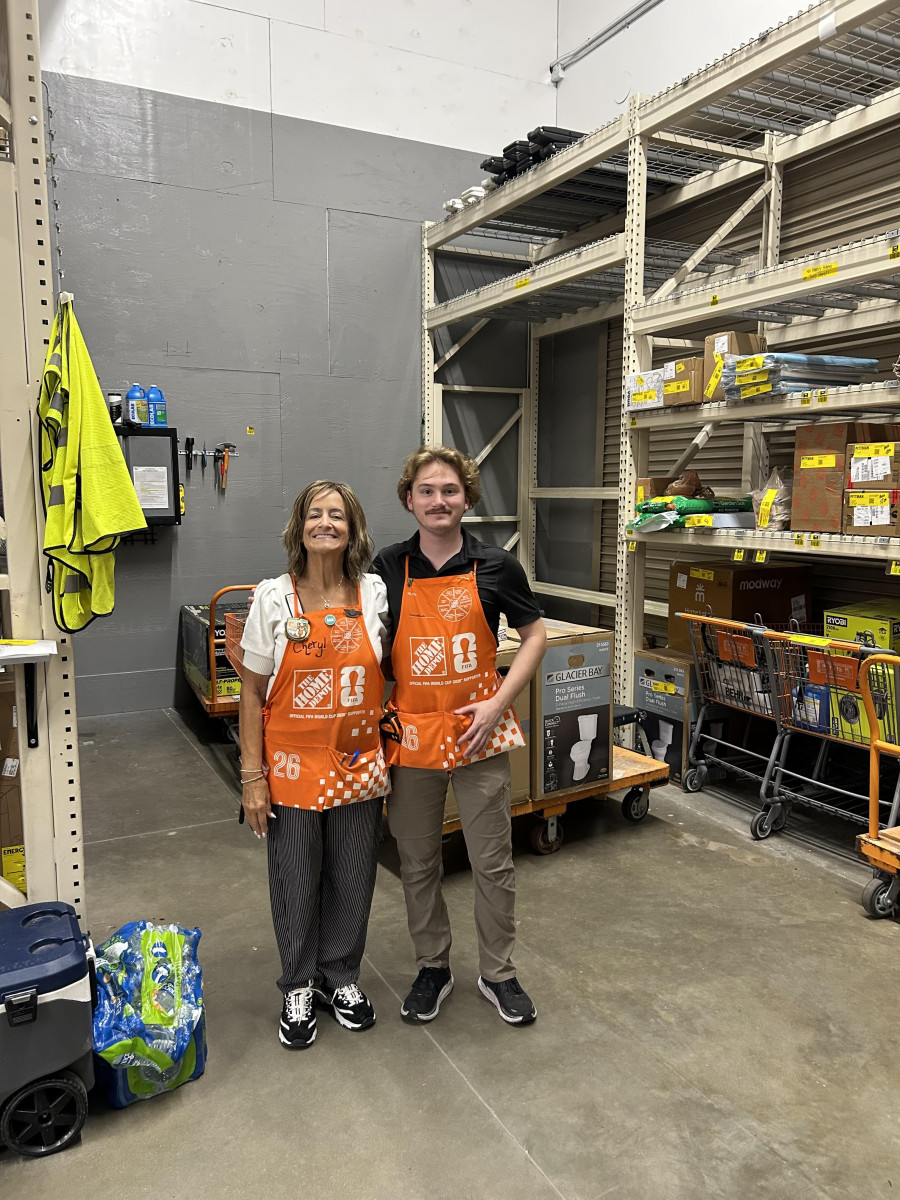
Before Jonathan left SHARE, they talked about job options, and they stayed in touch afterward. Through SHARE’s long-standing partnership with The Home Depot, King connected Jonathan with a Home Depot representative, helping him land an interview within a week. In February 2026, Jonathan started a part-time role in customer service with the company.
“I was able to move to full-time in a month. It’s been a good change of pace,” he says.
Jonathan has also been accepted to Jacksonville University and plans to pursue air traffic control, working toward a bachelor’s degree in aviation management. King has continued to help him along the way, offering insight and preparing him as he navigates the process of securing veteran benefits for his school funding.
“The staff at SHARE is absolutely phenomenal,” he says. “They’re very caring, patient, and observant. They know what they’re doing.”
Today, Jonathan’s return to work is more than a job update — it’s a marker of momentum. With diminished symptoms, stronger skills, and a plan for what comes next, he’s building a new life with purpose.
Written by Damjana Alverson
With five decades of experience, Shepherd Center provides world-class clinical care, research, and family support for people experiencing the most complex conditions, including spinal cord and brain injuries, multi-trauma, traumatic amputations, stroke, multiple sclerosis, and pain. An elite center ranked by U.S. News as one of the nation’s top hospitals for rehabilitation, Shepherd Center is also recognized as both Spinal Cord Injury and Traumatic Brain Injury Model Systems. Shepherd Center treats thousands of patients annually with unmatched expertise and unwavering compassion to help them begin again.