


Jodi Arminio's Rare Disease Support Group Offers Guidance, Comfort, & Camaraderie
After being diagnosed with neuromyelitis optica spectrum disorder, Jodi supports others with rare autoimmune conditions
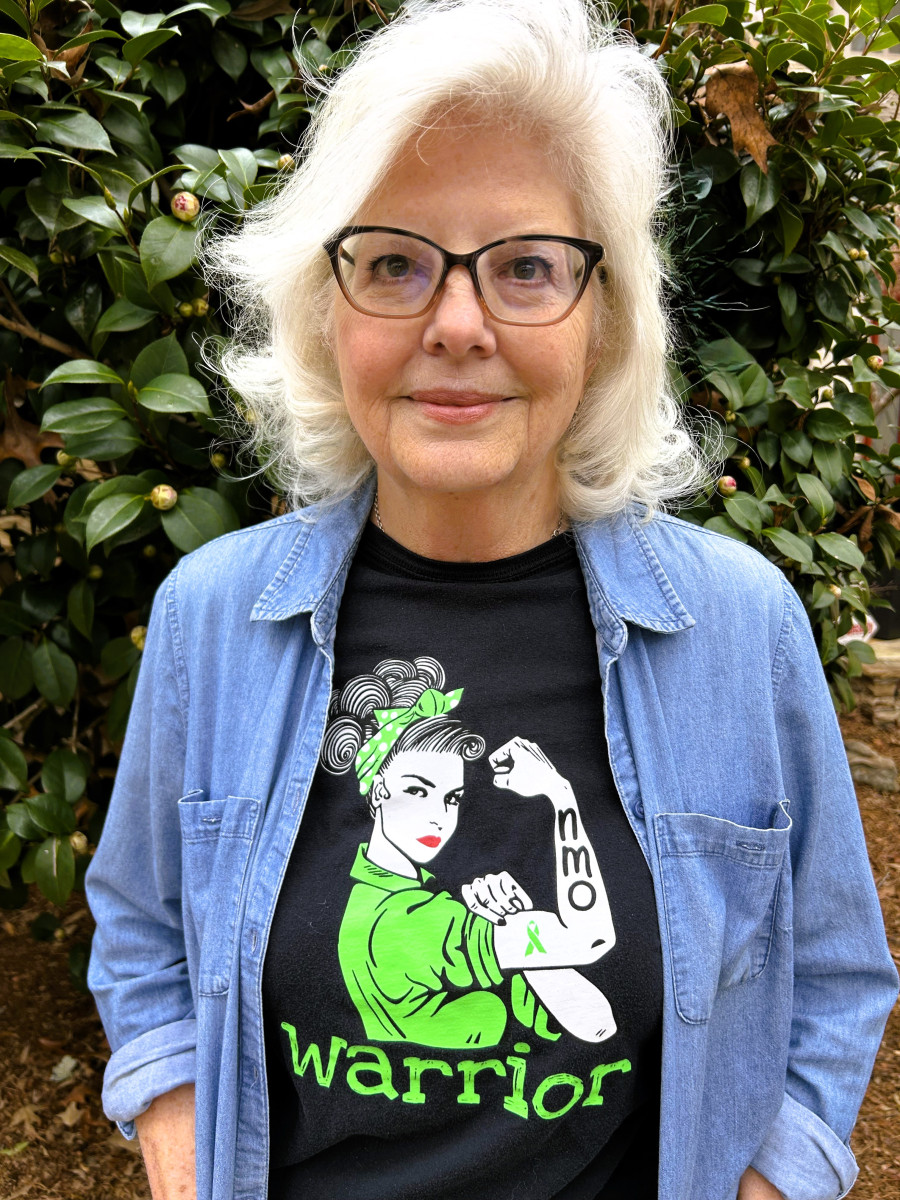
In retrospect, Jodi Arminio, 70, says she started noticing her symptoms in 2010.
“I had periodic weakness and numbness in my left leg, but feeling would come back in 30 seconds. By the end of 2010, the weakness had virtually disappeared,” she explains.
The following year, Jodi began experiencing severe loss of vision in her left eye that a neuro-ophthalmologist discovered was due to inflammation of her optic nerve. She brought these issues to neurologist Yazan Houssami, M.D.
“He put all my symptoms together immediately and did a blood test to confirm that I had neuromyelitis optica [spectrum disorder] (NMOSD). I’m so thankful he recognized what I had so fast, or I wouldn’t have been so lucky.”
In late 2012, Dr. Houssami referred Jodi to receive specialized care at Shepherd Center’s Andrew C. Carlos Multiple Sclerosis Institute, which treats a variety of autoimmune diseases, under the guidance of Ben Thrower, M.D.
“Dr. Thrower is amazing. He was able to explain everything about my condition in terms I could understand,” Jodi says. “The entire team has been very helpful, including the infusion nurses. Not one of them there isn’t an angel.”
NMOSD is an autoimmune disease that causes inflammation of the spinal cord and optic nerves. It presents similarly to multiple sclerosis (MS) as it attacks the body’s nervous system.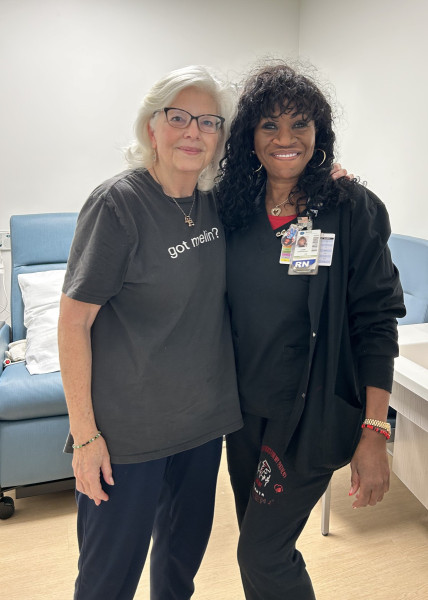
“At one point, NMOSD was thought to be a variant of MS before they discovered the antibody in NMOSD. It mimics MS, and a lot of NMOSD patients were first diagnosed as having MS and treated with MS drugs that they didn’t respond to. Now, there are four FDA-approved treatments for NMOSD,” Jodi says.
While the severity of NMOSD symptoms can vary greatly from person to person, Jodi describes her NMOSD as an invisible disease. While she occasionally uses a cane for stability, has loss of peripheral vision in her left eye, and experiences pain and fatigue, she says that her symptoms are managed now. It took the right treatment and hard work to get to this point.
“I feel very blessed. In the early days, I didn’t know anybody else with NMOSD. The two big organizations for NMOSD patients are the Guthy-Jackson Foundation funding NMOSD research and the Siegel Rare Neuroimmune Association (SRNA). I started connecting with them, and it was eye-opening to see so many people out there like me,” Jodi says.
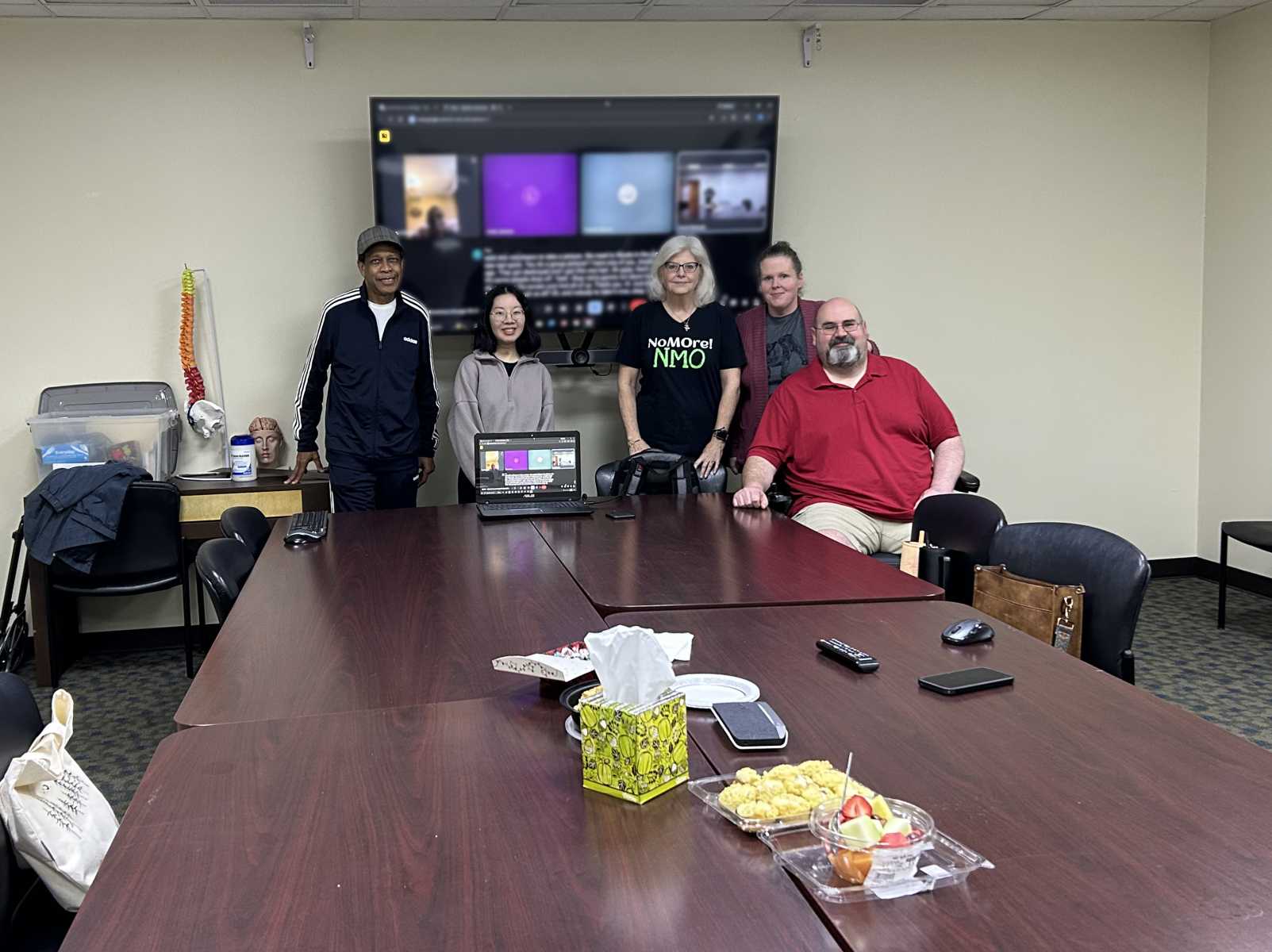
That’s why in 2014, Jodi decided to begin a support group hosted at Shepherd Center. Co-run with her right-hand person, Travis Edwards, the group has one primary focus.
“We want to help [others with neuroimmune diseases] recognize that they are not alone,” Jodi says. “Inviting anyone with a rare neuroimmune disorder, we gather monthly to welcome folks new to the disease, listen to members with questions or issues, celebrate milestones, and keep in touch with those experiencing setbacks or new attacks."
 Jodi is optimistic that there will someday be a cure for NMOSD. She contributes to NMOSD research by participating in a study at Shepherd to determine the long-term cognitive and physical effects of the disease.
“I can't thank Shepherd enough,” Jodi says. “They've been wonderful about providing accessible space for our support group to meet. As a patient, I really appreciate the comprehensive care I receive and friendships I’ve made.”
Written by Damjana Alverson
Are you living with NMOSD?
Shepherd Center researchers are inviting volunteers to join a research study testing a new, non-invasive device designed to help improve walking for individuals with NMOSD who have difficulty walking. Read more about the research opportunity here.
With five decades of experience, Shepherd Center provides world-class clinical care, research, and family support for people experiencing the most complex conditions, including spinal cord and brain injuries, multi-trauma, traumatic amputations, stroke, multiple sclerosis, and pain. An elite center ranked by U.S. News as one of the nation’s top hospitals for rehabilitation, Shepherd Center is also recognized as both Spinal Cord Injury and Traumatic Brain Injury Model Systems. Shepherd Center treats thousands of patients annually with unmatched expertise and unwavering compassion to help them begin again.