


It’s Not the Same: What My Stroke Taught Me About Memory Loss and Being Misunderstood
Marcus M. Johnson, Jr. reflects on memory loss after a stroke
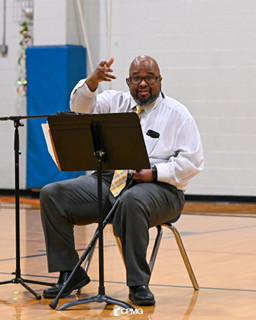
“Memory loss does not mean loss of intelligence.”
After my stroke, I learned something I had never really thought about before: memory loss is not just a medical issue — it's a social one.
People notice memory problems quickly. You repeat something, forget something, lose your train of thought, and the reaction is almost immediate. People start to assume. They don’t always say it out loud, but you feel it. They talk to you differently. They explain things differently. It’s like the moment memory slips, people believe everything else has slipped with it.
That assumption isn’t always true.
My stroke was a hemorrhagic stroke — what is known as an acquired brain injury (ABI). It didn’t come from a fall or an accident. It came from inside my body. What it left me with was not a loss of who I am or how I think. What it left me with, among other things, was some difficulty with short-term memory and fully remembering who I have been.
And that’s where the misunderstanding starts.
Because when people hear “memory loss,” many of them think of dementia. They assume decline. They assume confusion. They assume everything is fading.
But memory loss after a brain injury is not the same thing as dementia.
Dementia is generally progressive. It can affect memory over time, along with judgment, reasoning, language, and independence. Brain injuries — like stroke or traumatic brain injury — are different. They usually come from a specific event. They can leave real challenges, but for many people, those challenges are often specific physical or cognitive functions. You might struggle with memory, but still think clearly, make decisions, and understand the world around you.
I know that difference firsthand. I’m living it.
What made that difference even clearer was the kind of treatment I received. At Shepherd Center and later through Shepherd Pathways, everything was focused on recovery and adaptation. Therapy wasn’t about expecting decline — it was about improving function, rebuilding independence, and learning how to work through what had changed.
That matters.
Because it reinforces something that doesn’t always get said clearly:
Memory loss does not equal loss of intelligence.
At the same time, this experience has also shown me something else.
Even though the medical differences between dementia and brain injury are real, people don’t always treat them differently in everyday life. If someone forgets things or struggles to keep up, the response can look the same regardless of the cause.
That’s where my perspective changed.
This experience has given me a deeper sense of empathy — not just for people living with dementia, but also for the caregivers around them. Caregivers are often trying to help while dealing with uncertainty, stress, and incomplete information. They may not fully understand what’s happening neurologically, but they’re still navigating it every day.
And that’s not a failure — that’s reality.
Once you understand that, it becomes easier to see why frustration shows up on both sides — patients and caregivers alike.
That’s why support matters. Education matters. Sharing our perspectives matters.
Because sometimes the issue isn’t just memory loss itself — it’s what people assume memory loss means.
If there is one thing I hope people take from this, it’s simple:
Not all memory loss is the same — and it doesn’t mean a person has lost who they are.
Marcus M. Johnson, Jr. is a stroke survivor and former Shepherd Center patient. Drawing from both personal experience and research, he writes about brain injury, recovery, and the importance of understanding memory loss beyond common misconceptions.
With five decades of experience, Shepherd Center provides world-class clinical care, research, and family support for people experiencing the most complex conditions, including spinal cord and brain injuries, multi-trauma, traumatic amputations, stroke, multiple sclerosis, and pain. An elite center ranked by U.S. News as one of the nation’s top hospitals for rehabilitation, Shepherd Center is also recognized as both Spinal Cord Injury and Traumatic Brain Injury Model Systems. Shepherd Center treats thousands of patients annually with unmatched expertise and unwavering compassion to help them begin again.