


Going Beyond: Exercise Physiologist Corey Gainey
Corey Gainey Shares an Insider's Look at Beyond Therapy
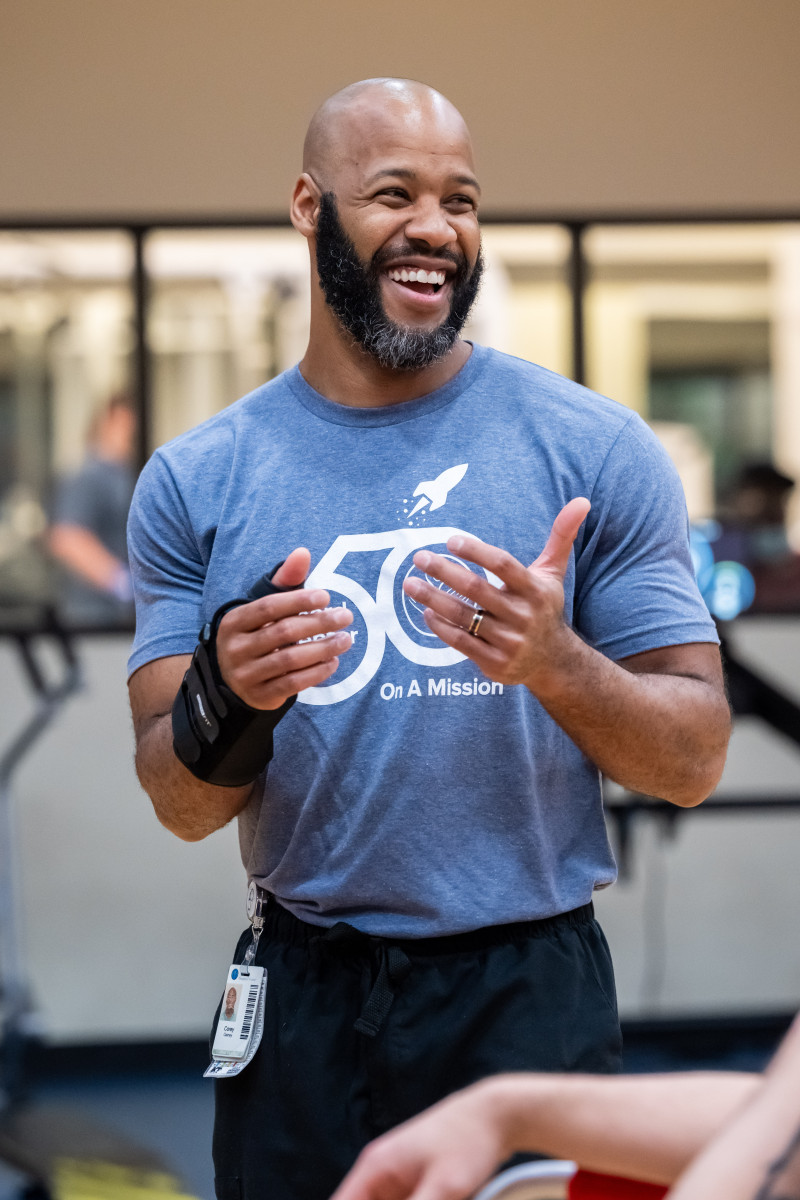
Beyond Therapy® is a cornerstone at Shepherd Center. A one-of-a-kind and truly innovative program, it was one of the first to apply neuroplasticity research to patient care. Building on traditional therapy, which often focuses on compensation strategies, Beyond Therapy aims to reactivate dormant neural connections and help clients train to meet their goals. But if you ask exercise physiologist Corey Gainey what makes Beyond Therapy special, he won’t mention the program’s origin story, its clinical research ties, or data points, at least not at first. Instead, he’ll say the magic of Beyond Therapy lies in the camaraderie between exercise physiologists, physical therapists, and clients.
How does Beyond Therapy differ from other programs at Shepherd Center?
For many of our clients, Beyond Therapy gives them a sense of normalcy. Many of our clients are back to living at home post-injury and bring those experiences into therapy.
We had one gentleman who wanted to get back to doing things around the house. He was used to taking care of these duties, but he also found peace when he was in his yard working on stuff. One weekend, he decided that after everything he’d been doing in Beyond Therapy, he could cut grass. But then he dipped into a ditch and fell off the lawnmower. It could’ve been a situation that went bad, but it didn’t. And he came back to Beyond Therapy on Monday and told us about it. He said, “The great thing is I know where I’m lacking balance now,” and laughed about it. He took it as an opportunity versus a failure. And it was great that he had the comfort level with us to share that story.
What is it like working with the other physiologists and physical therapists on your team?
Our physical therapists give us great information. They’ve worked with multiple populations, so they’re very seasoned. That allows us [exercise physiologists] to combine their clinical mindsets with our exercise and fitness mindsets.
We [physiologists] were taught the same things from a principled standpoint, but we’ve taken that knowledge and applied it differently. I’ll tell clients every day, “I’m not the smartest person down here by far, but if you need something explained to you like it’s coming from a textbook, we have a couple of guys who are super cerebral, and I’ll send you to them.” Some clients won’t receive things well from me, but at the same time, somebody else may not receive things well from the more cerebral guys. The great thing is we have all these different types of personalities, but we have the same outcomes in mind.
How does Beyond Therapy differ from people using the ProMotion Fitness Center or a neighborhood gym?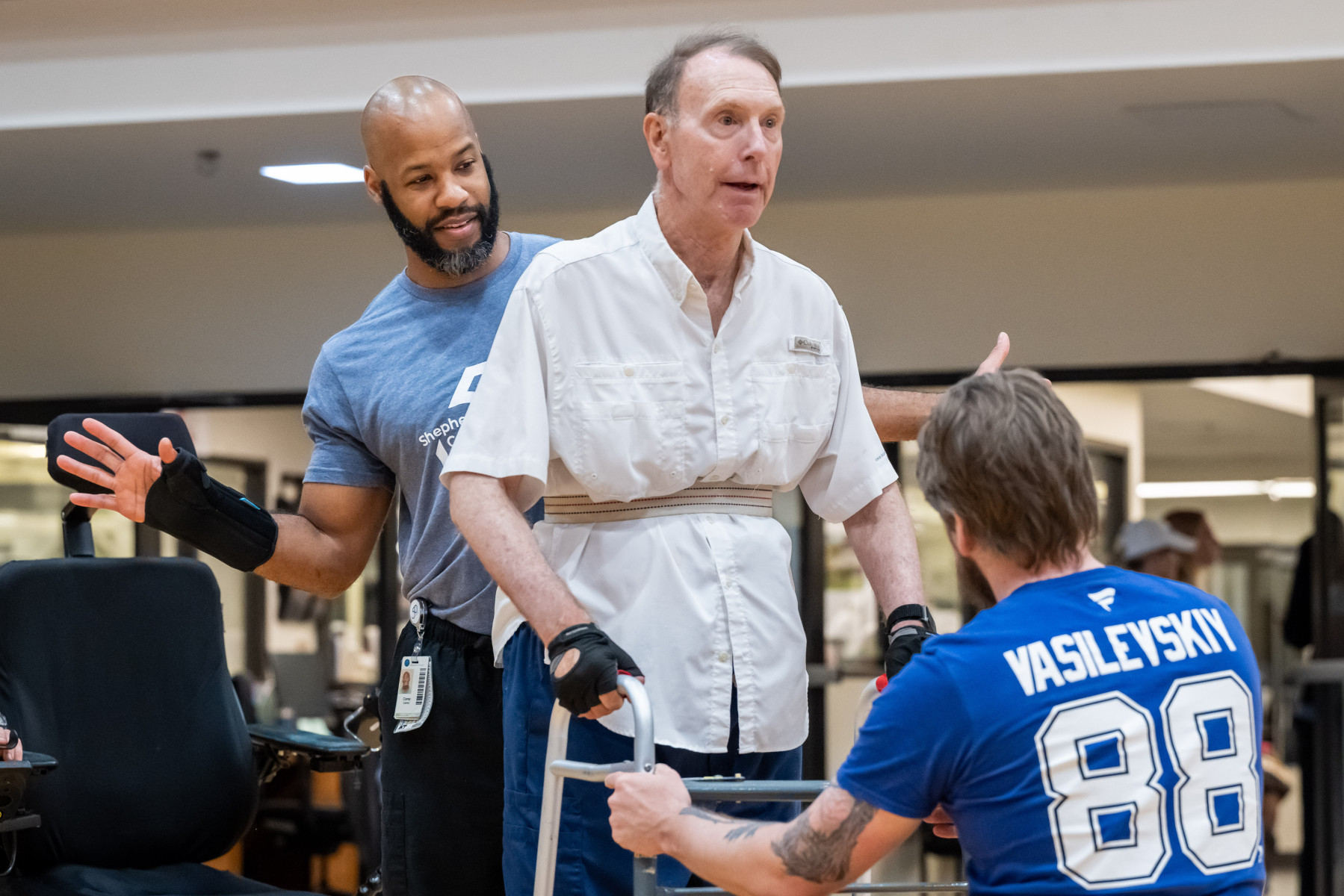
The keyword is neuroplasticity [the nervous system’s ability to change its activity by reorganizing its connections after injuries]. Our entire program is built on studies and principles of neuroplasticity — that is the basis of everything we do. We use principles from research studies in each of our sessions to help our clients reach their goals.
Beyond Therapy is also a place of comfort for our clients. Some clients may transition to a neighborhood gym, but a lot of folks will still drive 30 or 45 minutes to be here, because at the end of the day, they know they can come to us with questions. Plus, if any kind of medical incident or emergency were to happen, we’re apt to handle those situations.
How do you measure progress or success in your clients, especially when they may be dealing with lifelong conditions?
Whenever somebody comes in, we go through initial testing with them that gives us a baseline from a quantitative standpoint. But you can tell somebody, “Hey, you’ve improved on these measures,” but they still may say, “Well, I still can’t walk, or I still can’t do XYZ.” Many clients want results to translate into real life, and to feel confident returning to work or other roles they were in before their injury. That’s a better kind of outcome than any quantitative measures we reach — giving people the confidence to get back out there and do it.
What’s a moment that made you stop and think, “This is why I do this work?”
I was working with a client who was with us for about six months, and he didn’t have a great prognosis. One day, we were working on standing and balance. He’d been afraid he was going to fall, but then we got to see this playful side of him. I was holding his gait belt, and all of a sudden, I felt this hand slapping on top of my head. I looked up and he was like, “I’m touching your head!” and I just laughed, because it was like, “You’re worried about falling, but when it comes to touching my head, you’re willing to risk it for that.”
From then on, he made it his mission to touch my head whenever he could. For the most part, that would be something I hate, but it was fun to have that back and forth with him. I’d avoid it at all costs and make it a challenge for him, like, “If you can stand and walk toward me and touch my head, then you’re awesome.”
When he left us, he wasn’t walking without assistance yet. But he was in a good place, and he told us that we instilled hope in him to continue working, and his dad said the same. Then about a year after he left, some guy came in the gym and I was like “Who is that?” and then he yells, “I’m gonna come touch your head!” and he walked over and I gave him the biggest hug — and of course, he touched my head.
Responses have been edited for length and clarity.
Interview by Erin Kenney
With five decades of experience, Shepherd Center provides world-class clinical care, research, and family support for people experiencing the most complex conditions, including spinal cord and brain injuries, multi-trauma, traumatic amputations, stroke, multiple sclerosis, and pain. An elite center ranked by U.S. News as one of the nation’s top hospitals for rehabilitation, Shepherd Center is also recognized as both Spinal Cord Injury and Traumatic Brain Injury Model Systems. Shepherd Center treats thousands of patients annually with unmatched expertise and unwavering compassion to help them begin again.