


From Rehab to Rugby: Jonathan Horna's Unexpected Journey
How the Lilburn, Georgia native's experience at Shepherd Center helps him see his life in a new light
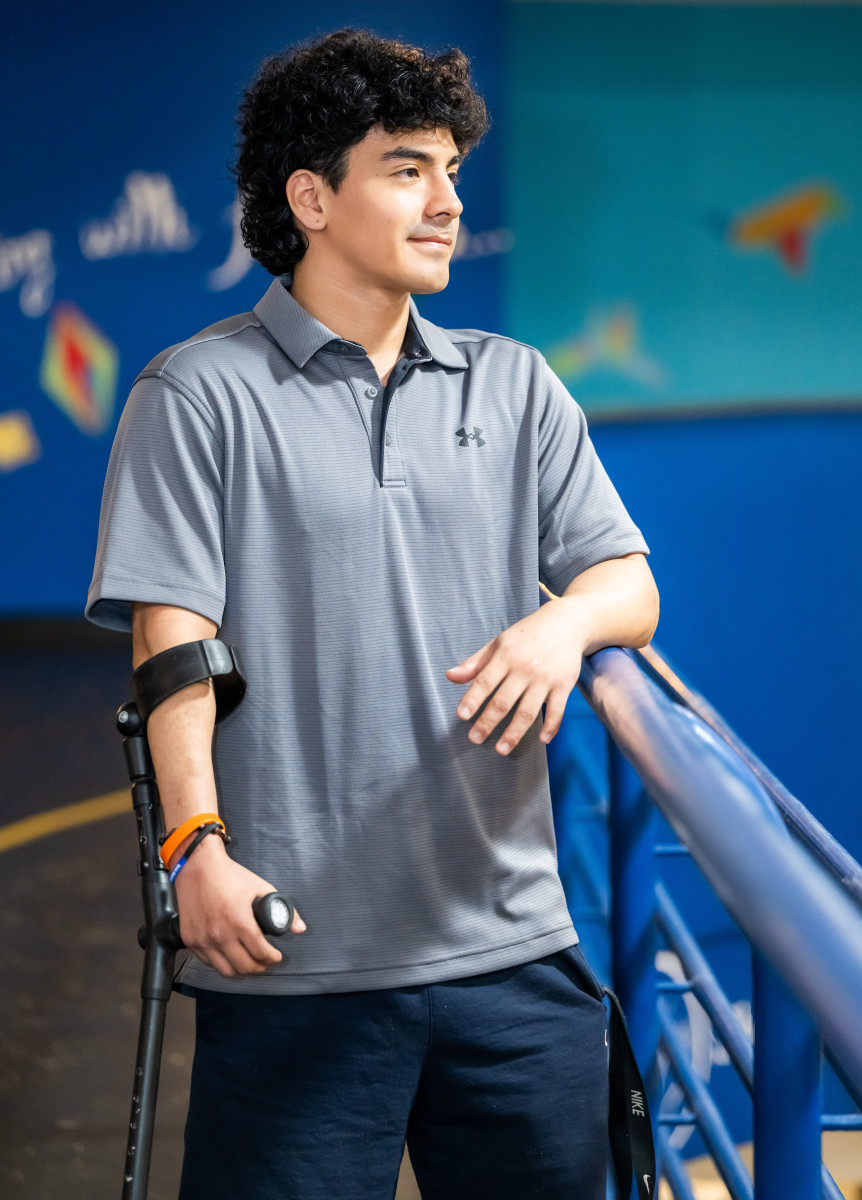
To understand how far Jonathan Horna has come since his life-altering car accident in 2021, you need to know that horrific crash is now only the second-most impactful hit of his life. The first? That came about a year and a half later, when Jonathan rolled onto the wheelchair rugby court at Shepherd Center for his first taste of a high-contact sport famously nicknamed murderball.
“Oh, man, when we started running that first play, I immediately got slammed into — you know, ‘teach the rookie how it is,’” Jonathan says with a laugh. “My first thought was ‘wow, what just happened?’ But it was exhilarating. I didn’t expect to ever get back into truly competitive sports again, so that was a huge moment. It changed so much for me in terms of my confidence and who I could be once again.”
Jonathan, now 25, was a pre-med student and a member of Georgia State University’s soccer team back in 2021. On Feb.17 of that year, another vehicle collided into Jonathan’s car. The accident resulted in a litany of injuries for the student, including an L1 spinal cord injury. After surgeries at Atlanta’s Grady Memorial Hospital — including the amputation of his left leg at the knee — Jonathan arrived at Shepherd Center in March of 2021.
The physical challenges were intense, Jonathan explains. But they were nothing compared to the mental and emotional hurdles he faced.
“I was used to being the helper,” Jonathan says. “When my parents needed something, I did it well, and fast. When I could help at church, I did that. That’s who I liked to be — for them, for myself, for everyone around me.
“Suddenly being put in this completely different situation, it was a little bit humiliating. What I had to learn was taking that humiliation and turning it into humility instead. To understand that I wasn’t on my own. And to understand that there are times when you have to let others be there for you.”
Jonathan says he couldn’t have flipped that switch mentally without the support of his family, his home church at Holy Cross Catholic Church, in Tucker, Georgia, and especially his Shepherd Center care team. 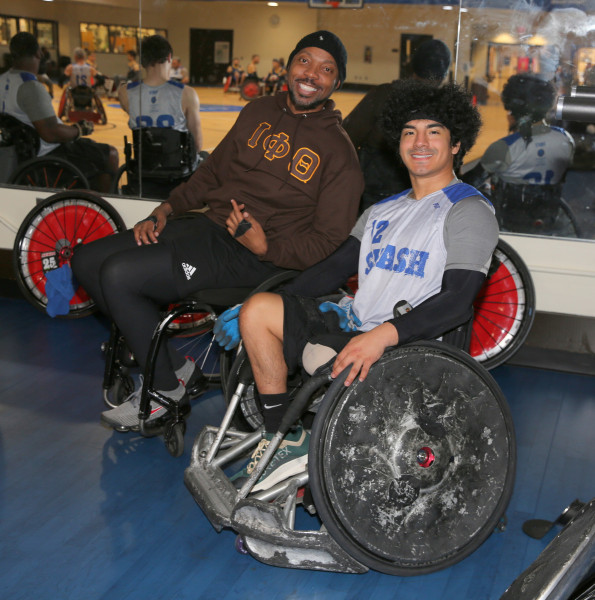
“From the nurses to the therapists and chaplains, they all helped a lot with the mental side of things,” Jonathan says. “They got me going, got me active, helped change my mindset.”
Most importantly, he says, “They were super open to someone who was very closed off.”
Slowly, Jonathan started to open up once again — talking, sharing, being vulnerable. The peer support of his fellow patients was a big part of that progress, too.
“Just being around other young people going through similar things,” he says. “I remember at the beginning, there was no way to hide and mope. The other patients would just come and say, ‘Hey, new kid, what are you in here for?’ When I look back, I realize it was a beautiful experience, a stepping stone to where I am now. That time in my life is an essential part of who I am now and what I plan to keep pursuing.”
And, yes, those pursuits now include playing for the Shepherd Smash, Shepherd Center’s quad rugby team.
“It’s funny because I wasn’t very good with my hands before, which is why I did soccer!” Jonathan says. “So, especially with limited functionality post-injury, I can’t believe I said ‘yes’ to even trying it. But it spoke to me. It’s an amazing sport, an amazing team here at Shepherd Center, and amazing resources all around you. Quad rugby is something I couldn’t live without now.” 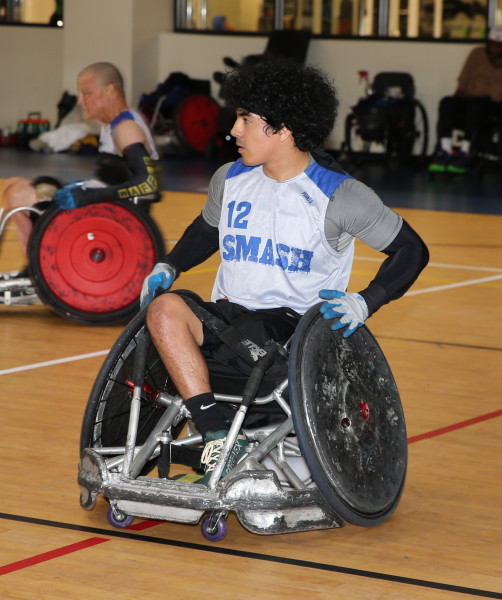 Jonathan is also moving forward in other areas of life. He’s volunteering at his church, teaching youth catechism. He’s also got a new vision for his career, having just earned an associate’s degree in accounting and now heading back to Georgia State for his bachelor’s. He’s ready for GSU’s vast downtown campus, too. With the aid of a new “smart prosthetic” and continued physical therapy, he’s progressed to walking only with the aid of a hand crutch.
“I have so much to thank Shepherd for everything they’ve done,” Jonathan says. “To be honest, realizing that a place like Shepherd Center even existed in my time of need was bizarre. I couldn’t believe there was a place like that, with all those resources and experts, it really was unbelievable at first. It’s so heartwarming to be able to let go and know you’re not alone. That you’re surrounded by people who are there for you.”
Written by Phillip Jordan
With five decades of experience, Shepherd Center provides world-class clinical care, research, and family support for people experiencing the most complex conditions, including spinal cord and brain injuries, multi-trauma, traumatic amputations, stroke, multiple sclerosis, and pain. An elite center ranked by U.S. News as one of the nation’s top hospitals for rehabilitation, Shepherd Center is also recognized as both Spinal Cord Injury and Traumatic Brain Injury Model Systems. Shepherd Center treats thousands of patients annually with unmatched expertise and unwavering compassion to help them begin again.