


Expert Advice for Staying Focused on the Road
This Distracted Driving Awareness Month, Shepherd Center driving experts share tips to reduce distractions and keep drivers focused on the road.

Keep your hands on the wheel. Don’t text and drive. Keep your eyes on the road.
It’s guidance many drivers have heard time and time again, yet distracted driving continues to be a public health crisis. In 2024, 3,208 people were killed and 315,167 people were injured in motor vehicle crashes involving distracted drivers, according to the National Highway Traffic Safety Administration.
While cellphones can be a major distraction for drivers, other kinds of distractions can also claim drivers’ attention on the road, like a spilled drink or a missed exit. Luckily, there are steps you can take to stay focused while driving.
For Distracted Driving Awareness Month, experts from Shepherd Center share their advice to ensure a distraction-free drive, keeping you, your passengers, and other people on the road safe.
JJ Brown
Driver/Tech, Recreation Therapy Program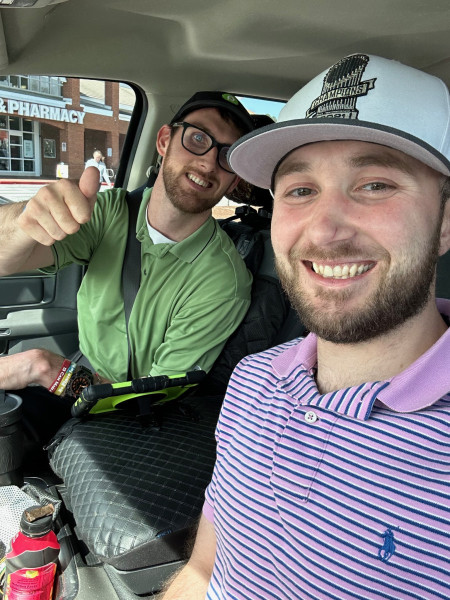
The Recreation Therapy team is committed to promoting safe, attentive driving — especially when driving patients during community outings. Taking a few simple steps to stay focused behind the wheel can make a big difference in keeping everyone safe. Here are some practical tips to help reduce distractions while driving:
- Lead by example: Whether transporting others or driving in your personal life, modeling attentive, distraction-free driving encourages others to do the same.
- Practice patience, slow down, and manage frustration: Traffic can be unpredictable, and it’s easy to feel frustrated. Take a breath, give yourself extra time, and avoid reacting to other drivers. Staying calm helps you stay focused and make safer decisions.
- Prepare before you start driving: Set your GPS, adjust mirrors, choose your music, secure all passengers and any personal items before putting the vehicle in motion. A few extra seconds upfront can prevent distractions later.
- Stay aware of your surroundings: Regularly scan the road, check mirrors, and anticipate what other drivers might do. Staying mentally engaged helps prevent your mind from wandering.
- Limit multitasking: Avoid eating, adjusting controls, or reaching for items while driving. Even small actions can take your attention off the road longer than you realize.
- Create a calm driving environment: Keep noise levels manageable and minimize anything that could pull your attention away, like loud music or clutter in the vehicle.
Photo caption: Brown, right, with close friend Chris Heitzman. Both are former Shepherd patients — Brown sustained a spinal cord injury in 2018. Read more about Brown's story here.
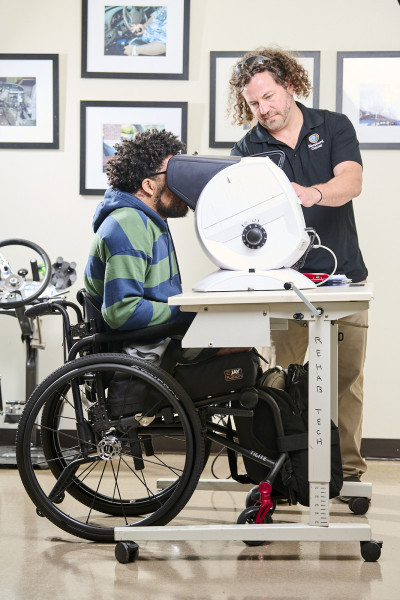
Matt Abisamra, OTR/L, CDRS
Program Supervisor, Driving Evaluation and Rehabilitation Program
If you’re using hand controls to operate your vehicle, you can’t free up your hands to adjust the radio, temperature, or other settings. But, you can prepare before starting your drive to make sure you have a comfortable and safe environment.
- Connect your phone to your car via Bluetooth for hands-free communications, navigation, and adjust to your music or podcasts.
- Use your car’s auto temperature setting to keep a consistent and comfortable temperature.
- Ideally, find a vehicle with automatic lights and windshield wipers, so if weather conditions change while you’re on the road, you’re prepared.
Additionally, for some of our clients with cognitive challenges, GPS apps offer support even on routine drives. Apps that tell drivers which lane to be in are especially helpful and can keep drivers focused on the road.
Photo caption: Abisamra, right, works with a client in the Driving Evaluation and Rehabilitation Program
Emma Harrington, MSPS
Director of Injury Prevention
- Set an example for your kids: Model the behavior you want to see from your future teen driver and lay the groundwork for a culture of safety in your home before the car seats turn around.
- Georgia is a hand-free state: Before you shift into gear set your music, podcasts, and GPS routes. If you need to adjust anything, pull over safely.
- Use technology that helps you block… technology: Enable your phone’s built‑in Driving Focus/Auto‑Silence modes or use blocking apps that disable notifications while driving.
- Set expectations for a culture of safety with your loved ones: Let family, friends, and coworkers know you do not respond while driving.
- Treat all alerts as distractions: Infotainment screens, smart watches, smart glasses. They all count.
- Let passengers help — or hold you accountable: Passengers can manage music, messages, or navigation. When you’re the passenger, reinforce a culture of safety and offer to help the driver.
Photo caption: Harrington is the Director of Injury Prevention.
With five decades of experience, Shepherd Center provides world-class clinical care, research, and family support for people experiencing the most complex conditions, including spinal cord and brain injuries, multi-trauma, traumatic amputations, stroke, multiple sclerosis, and pain. An elite center ranked by U.S. News as one of the nation’s top hospitals for rehabilitation, Shepherd Center is also recognized as both Spinal Cord Injury and Traumatic Brain Injury Model Systems. Shepherd Center treats thousands of patients annually with unmatched expertise and unwavering compassion to help them begin again.