


'Everything I've Wanted:' Motherhood Post-Spinal Cord Injury
Megan Collins Bordon Credits Shepherd With Giving Her the Skills She Needed For Life Post-Injury
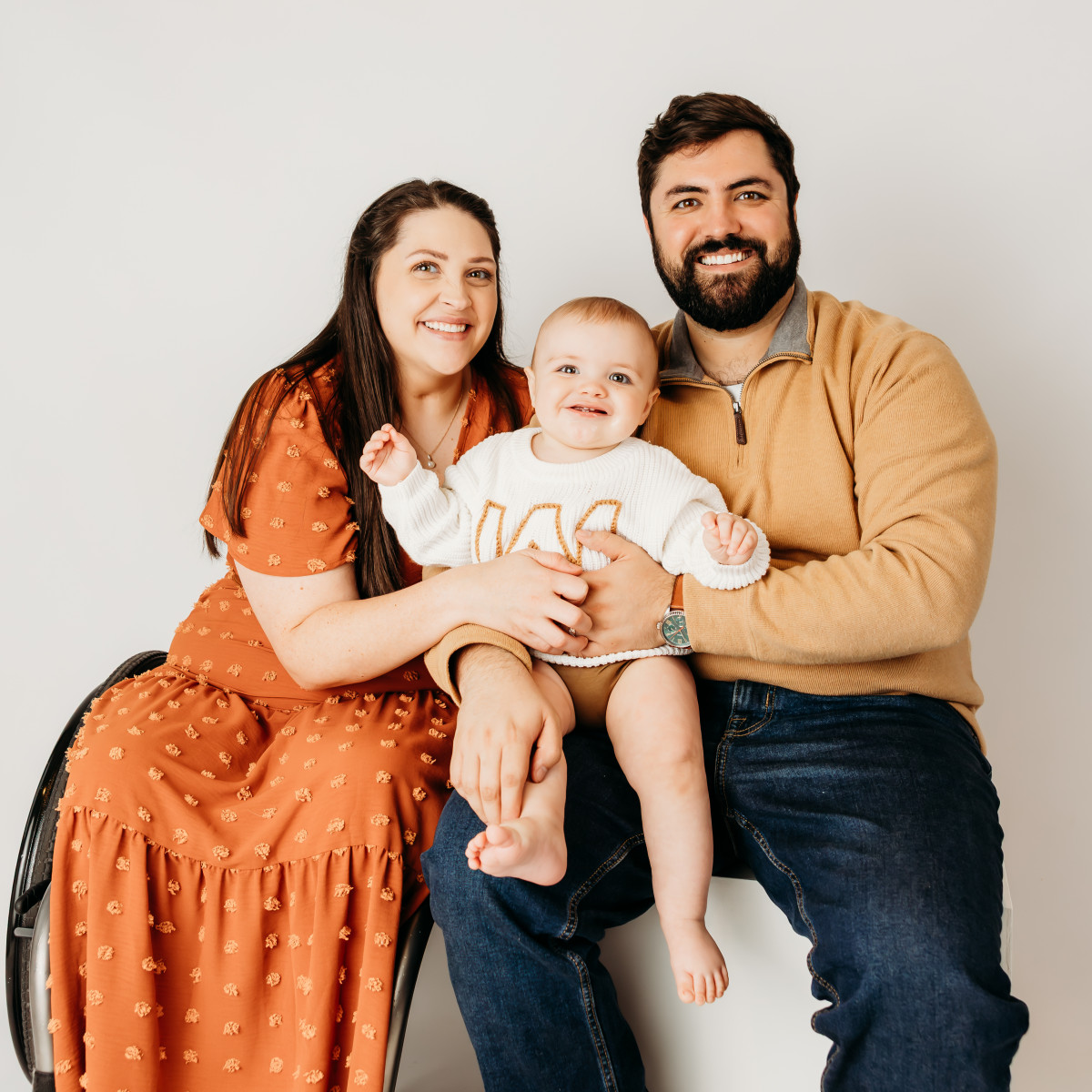
Megan Collins Bordon, like many moms, is no stranger to multitasking. One January morning, when reached by phone for an interview, she worked away on a to-do list while her 11-month-old, Wyatt, was down for a nap. Thirty minutes later, she’d gotten him up and out of his crib, getting ready to nurse him.
“Everything I’ve wanted from [the experience of being a mom], we’ve been able to do,” she says. “I feel really blessed about that.”
Megan and her husband, Adrian Bordon, welcomed Wyatt in February 2025, seven years after she sustained a spinal cord injury (SCI) after running off the road in her car. After two months in the ICU, she came to Shepherd Center for the SCI rehabilitation program. She moved from the inpatient program to the SCI Day Program to outpatient therapy, before ultimately moving from Tennessee to Atlanta to stay close to her new Shepherd community.
She found an apartment, enrolled in graduate school, and started a full-time office position at Shepherd Center — milestones she credits to her rehab at Shepherd.
“Shepherd from the start gave me the tools to adapt in any kind of environment,” she says. “Because of the wheelchair skills and social skills and confidence that I’d built at Shepherd, I felt like I could navigate any situation.” 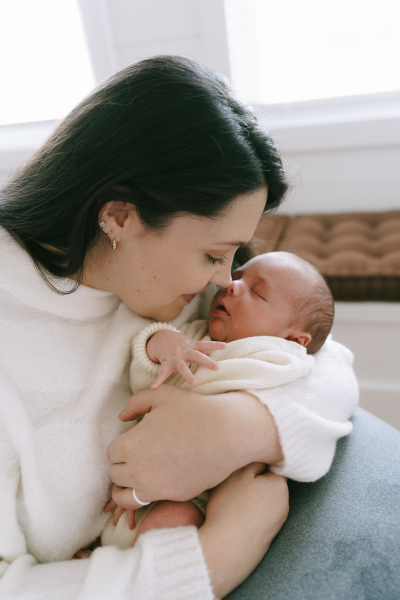
Megan points to recreation therapy and peer support as crucial components of her recovery. The programs taught her how to navigate life post-injury, including the Atlanta dating scene. Less than two years after her injury, she met her husband, Adrian.
The two married and moved to Charleston, South Carolina, where they began a new chapter in their life. Megan got pregnant in 2024 and began calling different OB-GYN practices to find a doctor who had experience with SCI patients. Luckily, she did.
During her relatively smooth, though still considered high-risk pregnancy, she hoped to have an unmedicated, natural birth. But she ultimately ended up delivering via a C-section (due to standard labor complications, not as a result of her SCI).
“My support system, asking the right questions, being well educated about my diagnosis and my care, all of that really contributed to a good [pregnancy and delivery] experience for me,” she says.
Since bringing Wyatt home, Megan has adapted to every challenge with help from a dedicated support system. Sarah Dubois, PT, DPT, one of her physical therapists from Shepherd, had her first baby just four months before Megan, making her uniquely suited to offer advice and support.
Megan also met two other Charleston-based mothers who use wheelchairs through her OB-GYN. Her friends and family round out her support network, helping with everything from Costco trips to replying to late-night texts.
As Wyatt neared his first birthday in February, Megan reflected on his first year.
“Especially in the beginning, I was so scared about what everything would look like. Once I got into it, I would be fine,” she says. “When he started crawling, I was terrified, but after two days of crawling, I was like, ‘Oh okay, this is the same thing, but harder.’” 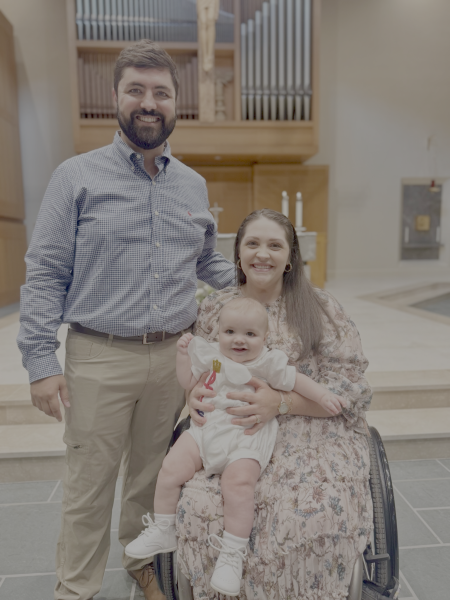
She sometimes gets asked how she’ll keep up with Wyatt once he’s walking and running, but her answer is simple: the same way any mother would.
“[I’ll] follow him around. Wyatt is just going to have to learn that mommy can’t [always] chase after him, and he needs to be safe and be careful and listen,” she says. “A lot of that is just going to be up to me and Adrian as parents to teach him.”
While each new phase presents its own challenges, she especially looks forward to some milestones, like their first flight as a family of three, hearing Wyatt form his first full sentences, and navigating the beach for the first time. But in the meantime, she is savoring every moment.
Written by Erin Kenney
With five decades of experience, Shepherd Center provides world-class clinical care, research, and family support for people experiencing the most complex conditions, including spinal cord and brain injuries, multi-trauma, traumatic amputations, stroke, multiple sclerosis, and pain. An elite center ranked by U.S. News as one of the nation’s top hospitals for rehabilitation, Shepherd Center is also recognized as both Spinal Cord Injury and Traumatic Brain Injury Model Systems. Shepherd Center treats thousands of patients annually with unmatched expertise and unwavering compassion to help them begin again.