


A New Outlook
After SHARE’s Russell Gore, M.D, questioned Dylan Sims' early onset dementia diagnosis, his life changed for the better.
“I put myself through the wringer a lot,” says Dylan Sims. “I embrace a challenge, even if I think something has a 20% success rate, I’m still going to give it a whirl.”
Case in point, the 32-year-old's adventurous lifestyle. While in college, he was a bull rider. He loves spending time outdoors, including backpacking and canoeing. But perhaps one of Dylan’s biggest challenges came after serving in the Army for four years.
A hip injury ended his military service in 2017, beginning a stretch of difficult years for Dylan. He struggled to adjust to post-military life, got divorced, and lost friends to suicide. His decision to get his master’s degree in recreation therapy was more than career-driven — it was a way to start a new chapter. His degree created space for him to spend more time outside, which helped Dylan improve his mental health. But he had some cognitive challenges that lingered. After increasingly worrying amnesic episodes, doctors diagnosed Dylan with early onset dementia, a diagnosis that changed his life. He was only 30 years old.
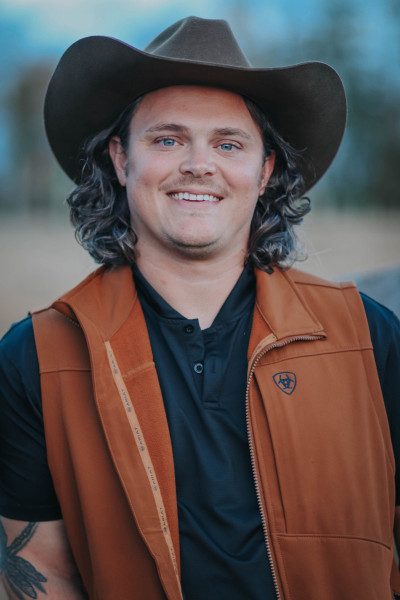 He quit a job he loved at a nonprofit in New Hampshire and began traveling the country, trying to maximize the time he had left. Then, his Wounded Warrior Project case manager referred him to Shepherd Center’s SHARE Military Initiative. During his program evaluation, SHARE Medical Director Russell Gore, M.D., questioned Dylan’s dementia diagnosis and started treating him for a brain injury.
Things got better. Dylan’s cognitive abilities improved. His therapists encouraged his creative writing, which helped him process his emotions. SHARE helped Dylan get back on the horse, literally. Equestrian therapy allowed him to ride horses again, something he hadn’t done since before his hip injury.
“(SHARE) ended up being very validating,” Dylan says. “After I got my mental health under control, there were still so many things that I couldn’t get to go right internally. Since being there, it’s been a complete 180 as far as my outlook for the future.”
Now, for the first time in a long time, Dylan is back in his hometown of Tupelo, Mississippi. He’s spending time with family, gearing up for a potential Appalachian Trail thru-hike, and writing — this year, he published a novel and a poetry collection. Most of all, he’s excited for his future.
By Erin Kenney
With five decades of experience, Shepherd Center provides world-class clinical care, research, and family support for people experiencing the most complex conditions, including spinal cord and brain injuries, multi-trauma, traumatic amputations, stroke, multiple sclerosis, and pain. An elite center ranked by U.S. News as one of the nation’s top hospitals for rehabilitation, Shepherd Center is also recognized as both Spinal Cord Injury and Traumatic Brain Injury Model Systems. Shepherd Center treats thousands of patients annually with unmatched expertise and unwavering compassion to help them begin again.