


ASW, From My POV
Shepherd's Social Media Specialist, Dom, shares his experience at Adventure Skills Workshop (ASW).
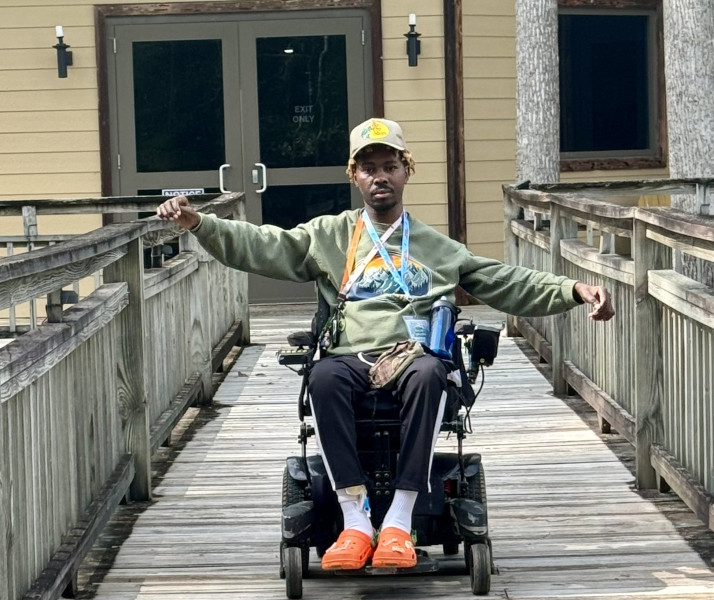
In October 2022, I attended Shepherd Center's inaugural fall retreat at Camp Twin Lakes in Rutledge, Georgia. It was the first time I ever slept in a cabin. It felt like a true camp experience, from the gravel crumbling under the tires to counselors – Shepherd Center recreation therapists – greeting you at the entrance, showing all 32 teeth and ready to lend a helping hand with bags, to the eerie yet peaceful quiet of nature, accompanied by crickets, creeks, and cicadas. From the moment my partner and I settled into our cabin, it was one adventure after the next. Twin Lakes was a blast — from zip lining, kayaking, and archery to s'more making.
While I was at Camp Twin Lakes, I heard about Adventure Skills Workshop (ASW) for the first time. All the rec therapists told me that if I had fun at this camp, ASW would blow my mind. Alesha, a friend I made at Twin Lakes, seconded their point, gushing about how much fun she had when she attended. Despite this encouragement parade, I sashayed my way out of making any formal commitment to participate because of my apprehensions about getting in the water again. Eventually, my worries subsided. Alesha reminded me that applications opened for ASW in March. Unfortunately, I procrastinated, and the slots filled much faster than I expected.
I missed my chance in 2023, but in 2024, I applied as soon as the application window opened, which happens every year on March 17, St. Patrick’s Day. That ended up being lucky for me because slots filled in just three hours. Within a few days of applying, I knew I had gotten a spot. I received an email from Kelly Edens, CTRS, recreation therapy manager at Shepherd, who was Yoda for the weekend, guiding me and all the participants. She shared a list of everything we needed to pack, explained how the weekend would go with activities, asked what I wanted to do, etc.
Two months later, the first day of ASW finally arrived. My partner and I packed our 2017 Chrysler Pacifica and embarked on our journey to Alabama. It teetered between drizzle and steady rain the entire way there. From 20 West to 85 North to the back roads of Alabama, the trip took about 2 1/2 hours. With crinkles and crackles, the gravel road announced our arrival at Camp ASCCA, an accessible facility on Lake Martin near Jackson's Gap. We parked by the dining hall, unsure of where to go. Donning my camo poncho with my partner sporting a big umbrella, we got out of the car to explore and see precisely where we needed to go. Luckily, a group of volunteers from Brasfield & Gorrie happened to be passing by and pointed us to the pavilion. One person was even kind enough to walk us there.
Inside the pavilion/gym, Shepherd staff ushered us to tables where we registered and got a bag full of goodies: t-shirts, according to our size, a microfiber towel, a canteen, a baseball cap, snacks, sunscreen, and mosquito repellent. At the next table we received the schedule of activities. The weekend was scheduled to a T, including everything from when the swim test was open to when lunch and dinner were served to when you could try each activity you signed up for. The volunteers helped unload our vehicle, and we settled into the room.
The weekend was meticulously planned, and even the rain didn't stop anything. It only delayed some activities for safety reasons. Still, even while it was raining, the therapists set up basketball, cornhole, Giant Connect Four, and other games to keep everyone engaged and having fun.
Once the weather cleared up, water activities began. People immediately got into the pool for their swim tests. The test consisted of holding your breath for 20 seconds while face down in the water, rolling over from your stomach to your back, and if you wanted to swim unattended in the pool, you had to float on your back with a lifejacket on for one minute unassisted. Passing the swim test was your golden ticket to water skiing, kayaking, tubing, jet skiing, tubing, scuba, water polo, and swimming without assistance. For safety reasons, if you didn’t pass the swim test, those activities would be off-limits for you, but the therapists were encouraging enough to allow you to try again.
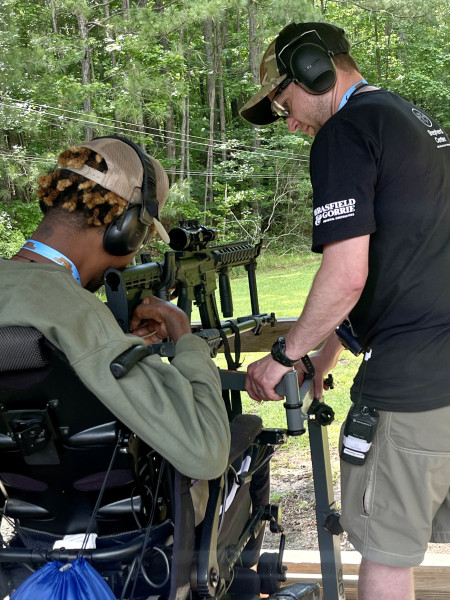
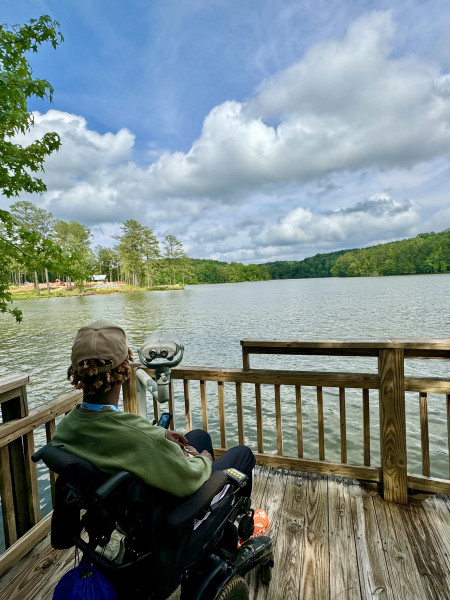
Taking the test was my first time in a pool since my accident, which is a huge feat. Even if you didn’t pass the test, like me, you could still partake in enough activities — fishing, shooting, board games, etc. — to keep yourself more than occupied. For me, that included connecting with several people from the disability community, including professional swimmers and dancers. Not once did I feel out of place, which sometimes can occur when abled-bodied people surround me. A woman I met at a few different Shepherd Center functions described my feelings precisely but more poetically, “It’s nice to be able look at people eye to eye rather than be butt-level all the time.” These moments of camaraderie with people who have intimate knowledge of my daily experience is a truly one-of-a-kind adventure that I might not have had without the help of Shepherd Center. Thanks to the donor-funded Recreation Therapy Program, I’ve made lifelong friends and connected with people throughout the disability community.
ASW was the most fun I have had in a long time. After an injury or illness, it can be challenging to figure out how to get back in the swing of things and do activities that you enjoy. Without Shepherd's guidance, I would have struggled to learn to fish or kayak. The therapists were always encouraging. They dedicate their weekend to you, showing you what is possible and how you can still live your life. Anyone will have a great time, no matter their disability, at ASW.
With five decades of experience, Shepherd Center provides world-class clinical care, research, and family support for people experiencing the most complex conditions, including spinal cord and brain injuries, multi-trauma, traumatic amputations, stroke, multiple sclerosis, and pain. An elite center ranked by U.S. News as one of the nation’s top hospitals for rehabilitation, Shepherd Center is also recognized as both Spinal Cord Injury and Traumatic Brain Injury Model Systems. Shepherd Center treats thousands of patients annually with unmatched expertise and unwavering compassion to help them begin again.