


Aphasia FAQ: Easing Barriers After Stroke or Brain Injury
Shepherd Center speech-language pathologist Amy Waite answers commonly asked questions about aphasia
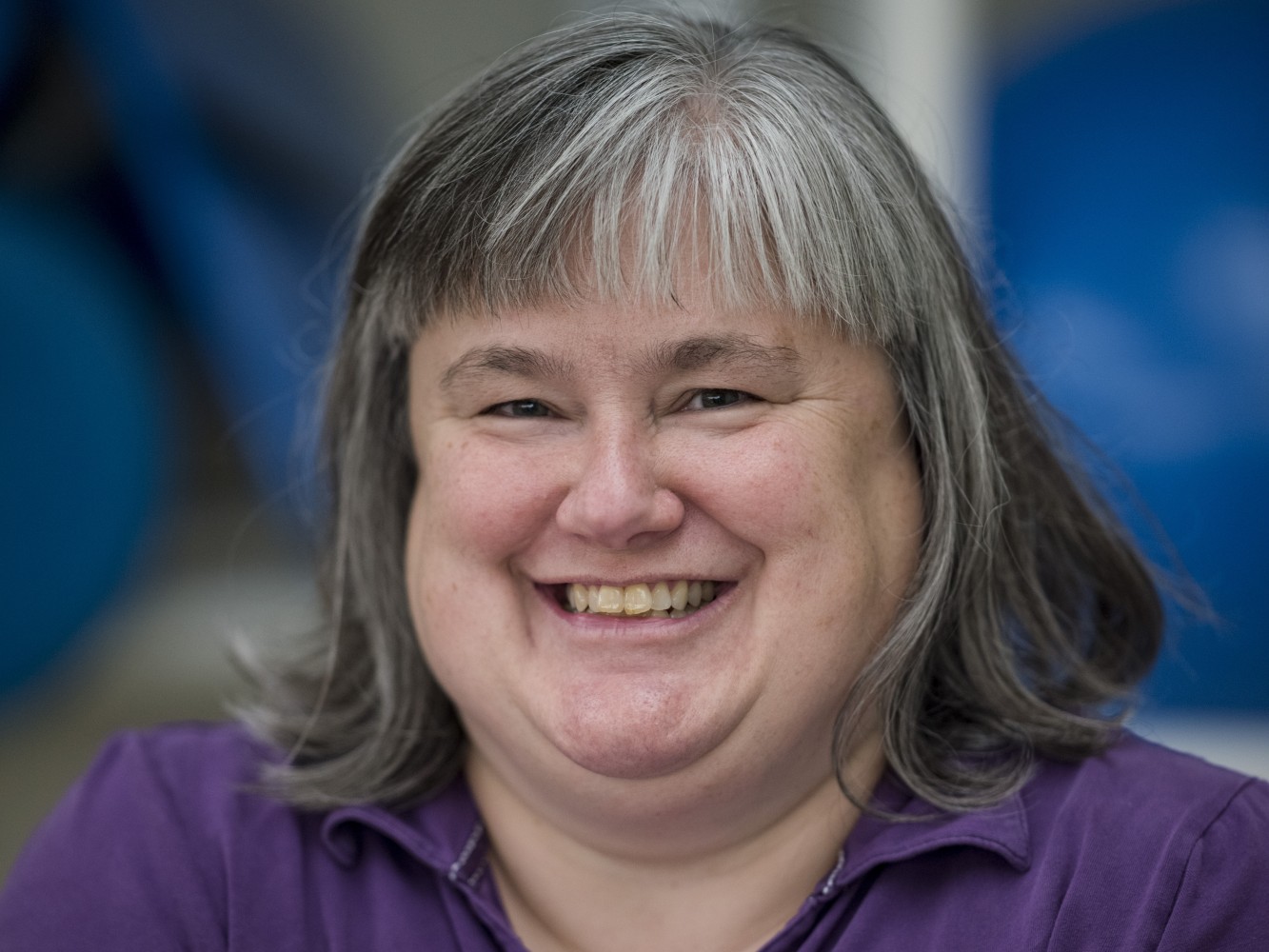
June is National Aphasia Awareness Month. Over two million people in the U.S. live with the condition, which impacts comprehension as well as written and verbal communication. Amy Waite, CCC-SLP, has worked at Shepherd Center as a speech-language pathologist for over 20 years and regularly works with patients experiencing aphasia. Here, she answers some frequently asked questions about the condition.
What is aphasia?
Aphasia is a language disorder caused by damage to the left side of the brain in 98% of people — there are the occasional people who develop language on the right side, but in most of us, it develops on the left. It can affect how well you understand, how well you talk, or both. It also affects reading and writing, because they're the “on paper” version of our comprehension and expression.
Its impacts depend on the location and the size of the area of damage. You can see much more classic aphasia symptoms in stroke patients and less classic in patients with traumatic brain injuries (TBI), because the damage is more diffuse but not as deep with TBI. In stroke patients, it's very specific to an area, so it'll be much more textbook.
There are different names to describe the different types of aphasia and its impacts: global aphasia is the most severe, impacting comprehension and communication. There’s also expressive aphasia, also called Broca’s aphasia, where people do have the comprehension piece but may struggle with spoken language. And Wernicke’s aphasia affects how well people understand what is being said.
How do you work with patients who have aphasia?
For many of my patients with global aphasia, they don’t enjoy coming to their speech therapy sessions. Sometimes people think I’m speaking in gibberish to them, because they don’t understand that they’re experiencing aphasia. So, you have to think outside of the box. Once, I was working with a woman who did not like speech therapy, but she liked country music, so we’d play country music.
She could sometimes sing parts of songs, because that uses a different part of the brain. And then I'd start playing a song, and I'd write three artists on pieces of paper. And then I'd put them in front of her and I'd say, ‘Who's singing this song?’ And then I'd point to them and read them, so she heard me say it, she saw their names, and she was hearing the song, and then she could point to the person who she thought was singing it. So, we were working on reading and comprehension through something she enjoyed. And the only way I could even get in at first was by just playing country music and not asking any questions. But then after we got through that, and she realized she could sing a little word here and there, then it started to loosen her up, and then we went with it.
People with expressive aphasia, they’re all about speech therapy. They’re going to sit down, and they’re going to work, and then they’ll want to do five more [drills]. They'll get frustrated, they'll make faces, they'll make noises, but then they're like, “Nope, nope, let's do it again.” And it's because they understand that something's wrong and they want to fix it. It’s unlike when people are experiencing the comprehension deficit, because the self-awareness isn’t there, and I think it can be more frustrating for them.
If someone is experiencing aphasia, what are some strategies to assist with communication?
Aphasia can be very frustrating. I encourage people to use humor — to laugh at themselves and try to find things that are funny, because if that’s even remotely a strategy they used in life before their injury, it can be helpful in therapy. But I do try to acknowledge the frustration and encourage people not to give up.
But sometimes, it’s good for people to know when it’s time to take a break. If something isn’t highly important, it may be easier to talk about later. Factors like emotions can impact your ability to communicate — if you’re angry or sad or upset in any way, it’s going to be harder to communicate.
I also encourage people to use gestures, draw pictures, and write. I’m horrible at drawing, but I use drawings to help communicate and also show my patients that it doesn’t matter what your drawings look like if they help you get your message across. And a lot of times we’ll laugh at my drawing, because if you can laugh at me, you can also laugh at yourself.
How do I help a loved one experiencing aphasia?
A big part of this is using less words and being direct in what you say. I'm not going to say, “Would you reach over there and pick up your shirt? I'm going to say, “Pick up the shirt.” And I'm going to make sure I use gestures, facial expression, and tone of voice to help also indicate my message, because those are all nonverbal cues that people with aphasia are still going to understand.
So sometimes, you become an expert at acting things out or miming because people can understand what you mean. So, I'll say, “Do you want a drink?” [She acts out drinking from a cup]. Because then they'll understand, “Oh, she’s asking if I want a drink,” even if they don't understand the words.
Again, aphasia is very frustrating. As a family member or friend, the worst thing you can do for them is finish their sentences, even if you have good intentions. Imagine if everything you want to ask me or say, I finished it for you and told you half of what you were trying to say. So, I encourage people to be patient and let their loved ones work on their communication.
What if someone needs additional aphasia therapy after their rehabilitation at Shepherd?
There are some intensive aphasia programs around the country. Most people could still benefit from additional aphasia therapy when they’re leaving Shepherd Center. If patients go to our outpatient programs, they'll still get speech therapy at Pathways. But a fair number of patients still go on to one of the aphasia programs.
One example is the University of Michigan Aphasia Program. That's like the granddaddy of all of them. But there are others, like The Aphasia Center in St. Petersburg, Florida. And I know the other speech therapists and many of our doctors [at Shepherd] recommend these facilities, too. They’re just more intensive, like six hours of aphasia therapy a day. And these programs have great outcomes, regardless of the time passed since injury.
Usually, I introduce the topic to the patients while they're inpatient, because the programs can be very expensive and they're not covered by insurance. So, I’ll say, “Hey, if you want to do a fundraiser, if you want to do a GoFundMe, here is something that you could use it for, if your communication isn't where you want it to be.”
Does aphasia go away or improve?
Technically, if you read about it, there's no cure for aphasia. But you can see people recover well enough that they are able to function without any communication deficits at all. And you can see anything in between, from no change to partial recovery — people whose communication is functional, but maybe they still struggle a little bit with talking. So, while there is no “cure,” a person can recover enough to live a fully functional life without having to use any compensatory strategies.
Responses have been edited for length and clarity.
Interview by Erin Kenney
With five decades of experience, Shepherd Center provides world-class clinical care, research, and family support for people experiencing the most complex conditions, including spinal cord and brain injuries, multi-trauma, traumatic amputations, stroke, multiple sclerosis, and pain. An elite center ranked by U.S. News as one of the nation’s top hospitals for rehabilitation, Shepherd Center is also recognized as both Spinal Cord Injury and Traumatic Brain Injury Model Systems. Shepherd Center treats thousands of patients annually with unmatched expertise and unwavering compassion to help them begin again.