


Always Learning, Always Growing
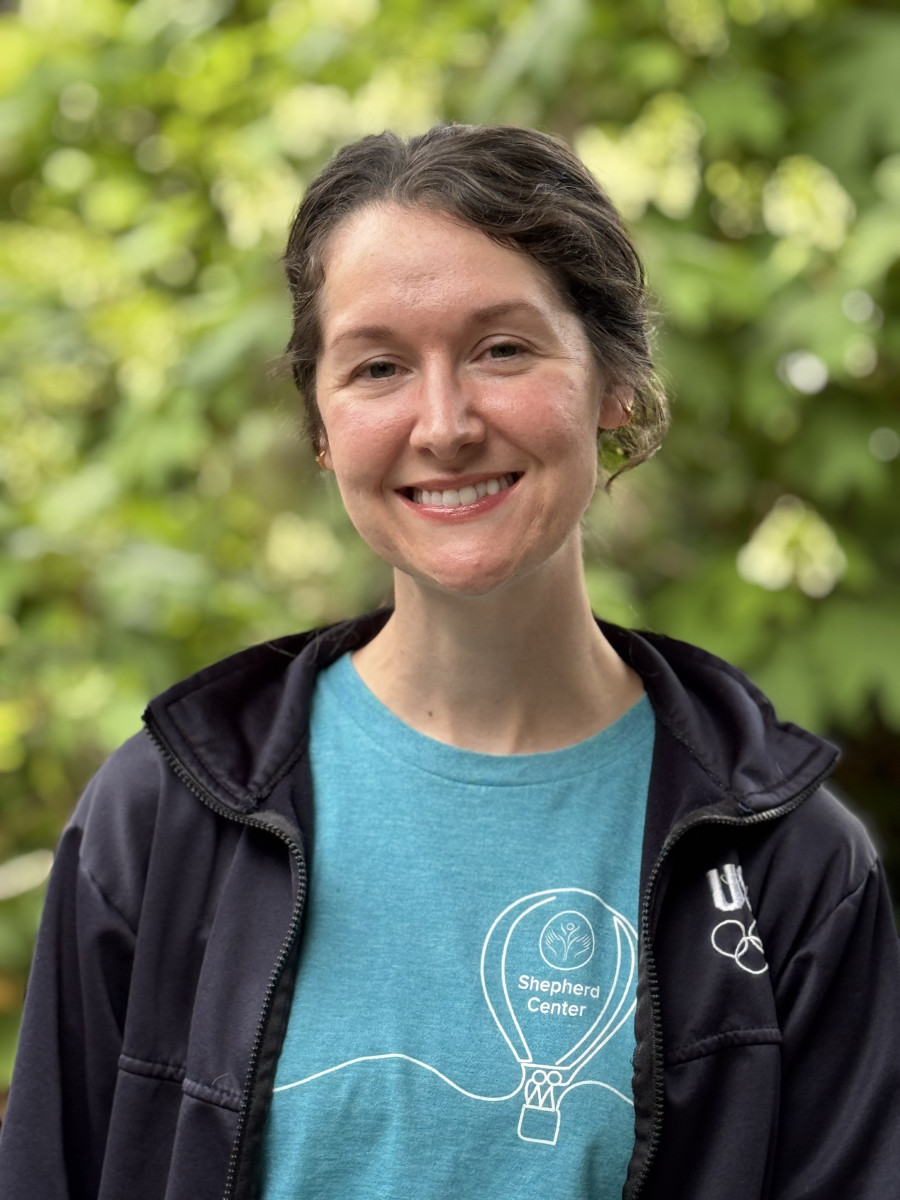
Speech-language pathologist Miranda Sindelar, M.Ed., CCC-SLP, has worked in Shepherd Center’s inpatient Acquired Brain Injury Unit for almost eight years and loves that there’s always something new to learn.
Tell us about your role.
I work with patients who have had a brain injury — that can be from stroke, traumatic brain injury, anoxic brain injury, brain tumors — any type of injury that has impacted the patient's brain and day-to-day functioning. I work with patients to rehabilitate their swallow function, their cognitive communication, and I’m part of a physical therapy, occupational therapy, and recreation therapy team that works to improve the patients’ day-to-day functioning and eventually help them leave the hospital.
How did you know that you wanted to do this as a career?
There were a lot of interesting elements to the field. Number one, you were working with people, and I knew that I wanted to work in a field that exposed me to a lot of different people. And I liked that there was an application of science to this field. So, I gave it a shot, and I went through the program. And you have to decide whether you want to work with younger ages or with an adult population, and I quickly fell in love with the adult population.
What’s the most fulfilling part of your role?
I like learning from my patients, and I also like that you'll never know everything in this job. There's always something to learn. My patients really teach me so many different things, but I think the most important thing is the human experience, and also … that not every single patient is exactly the same. There's an opportunity to try new things with patients and then to receive feedback from patients and their family members. I think the other really rewarding thing about this job is that we do get to work not just with the patients, but also with the families. And unfortunately, a brain injury can affect not just the patient, but also the family. So, we really do have such a big role to play [in helping] families return to their home or their community.
How does the length of stay affect your relationship with patients and their families?
In acute care settings, you don't really get to spend as much time getting to know the patients and their families. But in inpatient rehab, they are here for night and day for several weeks, and you really do get to learn so much about that person, and they become part of the Shepherd family. You build a relationship with them. And that's absolutely one of the most special things.
What makes for a good day at work?
I can give you a couple of examples, because there are some really perfect days here, and it's hard to pick just one scenario. I can tell you that hearing a patient talk for the first time when you put on a speaking valve or having a patient hit one of their personal goals for the first time, whether that's eating something at Chick-fil-A again for the first time or getting to walk across the hall with the physical therapist for the first time and sharing in that moment with the patient and their families — that cannot be overstated. Those are the moments that stick with you.
Also, in inpatient rehab, we get a lot of variety in our day. For example, today we took several patients to the aquarium, and they got an opportunity to be out of the hospital in a new environment. And it's something different that they can experience. Several of the patients had family members with them. And so both the family members and the patients are learning what it's like to be back in that environment. And that's neat to see — and sometimes challenging — but great for us to work on. Because we're right there with them, so they have that support. They're not by themselves. We can problem-solve together as a team and figure it out.
I absolutely love the therapy team that I work with, and they make absolutely the most difference in my day-to-day. I can't imagine not having my team. They're amazing. We support each other. We have each other's backs. And that makes the biggest difference in the care that we provide.
What are some of the speech therapy goals you might work on during an outing?
Projecting your voice in an environment like that is something we work on. It can be very noisy. So, if they are working on their articulation or their volume, that's a really great opportunity. We work on managing their overstimulation. So, if they're having any trouble with the loud noises, the increased activity, we are working to find ways to help them manage that and to help their families manage that.
We also work on navigation. So, if there's a map or if we're having to move around obstacles in our path, we're working on that navigation alongside physical therapy. And then we will also use our location to work on reasoning and memory skills. So, at the aquarium today, we might have learned some facts about the animals in the exhibit, and then later, can our patient recall some of the things we learned?
And we're working on conversation. Normally, we have more than one patient on the outing, so it gives our patients an opportunity to socialize if they're at that point. As the therapy team, we encourage that socialization, even if it looks different. We're just starting to take those baby steps into socializing again and giving them questions to reason. So those are some of the skills that we're working on in those outing activities.
How do you think your role impacts patients and their families?
To me, communication is such a large part of who we are as people. So, I hold communication very, very dear to me, and I have experienced the frustration from patients and family members when patients are unable to express their needs. Sometimes, we have a great communication system by the time they're ready to leave inpatient rehab, sometimes it is still very much a work in progress. But no matter what it looks like, by the time they leave inpatient rehab, my goal is to arm families with education and information that is appropriate at that time, and I also want to give them hope when they're leaving here.
Responses have been edited for length and clarity.
 Education:
University of Georgia, Bachelor of Education, Communication Sciences and Disorders
University of Georgia, Master of Education, Communication Sciences and Disorders
Fun Facts:
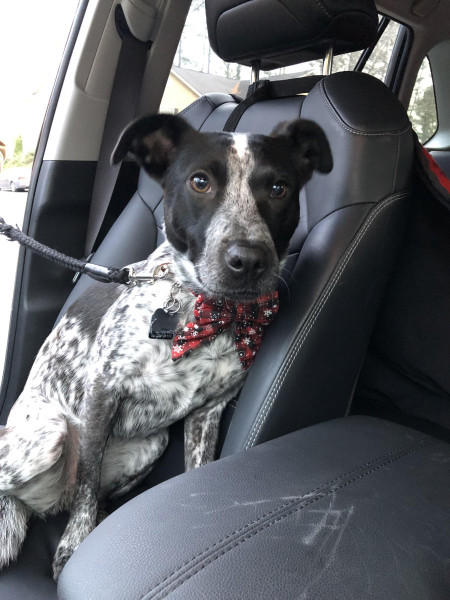
Miranda has a dog, Moonpie — an Australian cattle mix — who was born with a neurological disease that caused motor coordination difficulties. The disease is not progressive, and Miranda has helped Moonpie improve her balance and coordination through many hours of training.
Miranda has recently dusted off her roller blades and is relearning how to rollerblade. Equipped with a helmet, knee pads, and elbow pads, of course!
Interview by Ruth Underwood
With five decades of experience, Shepherd Center provides world-class clinical care, research, and family support for people experiencing the most complex conditions, including spinal cord and brain injuries, multi-trauma, traumatic amputations, stroke, multiple sclerosis, and pain. An elite center ranked by U.S. News as one of the nation’s top hospitals for rehabilitation, Shepherd Center is also recognized as both Spinal Cord Injury and Traumatic Brain Injury Model Systems. Shepherd Center treats thousands of patients annually with unmatched expertise and unwavering compassion to help them begin again.