


A Steadying Force Behind the Scenes
Eliza Reese, CRRN, focuses on keeping her patients medically stable so that they can focus on rehabilitation.
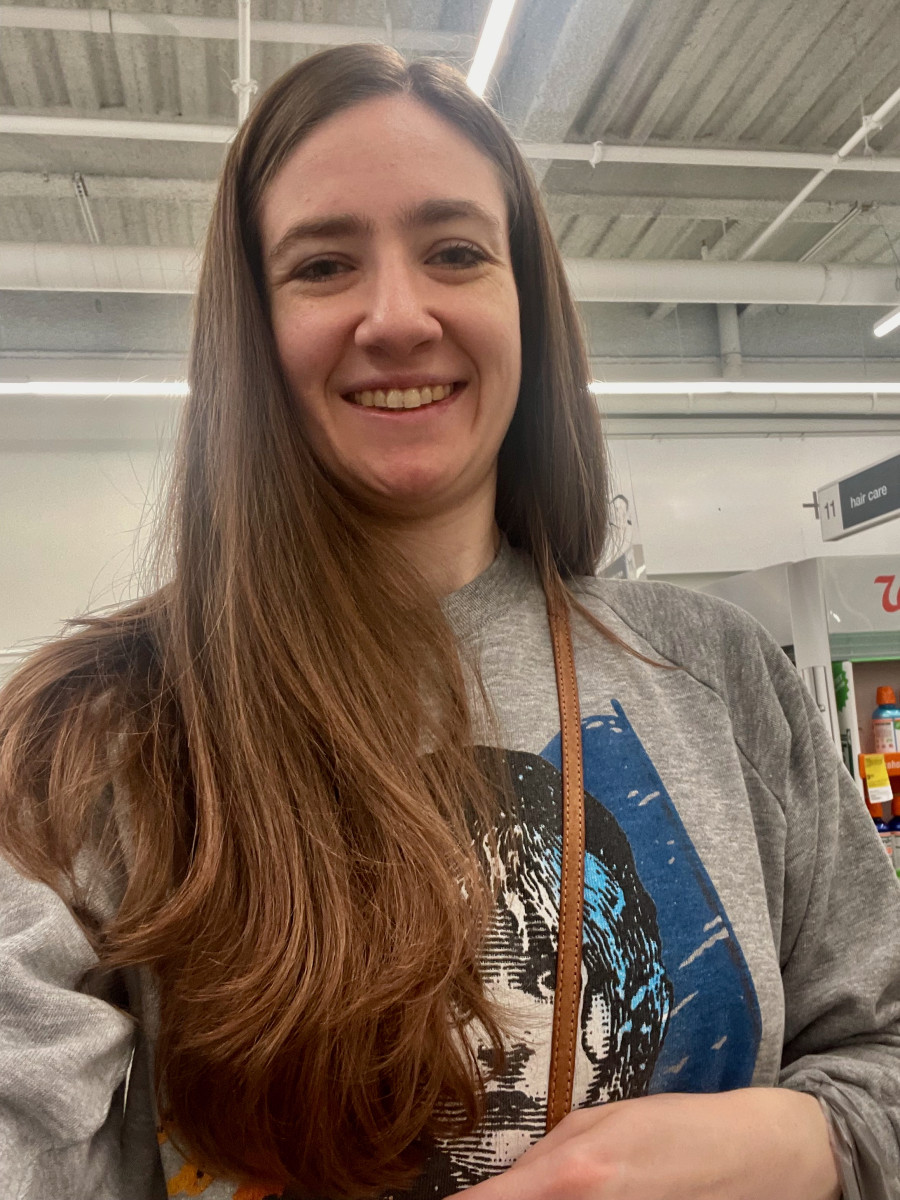
Eliza Reese, CRRN, first came to Shepherd Center in 2019 as a student nurse extern. After her externship, she worked at Shepherd as a PRN (as-needed) patient care technician while she was in nursing school. Then she completed her senior practicum at Shepherd and, upon graduating, joined the Comprehensive Rehabilitation Unit (CRU) as a certified rehabilitation registered nurse.
You started at Shepherd Center while you were still a nursing student. What does it mean to do an externship and senior practicum?
An externship in nursing is a paid internship … and it is eight weeks of work, four weeks, in my case, were with a PCT, and then four weeks were with a registered nurse. And then, at the end of those eight weeks, you can speak to the manager of whatever unit you're working on and ask about staying on as a PCT (patient care technician), and that's what I did. So, I started out on the ABI [Acquired Brain Injury] floor, and I stayed as a PRN PCT for the rest of that school year.
[The senior practicum] is in the very last semester of nursing school. You are basically side-by-side with a nurse. You don't have a preceptor there. You are being as close to a real nurse as a student can be. So, you're helping the nurse with med administration, you're helping manage care plans, and doing education … everything that you would be doing on a normal everyday basis … and it allowed me to practice a lot of skills up in the ICU.
Can you explain your role at Shepherd?
I am an inpatient RN. I work weekdays, so I am considered a primary RN to my team. What that means is that for everybody that I take care of, I am typically the one responsible for family training and education. I'm also the one responsible for being the nursing representative when we have team conferences, where the therapists, the physician, and the case managers [and nurses] all get together and go over the patient care and any planning. I am responsible for speaking on behalf of my patients [regarding] nursing.
How did you know you wanted to be a nurse?
I'm not sure I quite believed that I could be a nurse until I started going through nursing school, and then I was like, “Oh my gosh … this is exactly what I want to do.” It combined a lot of people skills and just general care of people. And it's something that I suddenly realized I was very passionate about. I'd always loved science. I majored in biology in college … but I'm also a dance teacher, so I follow students year-round and get to watch their progress. It combined the beauty of science and understanding why things happen the way they do, with the progression of following people and watching them gain new skills, very similar to teaching.
What does a typical day look like for you?
I typically am at work by about 6:15 a.m. We start our shift and hand off at 6:30 a.m. Because I work day shift, we're getting updates from the night shift nurse. How did the patient sleep? Are there any new concerns? … And after report, I'm rounding on my patients, making sure they're okay, making a plan. What does their therapy look like? What do their medications look like? Do they have any procedures for the day? And I'm looking at all of that before I start, and then we start fairly quickly into breakfast and med passes. Our patients go to therapy, so we get nice gaps to chart. We help our patients with lunch and lunchtime meds, help them with afternoon meds and dinner, and all the while, there could be a call from a therapist: “This patient's not feeling well, can you come look at this?” Taking patients to a procedure, picking them up from a procedure … doing education, somebody has a question. It just depends on the day.
What do you like most about your job?
I really enjoy following my patients through the progression of their skills, no matter what they are. I take pride in being able to encourage my patients and reminding them of things they hadn't been able to do and what they can do now, and [encouraging] a lot of reflection. I think it helps ground our patients. And it's really fun to watch [patients] being able to use a cup or being able to feed themselves [for the first time post-injury]. It’s really satisfying to help my patients go through these tiny little gains that don't feel good to them, but they really are huge in the grand scheme of things.
What were your first impressions when you started work at Shepherd Center?
Before I came to Shepherd Center, I had some clinical experience. We have clinicals every semester as part of the nursing school program. So, I had already been to three different hospitals. And so I knew how that patient interaction went, and I did not expect the … beautiful connection that every employee had to the patients. It was so natural. It was very family-like. It wasn't people in there just doing their job. It was somebody noticing something. How was your day? How is your daughter doing? I noticed that from day one, and it was very different than any other experience I had had.
How does your role impact patients and families?
I would say that my role personally helps patients experience a sense of normalcy. It helps them focus on doing their therapy and getting stronger. I'm there, kind of in the background, to make sure that they are [medically] stable, so they don't have to think about anything else … And I like that, that we just sit in the back and make sure that things are nice and stable for our patients. And then when things are not, being able to step in and correct it so the patient can move on.
Responses have been edited for length and clarity.
Education:
Agnes Scott College, Bachelor of Science, Biology
Mercer University, Bachelor of Science, Nursing
Fun Facts:
Eliza has been teaching dance, including ballet, tap, swing, and modern dance, for the past 12 years.
She also loves knitting and crocheting, an interest she got from watching her grandmother knit, and has made everything from stuffed animals to articles of clothing.
Eliza met her fiancé at work — he is also an RN — and they plan to marry later this year.
Interview by Ruth Underwood
With five decades of experience, Shepherd Center provides world-class clinical care, research, and family support for people experiencing the most complex conditions, including spinal cord and brain injuries, multi-trauma, traumatic amputations, stroke, multiple sclerosis, and pain. An elite center ranked by U.S. News as one of the nation’s top hospitals for rehabilitation, Shepherd Center is also recognized as both Spinal Cord Injury and Traumatic Brain Injury Model Systems. Shepherd Center treats thousands of patients annually with unmatched expertise and unwavering compassion to help them begin again.