


A Shining Example of Shepherd's Mission
Jena Kelly, OTR/L, shares her experience as an occupational therapist.
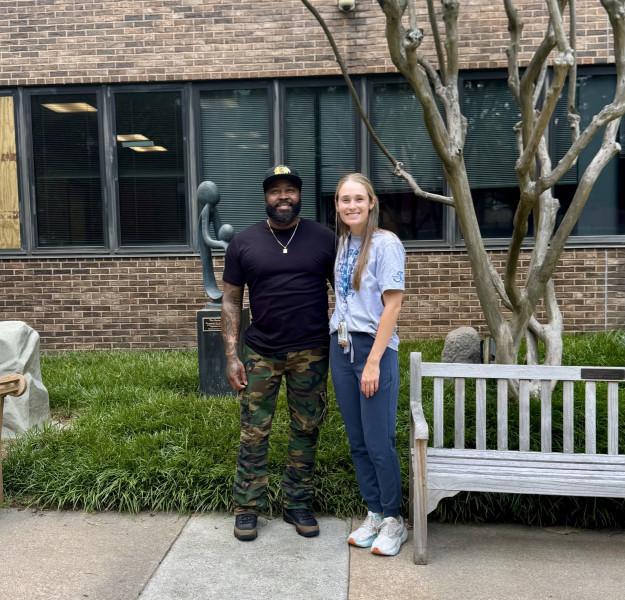
Jena Kelly, an occupational therapist (OT) on Shepherd Center’s Comprehensive Rehabilitation Unit (CRU), is an excellent model of what it means to work at Shepherd Center. She shares her experience working as an occupational therapist, including how she has made lifelong connections with her patients, and gives tips to people seeking to join the field.
What’s one patient story that has stuck with you? A moment that reminded you why you do this work?
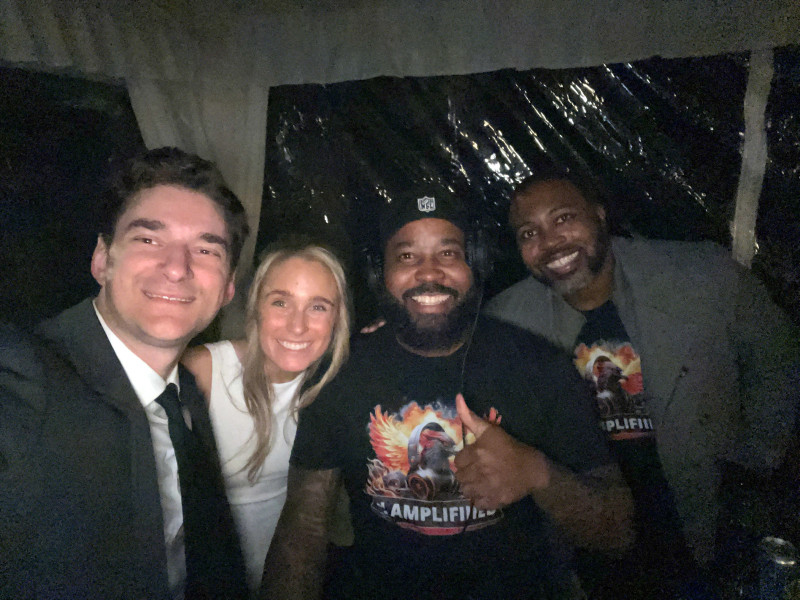
I have two that come to mind. The first was a man who had an amputation after a motorcycle accident. He was a DJ as a side gig in addition to his normal 9-5. Around that time, I was getting married and asked him to DJ my wedding. It was his first step back into real life, but in a safe, supportive setting. We made sure everything was accessible. It was really special. The second one was a young guy who had just finished playing college baseball and then had a spinal cord injury. There’s such a tremendous identity shift going from college athletics to the real world that was amplified with his SCI. Since I was a college athlete, I really understood that. I knew he wanted to exercise, work hard, and feel like himself again. And that connection made a big difference in his recovery.
Do you think being able to relate to patients is an important skill for OTs?
Absolutely. Being a people person and being empathetic are huge. If a patient is short-tempered or frustrated, you have to remember they’re going through one of the hardest times in their life. Building trust is everything. It’s such a gift we get to give at Shepherd.
What does occupational therapy at Shepherd entail?
Occupational therapy at Shepherd Center is really about helping patients become as independent as possible with their life skills — things like bathing, dressing, grooming, and toileting. But it goes beyond that. We also focus on what makes them, them. We look at their interests, what their life looked like before their injury, and we make therapy as patient-specific as possible. That’s my favorite part — working on truly meaningful activities and trying to simulate those experiences, even in a hospital setting.
CRU (Comprehensive Rehabilitation Unit) is the smallest inpatient unit in the hospital. I love how tight-knit we are and how diverse the patient diagnoses are. It started out as a med-surg floor but has evolved. Now we serve those with brain injuries, strokes, amputations, spinal cord injuries, post skin-flap surgery, and all kinds of neurological disorders.
What does occupational therapy look like for a patient after they’ve discharged? What do you provide to help them continue their recovery?
We will always try to send patients home with a home exercise program. Sometimes it's custom-made, or we use resources from MyShepherdConnection.org. That site has videos and handouts for strengthening exercises. We also teach family members how to assist with stretching, transfers, and activities of daily living, if needed. I often help patients plan out a daily timeline. When you’re inpatient, your schedule is packed. So, going home and having nothing planned can be tough. We talk through structuring their day, conserving energy, and managing expectations. They shouldn’t expect to be back at 100% right away. Most of them will continue therapy through outpatient or a day program.
How did you get involved in occupational therapy? Was it something you always wanted to do?
I didn’t come from a family in healthcare, and I did not know OT existed until college. I originally thought I wanted to do nursing, but it didn’t feel like the right fit. I took a career quiz through my undergrad counseling office, and OT came up. I started researching, and it felt like a perfect fit. I played college tennis, and I loved personal training. OT felt almost like personal training for unique populations. I have always been drawn to volunteering; whether that is Best Buddies, Next Stop, or Hope Heals Camp, so this profession all tied together naturally for me.
What advice would you give to someone considering occupational therapy as a career?
Shadow as much as you can. OT looks different depending on the setting — schools, the military, outpatient, neuro-rehab, orthopedics, you name it. See the range of possibilities. Also, look inward and ask yourself what kind of extracurriculars or volunteer work you are naturally drawn to. That helped me figure it out. OT kind of found me, in a way. I am forever thankful for the profession of OT, which has allowed me to meet some of the most incredible coworkers, families, and patients.
Interview by Dominique McPhearson
With five decades of experience, Shepherd Center provides world-class clinical care, research, and family support for people experiencing the most complex conditions, including spinal cord and brain injuries, multi-trauma, traumatic amputations, stroke, multiple sclerosis, and pain. An elite center ranked by U.S. News as one of the nation’s top hospitals for rehabilitation, Shepherd Center is also recognized as both Spinal Cord Injury and Traumatic Brain Injury Model Systems. Shepherd Center treats thousands of patients annually with unmatched expertise and unwavering compassion to help them begin again.