


A New Era for Multiple Sclerosis Research at Shepherd Center
Shepherd’s Human Performance Lab Ushers in New Possibilities for MS Care
March is Multiple Sclerosis (MS) Awareness Month, a time to promote understanding of the chronic neurological condition that impacts one million diagnosed Americans and their families, friends, and care partners. Thanks to the efforts of researchers at Shepherd Center and around the globe, outcomes for people with MS have never been better, and the prognosis for someone diagnosed with MS today looks completely different than it would have 20, 15, or even 10 years ago.
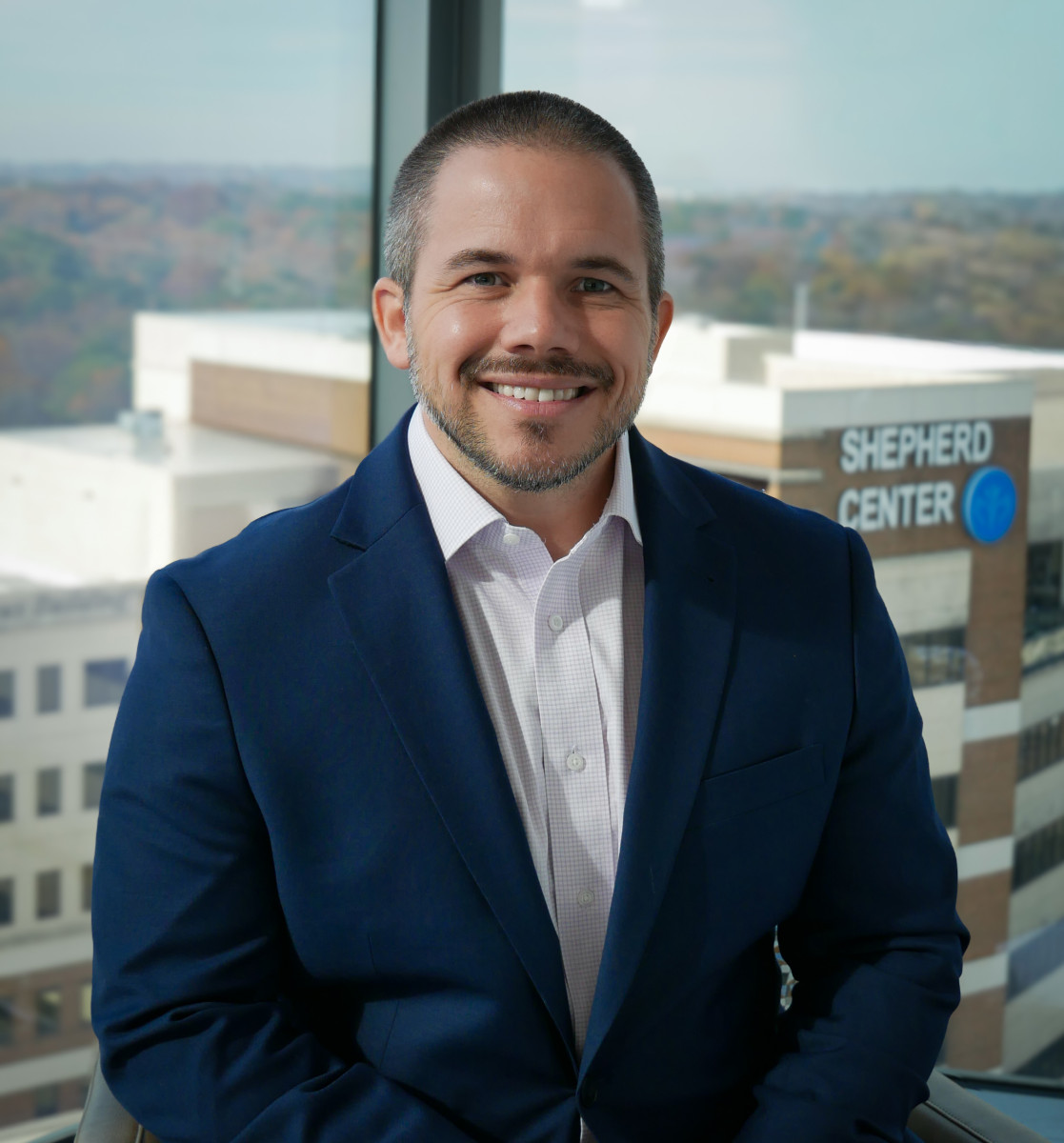
To learn more about the research driving improvements in MS care, we caught up with Brad Willingham, Ph.D., director of the Multiple Sclerosis Research Program at Shepherd Center.
First, can you tell me about MS research at Shepherd? How are we different from other institutions conducting MS research?
That's exactly why I'm here at Shepherd: because we are very different. And it’s why I'm so honored to be a part of this organization and working to advance our mission through research.
Although I started my career here as a clinician at Shepherd Center, my scientific training is in neuromuscular physiology . So, a lot of my work has been focused in basic science. I spent almost five years at NIH [National Institutes of Health] doing deeply cellular-level work. It was fun. The questions were interesting. The technology was cool, but I wanted to be focusing more on work that has an immediate impact on patients.
At Shepherd, our work must be immediately relevant to those we serve and the clinicians who provide their care. Meaningful research is a mandate. Every experiment, every outcome is someone's life. And we get to see the impact we are making through our research in real time.
Additionally, Shepherd just has a different culture. Our clinicians are curious, they're motivated, they're looking to push the status quo, they're open-minded, and they're always questioning how to advance things. This creates an environment where researchers are welcome in the clinical spaces. They consider us part of the team. They're excited to share their needs and problems and questions with us.
How do you ensure research is addressing patient needs?
We actually start with the patients and with the clinicians, and we meet with them. We meet with them on a quarterly basis, sometimes more frequently, in what we call knowledge translation meetings. And we ask, ‘What are your needs? What are your questions? What are your barriers?’ And then from that, we work backwards.
We design scientific research studies to address a knowledge gap, or create and innovate a tool or solution, or create a way to overcome barriers to access and care. It's wonderful because we do get research that's directly relevant to the real world. It's immediately tailored and catered towards the needs of the patients and clinicians.
Because we start with the clinicians and patients, we do end up with quite a wide range of studies. We have studies in employment, studies in fatigue management, and studies on technology development, developing tools to make care more accessible.
We also have studies that are directly integrated into care, and so we're empowering clinicians to use the data they collect as part of their routine job to extract meaning from that, extract insights from that, to help refine their care, and explore what care may be most effective for different folks living with MS.
Does your team conduct any research looking at potential cures for MS?
Yes. We are very active in research that moves the field toward better treatments and, ultimately, a cure for MS.
We have a fantastic clinical trials team here, led by Issi Clesson, RN, MSCN, CCRP, Director of Clinical Trials. We partner with pharmaceutical industry collaborators to evaluate the most cutting-edge disease-modifying therapies aimed at slowing or preventing MS progression as early as possible.
In the wider medical community, we've come a long way with disease-modifying therapies for MS. We have made tremendous advancements in preventing relapses and preventing disease progression with pharmacologic treatments, but that's just part of the story.
When someone has MS, the initial damage from the disease cascades throughout the body. It causes mobility impairments and fatigue and cognitive disruptions, bowel and bladder dysfunction, all of these things that impact your daily life. It's important that we not solely focus on a cure, but also help those who have already been impacted by MS to sustain their function, get back to doing the things they love, and mitigate the severity of disability progression.
You mentioned how far MS research has progressed in terms of pharmacology. What are some other advancements we’re seeing now?
The research we’re working on now — which is really paradigm-shifting — is addressing one of the most long-standing and pressing challenges in MS care: the heterogeneity, or variability, we see in our patients. No two folks living with MS are living the same experience.
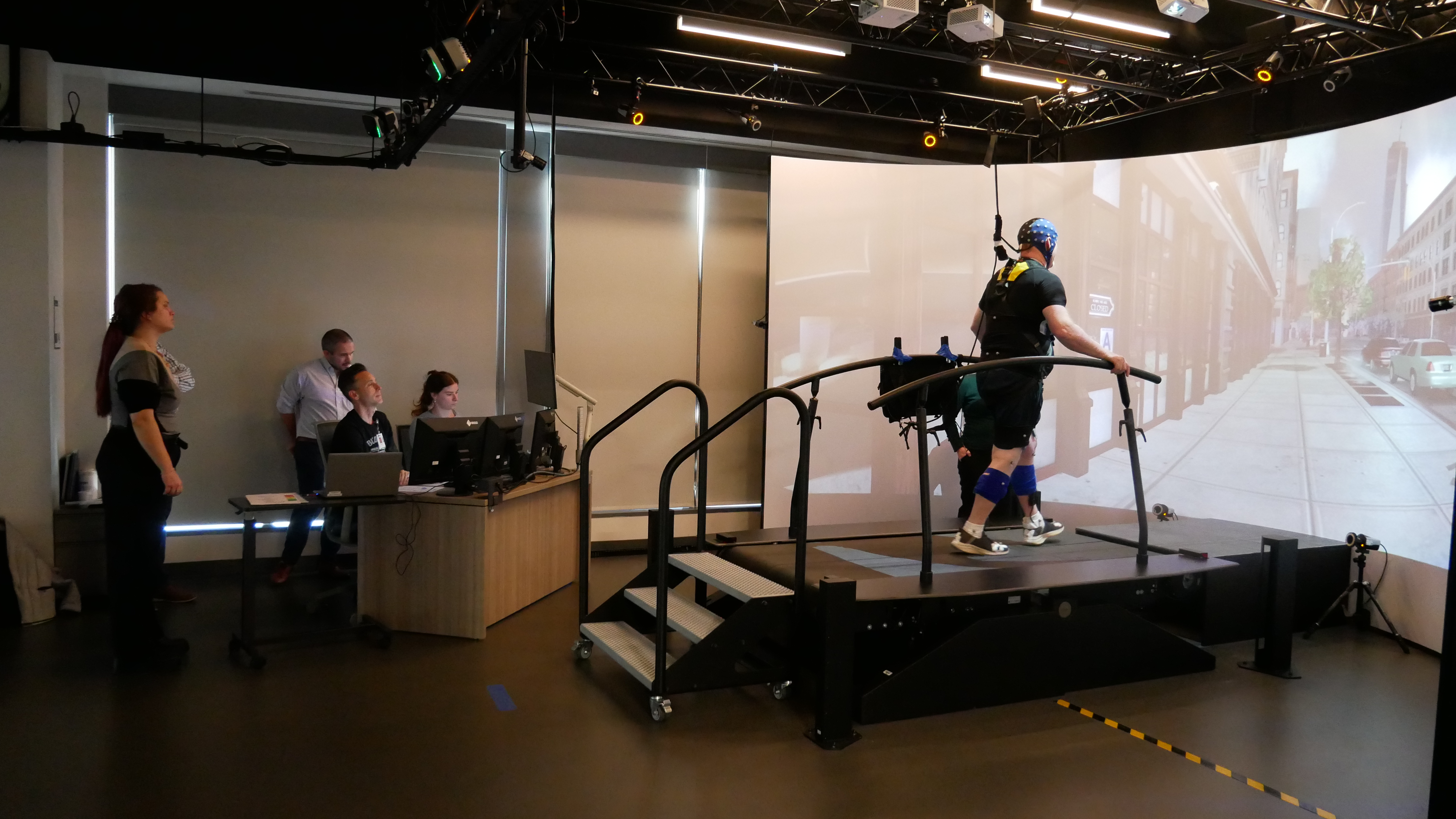
People with MS most commonly report impairments in mobility and fatigue as their most common and most impactful, debilitating symptoms. But the reason why someone may have challenges with mobility or walking, or the reason someone may feel fatigued, is different from person to person. So, what we’re doing now is leveraging our new infrastructure in the Human Performance Lab, that allows us to systematically evaluate different physiological systems at the same time. This allows us to determine what is causing mobility impairment or fatigue from patient to patient. Because if we know that, we can apply a very targeted treatment. A one-size-fits-all approach is not going to work. By treating the symptom, you may not be addressing its underlying cause.
One of our current studies is the PRISM study (Precision Rehabilitation through Integrated System Modeling). We use the Human Performance Lab to systematically evaluate the body, from brain activity, to biomechanical movement, to muscle activation, to metabolism and cardiopulmonary function. We can evaluate all of these systems at the same time, during the exact same conditions, to tease out the underlying cause of what a patient is experiencing. Modern pharmacology achieves precision by targeting specific biological pathways in the body. Our goal is to bring that same level of precision to rehabilitation by identifying the underlying physiological processes that cause symptoms and designing therapies that address them directly.
A lot of things are coming together to make this possible. Almost daily, we hear of some new technology being invented. But it’s not just for convenience, it’s not just for entertainment anymore. With advancements in computing, imaging, sensors, neurophysiologic measurement systems, and AI, we can now see further than ever before. And we now have technology to make all these precise measurements, and it’s fast enough, affordable enough, and mobile enough to use in a clinical research lab .
And so, on the clinical side, this precision rehab approach, this PRISM approach, is going to allow more targeted therapies, with the goal of improving outcomes for patients in a more personalized, efficient, and cost-effective way. On the research side, it's also going to accelerate scientific discovery because we can capture more meaningful data that are more sensitive to changes in health and function. This can make clinical studies more efficient and help promising therapies move more quickly from research into real-world care for the people who need them most.
Responses have been edited for length and clarity.
Interview by Erin Kenney
With five decades of experience, Shepherd Center provides world-class clinical care, research, and family support for people experiencing the most complex conditions, including spinal cord and brain injuries, multi-trauma, traumatic amputations, stroke, multiple sclerosis, and pain. An elite center ranked by U.S. News as one of the nation’s top hospitals for rehabilitation, Shepherd Center is also recognized as both Spinal Cord Injury and Traumatic Brain Injury Model Systems. Shepherd Center treats thousands of patients annually with unmatched expertise and unwavering compassion to help them begin again.