


Our Unforgettable Journey to Big Cedar Lodge
A three-day adventure reminds me of recreation therapy’s impact
Austin Yarbrough’s life changed in an instant after sustaining a spinal cord injury in a motorcycle crash. During inpatient rehabilitation at Shepherd Center nearly five years ago, he quickly formed a bond with outdoor recreation therapy specialist Gavin McClintock, CTRS. Their relationship began in therapy, but their friendship was shaped by love for the outdoors and a refusal to let injury limit adventure.
Austin embraced every challenge Gavin threw at him: fly-fishing, boar hunting, adaptive outdoor skills, even “truck-sinking,” a story best saved for another day. After returning home to Chattanooga, Austin stayed connected to Shepherd, returning for clinics, outings, and Adventure Skills Workshops. So, when an opportunity arose to explore the possibilities of a new patient partnership, Austin was our first call.
Thanks to Jim Balkcom, former Shepherd Center board member and generous donor of 20 years, we were invited to experience Big Cedar Lodge through the hospitality of his close friend, Johnny Morris, founder of Bass Pro Shops and visionary behind it all.
 Set across 4,600 acres in the Ozarks, Big Cedar is more than a resort, it is a tribute to conservation, wonder, and the outdoors. With world-class golf, fishing, trails, marinas, restaurants, and accessible adventures at every turn, it felt tailor-made for the spirit of recreation therapy.
What struck us immediately was the intentionality. The incredible staff designed an itinerary around Austin’s interests and needs, proving accessibility was not an afterthought but is woven into the guest experience. In many ways, this was a fact-finding mission: could Big Cedar become a place where more patients, regardless of injury level, can come to reconnect with life beyond the walls of Shepherd Center? We quickly realized the answer was yes.
The experiences were extraordinary.
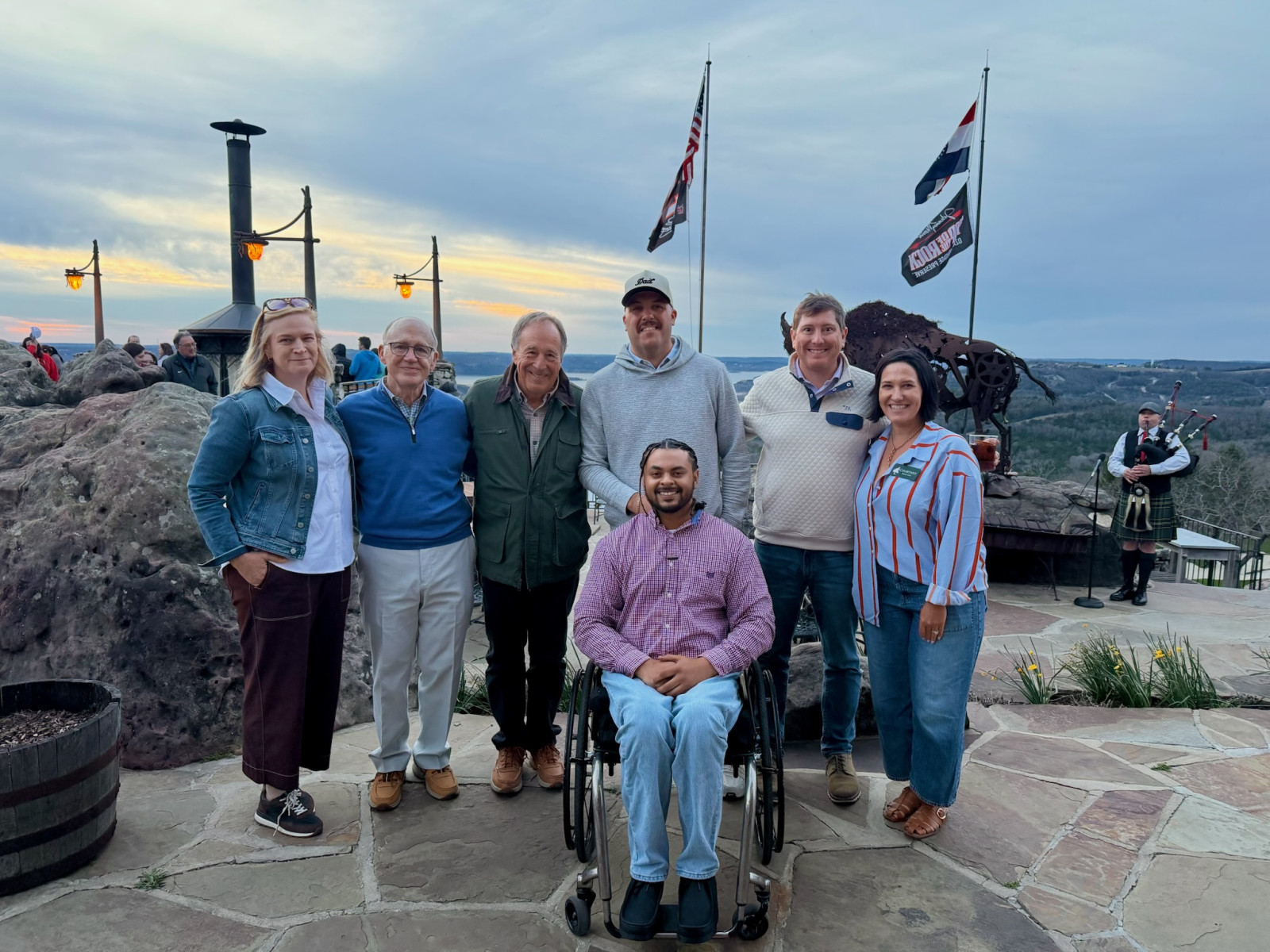
Johnny Morris personally led us through the Ancient Ozarks Natural History Museum, appearing almost magically from one of the exhibits to share stories behind acquiring his favorite pieces, including the mystery of a missing 13-million-year-old mammoth tusk. At Top of the Rock, we experienced the resort’s iconic sunset ceremony, where a bagpiper played as the sun sank below the hills, followed by the thunderous boom of cannon fire over the water. It felt surreal, and somehow routine at Big Cedar.
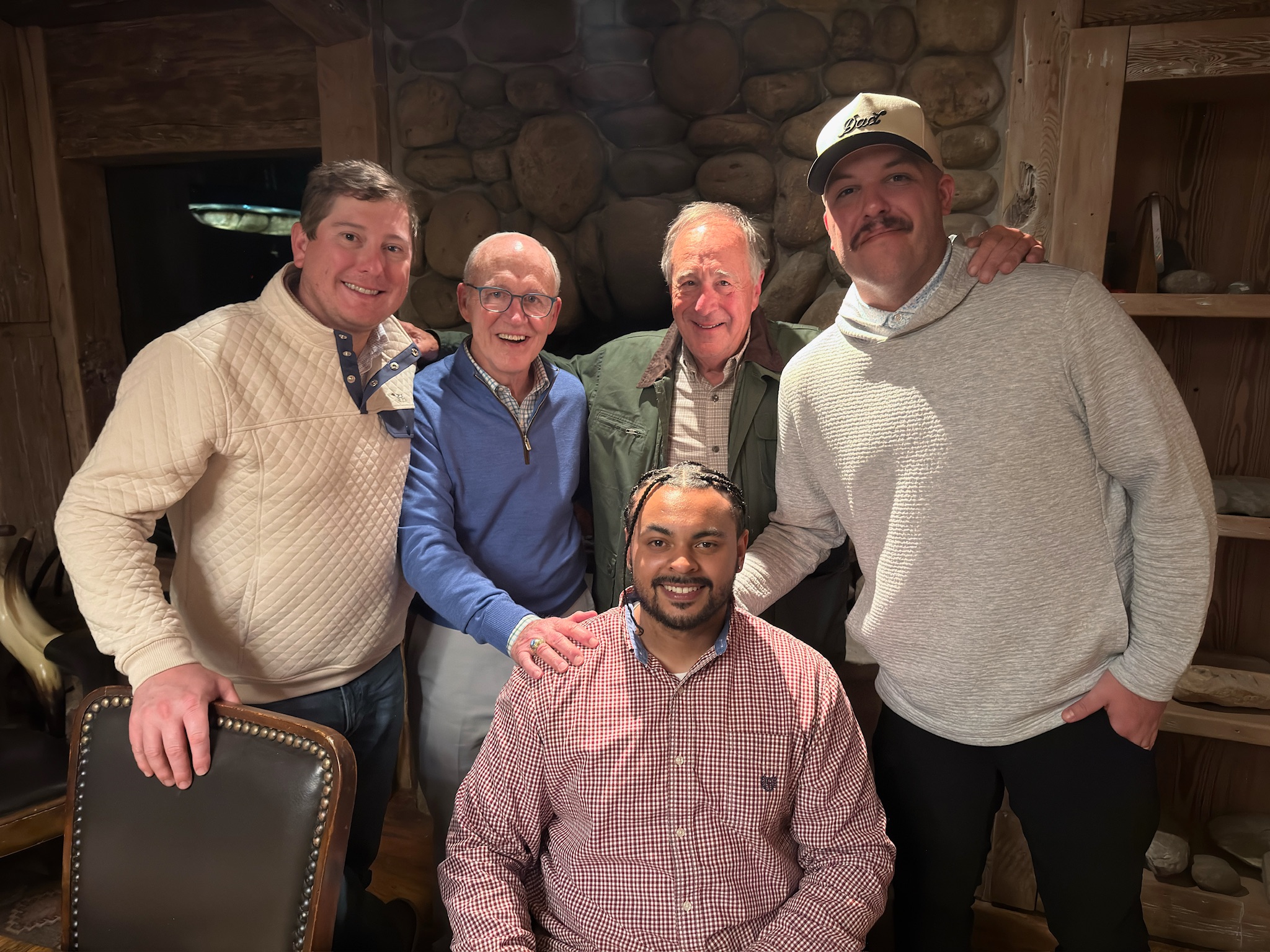
Later, over dinner, Johnny and Jim shared stories of a friendship born from business disagreements and strengthened over decades of mutual admiration. But what moved me most was watching Johnny turn his attention to Austin and Gavin, peppering them with questions about accessibility. He scribbled notes on a napkin as Austin offered suggestions, and Gavin shared solutions. He made them promise to inspect the property and report back on anything that could be improved, because if something needed attention, he intended to fix it!
The next day, we set out to Dogwood Canyon Nature Park, a 10,000-acre masterpiece owned and operated by the Johnny Morris Conservation Foundation. Waterfalls, trout streams, and roaming bison created a wild scene. We toured the canyon, heard stories of Johnny Cash and President George H.W. Bush fishing with Johnny nearby. Jim was there, too, for those unique moments years ago.
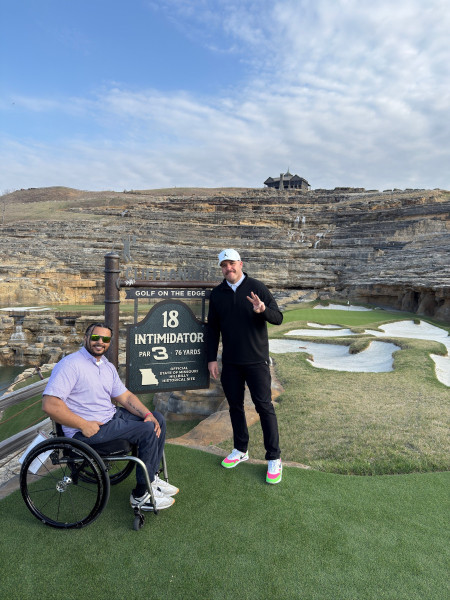
That afternoon, we played the new Cliffhangers Golf Course, designed by Johnny and his son John Paul. Calling it golf hardly does it justice. It felt more like traversing caves, cliffs, waterfalls, and canyons in-between errant shots.
 But the heart of the trip was on the water.
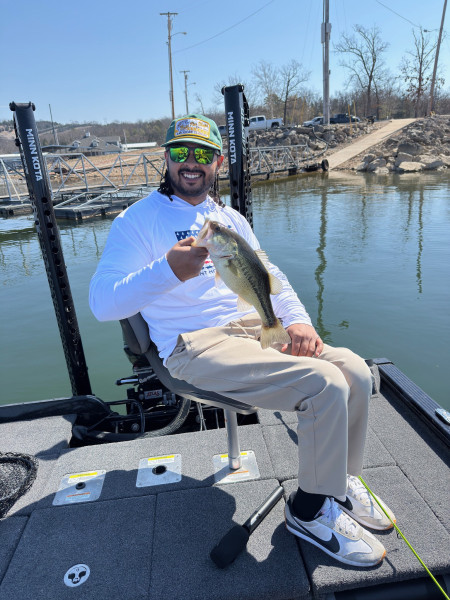
No visit to Big Cedar is complete without fishing on Table Rock Lake. Watching Gavin help Austin transfer seamlessly from wheelchair to the boat, seeing Austin settle in with humble confidence, and then watching him reel in largemouth bass under the open Ozarks sky, it was impossible not to understand what recreation therapy means to patients.
For Austin, this was another return to the outdoor adventures that have shaped his life post-injury. For Gavin, it was yet another display of what his team does every day: help people get back to the passions that make life feel whole. That is the magic of recreation therapy.
It is never just about fishing or golf… or bison. It is about restoring identity. It is where courage meets creativity, where independence is rebuilt, and where small victories become life-changing turning points.
As a philanthropy officer in the Shepherd Foundation, I often speak about donor-funded programs like recreation therapy through outcomes and impact metrics. Too often, it can become a numbers conversation. This trip offered another lens to see the impact of our donor-funded programs.
At Big Cedar, I saw generosity translated into freedom. I saw a former patient express his passion and joy for the outdoors. I saw a therapist doing life-changing work. And I saw what is possible when visionary philanthropy meets innovative care.
Written by John Ross
With five decades of experience, Shepherd Center provides world-class clinical care, research, and family support for people experiencing the most complex conditions, including spinal cord and brain injuries, multi-trauma, traumatic amputations, stroke, multiple sclerosis, and pain. An elite center ranked by U.S. News as one of the nation’s top hospitals for rehabilitation, Shepherd Center is also recognized as both Spinal Cord Injury and Traumatic Brain Injury Model Systems. Shepherd Center treats thousands of patients annually with unmatched expertise and unwavering compassion to help them begin again.