


For the Love of the Game
After a spinal cord injury, video games help keep Koltyn Roper connected to the sport he loves
Koltyn Roper has been playing baseball for eight years.
It would be a long time for anyone, but for 12-year-old Koltyn, it seems even longer. He’s been playing the sport for two-thirds of his life.
Koltyn’s baseball career shifted, however, after he sustained a spinal cord injury in an accident in December 2025. After two weeks in the Pediatric Intensive Care Unit at Children’s Healthcare of Atlanta, he transferred to Shepherd Center to begin rehabilitation in the Adolescent Spinal Cord Injury Rehabilitation Program.
“It’s been a lot of fun,” Koltyn said before leaving Shepherd Center to return home to Dawsonville, Georgia, in April. During his several months at the hospital, he became known on the floor for telling jokes and getting laughs out of his therapists.
Throughout his time at Shepherd Center, his therapy team found ways to infuse his passion for baseball into his therapy. One activity brought the baseball diamond straight into his room: video games.
“I did play a lot of video games before, I played with a lot of my friends from different counties, just because [we aren’t able to see each other as much],” Koltyn says. “I played with my brothers, too.”
Playing video games after his injury proved to be a little different. Koltyn had reduced mobility in his hands and couldn’t use the controller the same way he did before his injury. But Graylyn Jones, OTR/L, an assistive technology therapist in the Access Technology Lab, showed Koltyn how an adaptive controller could help him play his favorite XBOX games again. Video games are often incorporated into recreation therapy sessions at Shepherd Center, which aim to help patients rebuild confidence and independence after injury through engaging in activities outside the hospital room or therapy gym. Thanks to generous donor support, rec therapy is a throughline over the course of a patient’s time at Shepherd.
For Koltyn, other recreation therapy sessions included playing wiffle ball and going on outings to the World of Coca-Cola and the SkyView Ferris wheel in Atlanta. But video games, especially, have been a continued hobby for him throughout his rehabilitation. After Koltyn’s session with Jones, his mom, Heather McCall, applied for an adaptive controller from AbleGamers Foundation. AbleGamers’ mission is to create opportunities that enable play in order to combat social isolation, foster inclusive communities, and improve the quality of life for people with disabilities. The organization provides adaptive controllers and other assistive technology to people like Koltyn, keeping them in the game.
 While Heather and Koltyn awaited the adaptive controller, there was still one game Koltyn could play with the standard controller. It just so happened to be MLB The Show, a baseball game. During his time in the Spinal Cord Injury Day Program, he would play the game in his family’s apartment at the Woodruff Family Residence Center.
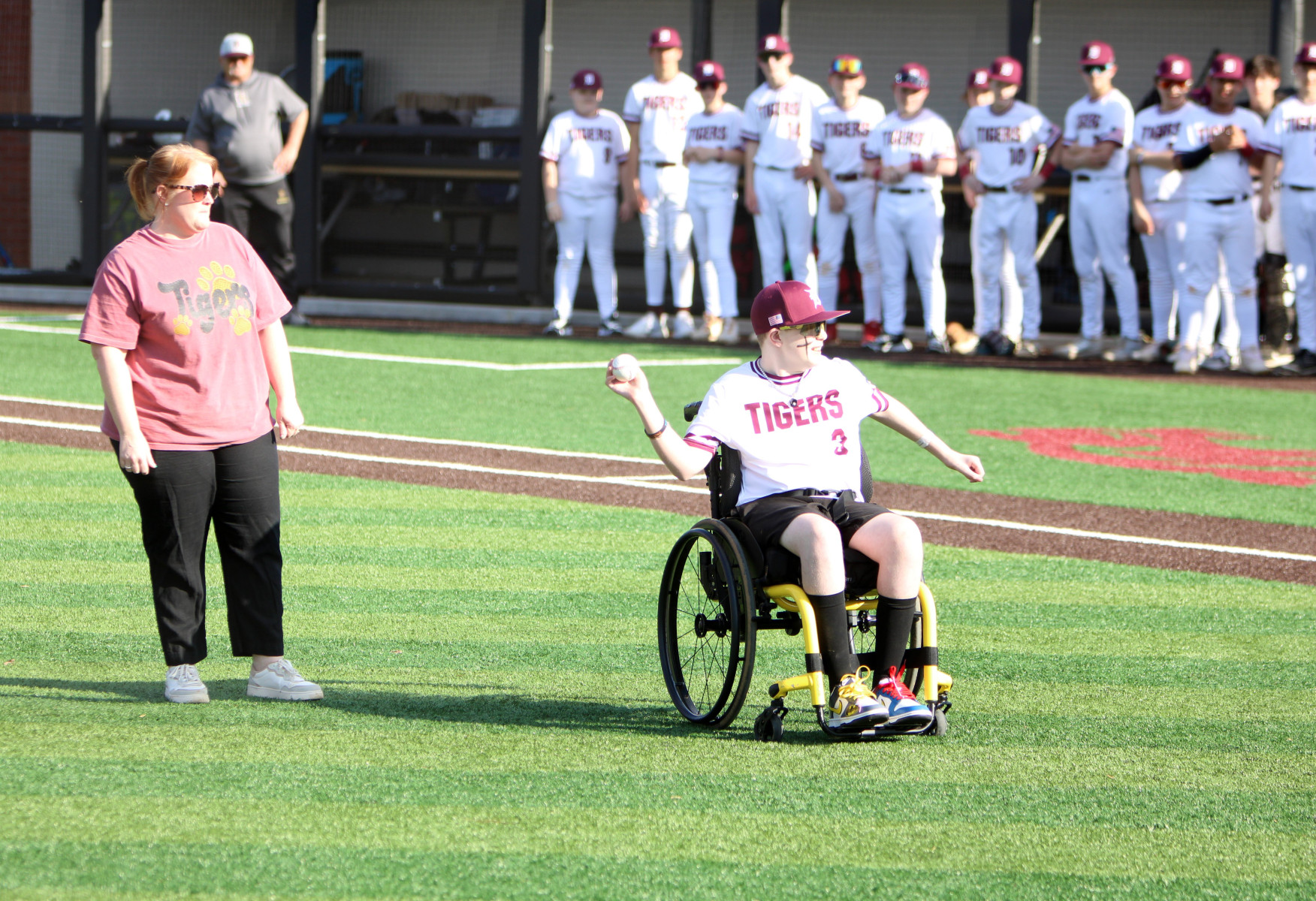
Koltyn had other baseball experiences during his time at Shepherd, too. In March, he returned to his middle school to throw out the first pitch of a baseball game. And in April, just a couple of days before his graduation from the day program, he and his family attended the annual University of Georgia versus Georgia Tech baseball game at Truist Park. Outings like these prepared Koltyn and his family to return home, even if it was bittersweet to say goodbye to their care team here.
“You know, never being in this situation, somebody might not understand, but when they say you're part of the Shepherd family, you really are,” Heather says. ‘These people have become our family.”
Even though Koltyn’s discharge meant saying goodbye to his Shepherd family, going home meant he, his parents, and siblings were all under one roof again, after four months apart. While Heather and Koltyn were at Shepherd Center, Koltyn’s dad, Brady McCall, went back and forth between the hospital and Dawsonville, participating in Koltyn’s therapy sessions and also taking care of his three siblings at home. Getting ready to return home, Koltyn was excited to be with his siblings again, and especially excited for home-cooked meals made by his dad.
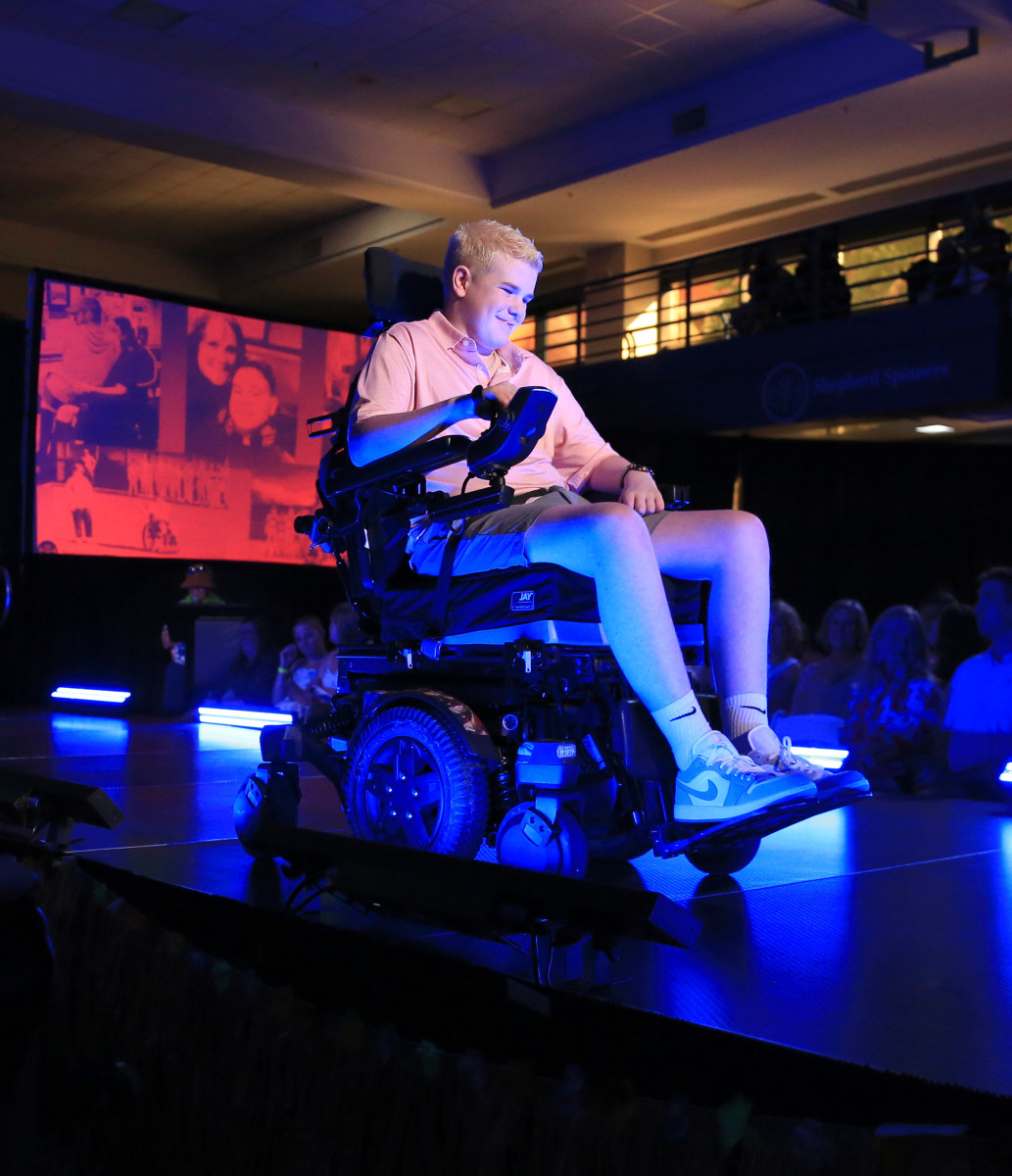
It wasn’t long before Koltyn and his family returned to Shepherd Center for a visit. By the time they came back for Project Rollway in June, they had been settling back into life at home. AbleGamers sent Koltyn an adaptive 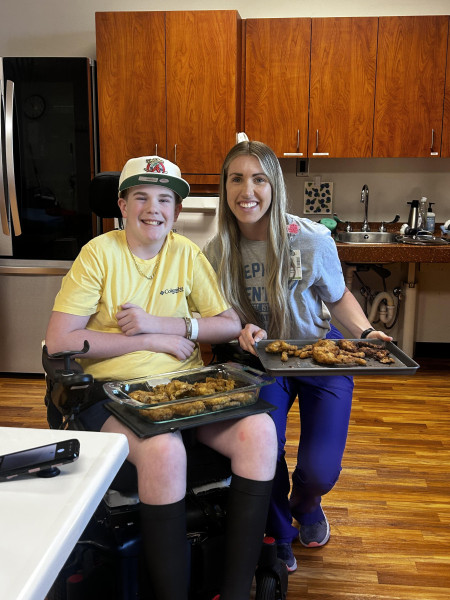 video game controller, giving him the ability to play more video games with his siblings and friends. When Koltyn took to the stage that evening, he and his family got to celebrate the progress he’s made so far.
“It has been absolutely amazing,” Heather says. “From start to finish, he’s made so much progress that we know he would not have made elsewhere. It has been life changing.”
Koltyn plans to return to Shepherd Center next summer for continued therapy, more laughs with his therapists, and to keep making progress. But in the meantime, video games are keeping him connected: to his friends, to the sport that he loves, and simply to life as a 12-year-old kid.
Written by Erin Kenney
With five decades of experience, Shepherd Center provides world-class clinical care, research, and family support for people experiencing the most complex conditions, including spinal cord and brain injuries, multi-trauma, traumatic amputations, stroke, multiple sclerosis, and pain. An elite center ranked by U.S. News as one of the nation’s top hospitals for rehabilitation, Shepherd Center is also recognized as both Spinal Cord Injury and Traumatic Brain Injury Model Systems. Shepherd Center treats thousands of patients annually with unmatched expertise and unwavering compassion to help them begin again.