


A Student-Athlete Jumps Back In
MaryGrace Guzzino's Journey Back to the Water After Concussions
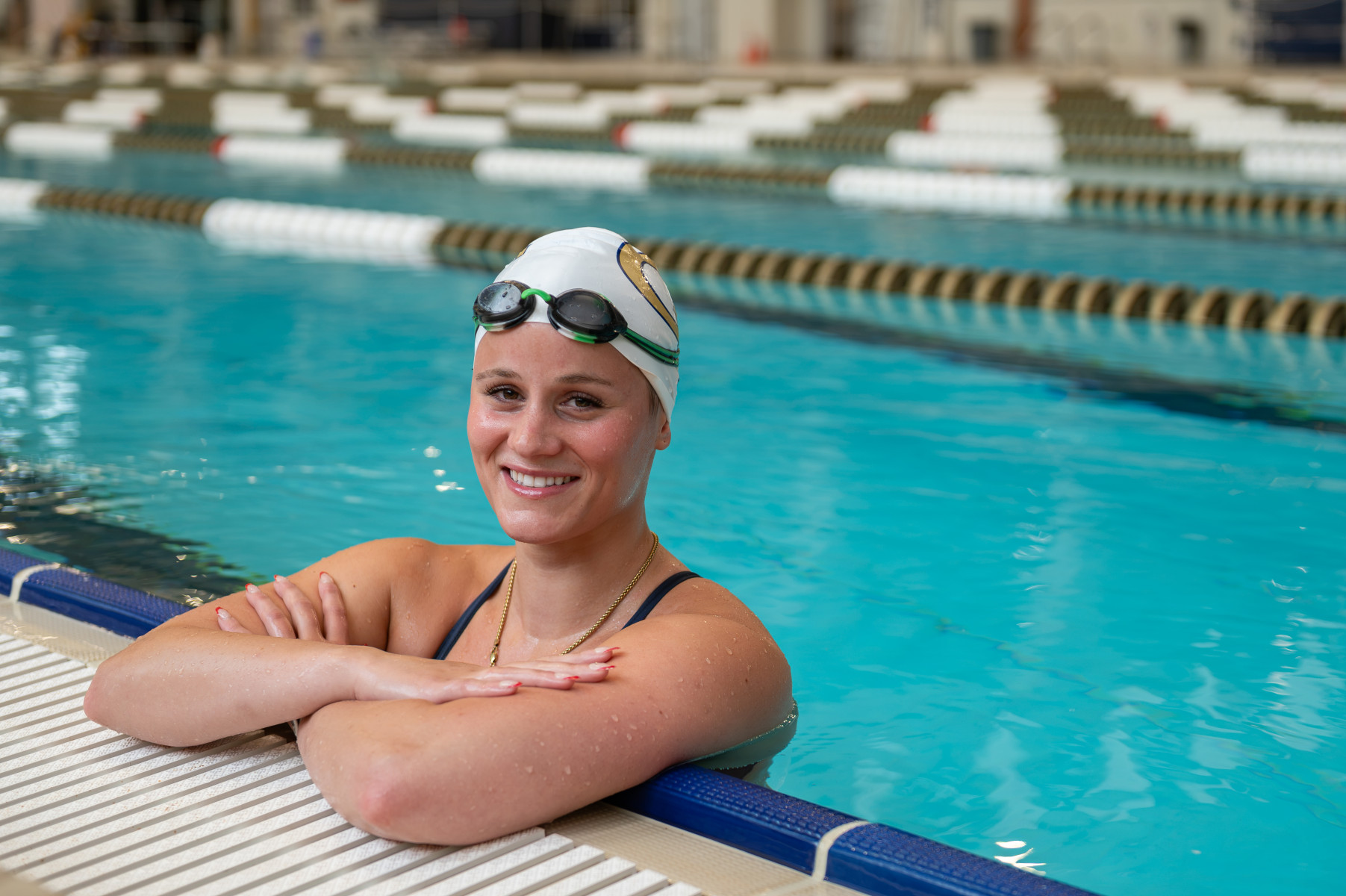
Water is life to us all. For MaryGrace Guzzino, though, it’s more than that.
“I love everything about swimming,” says the senior on Georgia Tech’s swim team. “It’s just pure love, pure enjoyment. The competitive aspect is sopersonal. You have opponents and you want to win as a team. But it’s really just you against yourself. I love that.”
So, when swimming was taken away from MaryGrace — due to a pair of concussions she sustained in “freak accidents” in the water in 2025 — the pain wasn’t relegated to her brain alone. Thankfully, MaryGrace landed at Shepherd Center’s Complex Concussion Clinic (CCC). CCC offers fully integrated, multi-disciplinary treatment for patients whose concussions have produced more complicated, persistent symptoms. The clinic is led by founding director Russell Gore, M.D., an expert in neurotrauma who has significant experience in working with athletes specifically; in fact, this past summer, Dr. Gore served as concussion consultant and advisor for the 2026 FIFA World Cup. A Georgia Tech Yellow Jacket himself, he is an assistant professor in the Walter H. Coulter Department of Biomedical Engineering at Georgia Tech and Emory University.
 “Dr. Gore and the whole care team understood how frustrated I was with the symptoms and how hard it was to not be swimming,” MaryGrace says. “They shared it all with me and they really understood the love I have for the sport. I felt like I was really being taken care of, just fully supported.”
Her care included testing, treatments, and exercises to directly address symptoms such as dizziness, blurred vision, fatigue, and light sensitivity. MaryGrace also participated in physical therapy and speech therapy to address cognitive issues that were making her academic life more difficult, as well.
“I was kind of re-learning how to do school,” MaryGrace says. “It was learning new study techniques — re-reading chapters before class, writing things down, charting what I knew and what I didn’t know to put markers in place that we could track. It was all about memory recall and retaining things again.”
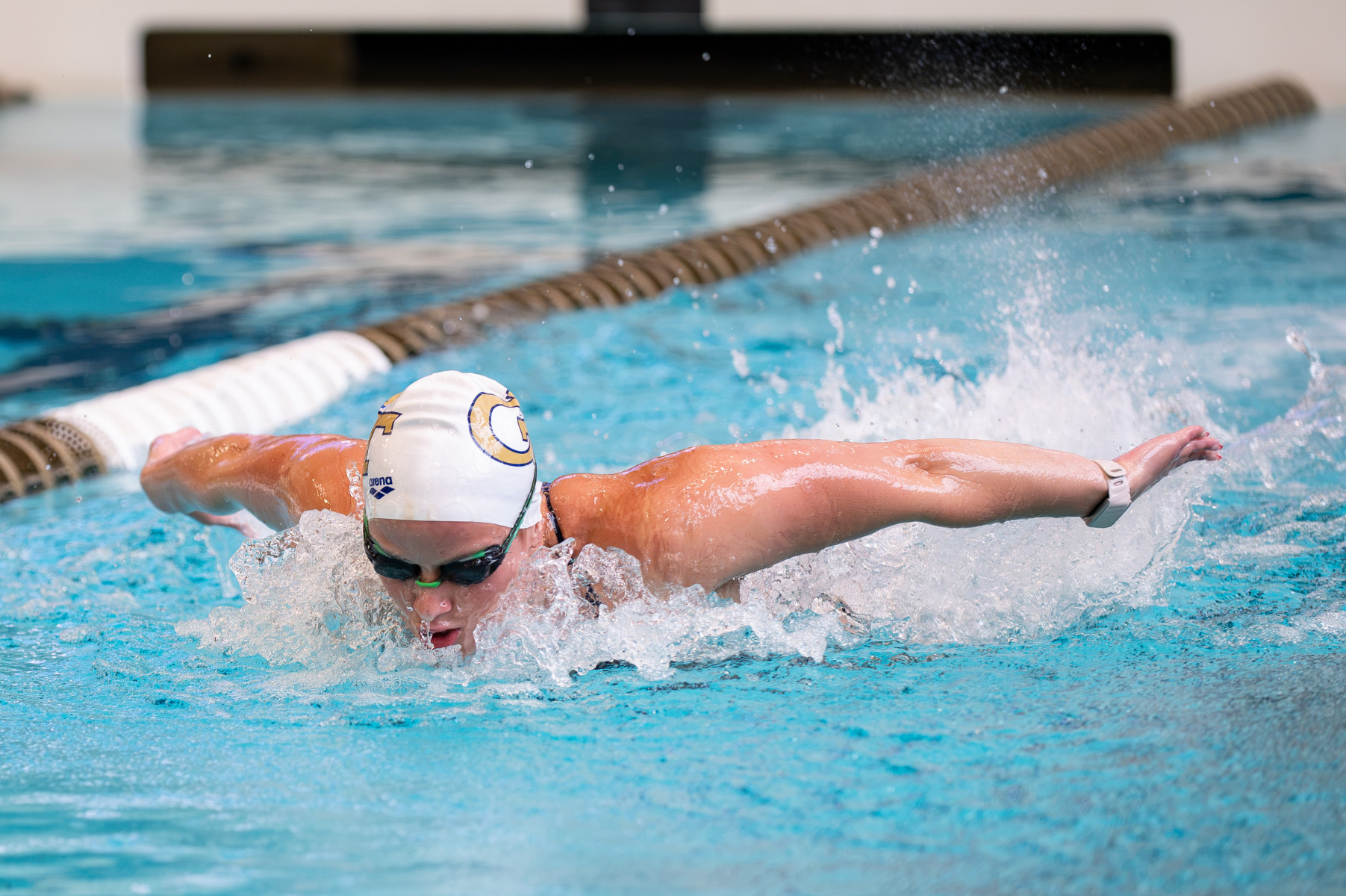
For the better part of a year, she was fully away from the sport. The absence was painful, but her body was healing. Gradually, things improved. As she could get back in the water again and start training more, her mental health strengthened along with her physical health.
“Being at Shepherd Center and going through this, it sounds so cliché, but it really did make me so much more mentally strong,” MaryGrace shares. “And mentally strong in the water, specifically, as an athlete. Those mental exercises from the clinic carry over to the pool.”
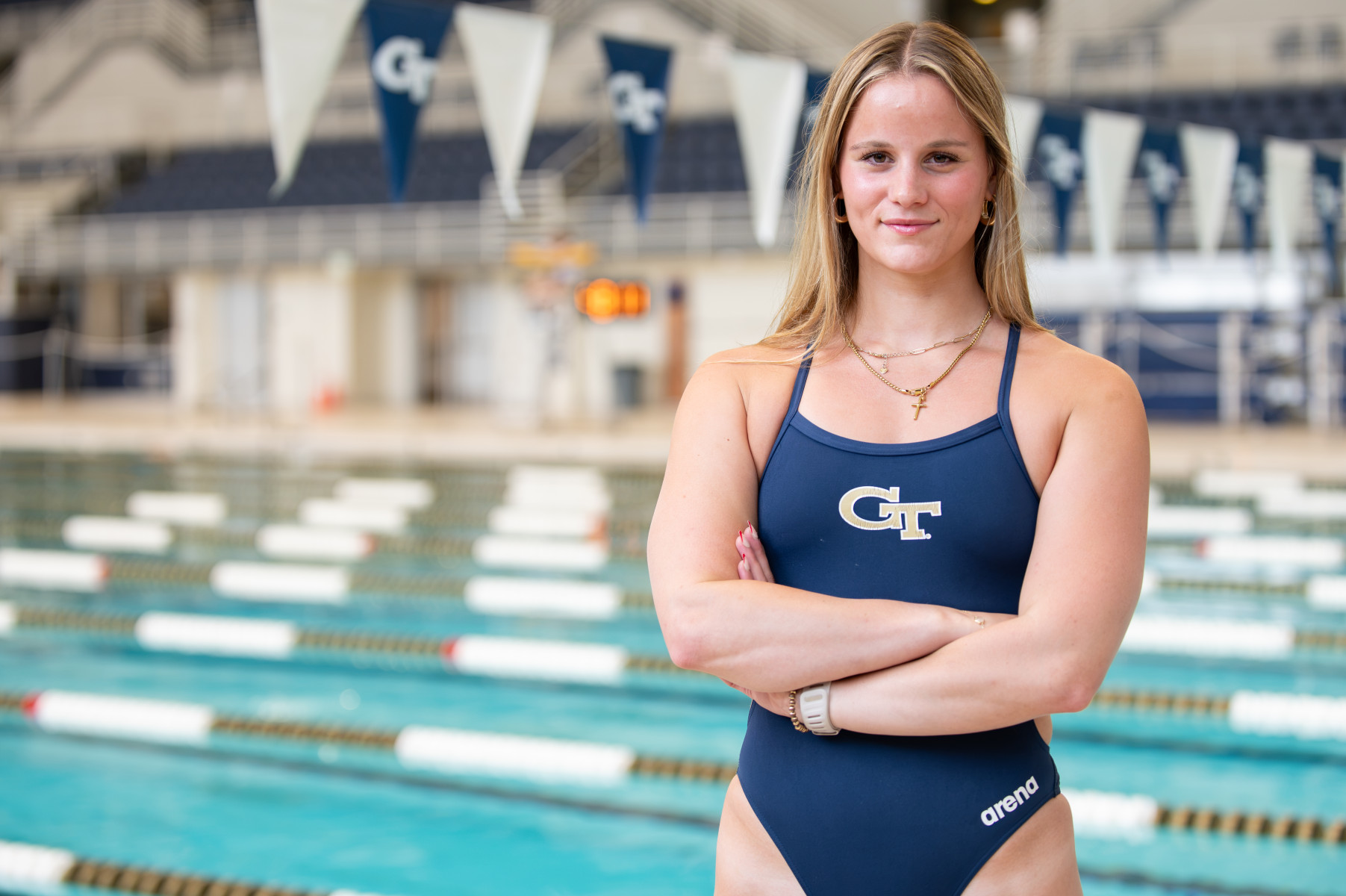 Starting with her senior year this fall, she’ll have two seasons of eligibility left at Georgia Tech. She plans to get her master’s degree during that extra year and consider what comes next after college.
One thing she’s sure of: Swimming will always be part of her life.
“Oh, I’ll keep swimming forever!” MaryGrace says. “I’ve realized that all over again this past year. I’ve also learned more about resilience. This has all just reinforced for me that even the craziest setbacks can make you come back even stronger."
Written by Phillip Jordan
With five decades of experience, Shepherd Center provides world-class clinical care, research, and family support for people experiencing the most complex conditions, including spinal cord and brain injuries, multi-trauma, traumatic amputations, stroke, multiple sclerosis, and pain. An elite center ranked by U.S. News as one of the nation’s top hospitals for rehabilitation, Shepherd Center is also recognized as both Spinal Cord Injury and Traumatic Brain Injury Model Systems. Shepherd Center treats thousands of patients annually with unmatched expertise and unwavering compassion to help them begin again.